Read More












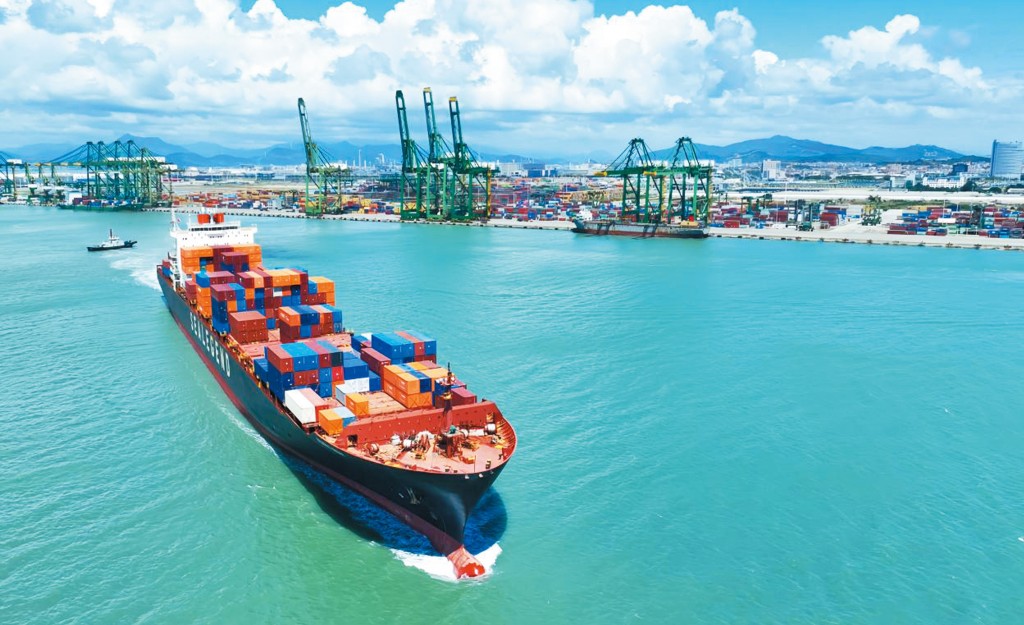
The melting of Arctic ice has opened new shipping routes, creating business opportunities with the “Polar Silk Road” as the first cargo ship arrived at the UK's Port of Felixstowe on October 13 in just 20 days from Zhejiang, carrying some 4,000 containers bound for Britain, Germany, Poland and the Netherlands.
According to East Week magazine – sister publication of The Standard – the China-Europe Arctic Express reduces shipping distances between Asia and Europe, potentially reshaping global geopolitics and creating business opportunities.
On September 23, the Arctic Express' first cargo ship Istanbul Bridge left Ningbo-Zhoushan Port for Felixstowe. It took the Northern Sea Route via the Bering Strait and Arctic Ocean.
The journey took 20 days due to storms, yet it remains 20 days to a month faster than routes via the Suez Canal or the Cape of Good Hope.
The Arctic route helps preserve temperature-sensitive items and cuts refrigeration costs, halving carbon emissions and benefiting the transport of high-value goods such as electric vehicles, lithium batteries and photovoltaic modules.
Istanbul Bridge's operator plans to regularize this route next year, potentially establishing the first fixed cargo service across the Arctic Ocean from May to October.
Previously avoided due to high icebreaker costs, the Northern Sea Route is now more viable due to climate change.
The recent geopolitical landscape has increased shipping costs by 20 percent around the Cape of Good Hope. The Arctic route provides a cost-effective alternative, although port infrastructure is still developing.
A company in Yiwu said the Arctic Express reduces transport costs by 30 percent per container, providing additional export channels for “Made in China” goods to reach Europe.
Another key transport initiative under the Belt and Road Initiative is the “China-Europe Railway Express,” which connects 112 Chinese cities, over 100 Asian cities, and more than 200 European cities.
Since its launch, the railway has experienced over 10 percent growth in freight volume in 2024, valuing over 25 billion euros (HK$224.74 billion).
On September 20, due to joint military drills by Russia and Belarus and increased drone activity, Poland closed all border crossings with Belarus, including railway routes – stranding some 300 trains and preventing containers from entering the EU.
Experts view the launch of the Arctic Express as a strategic move to overcome geopolitical risks along the Eurasian borders.