Read More










Brazen sexual assault on bus goes viral, sparks outrage
05-06-2026 17:44 HKT
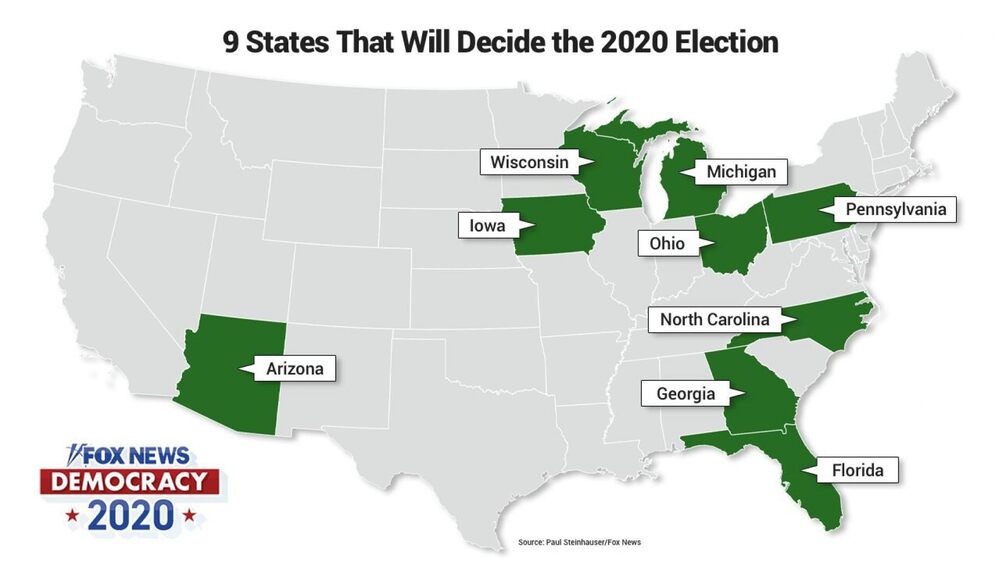
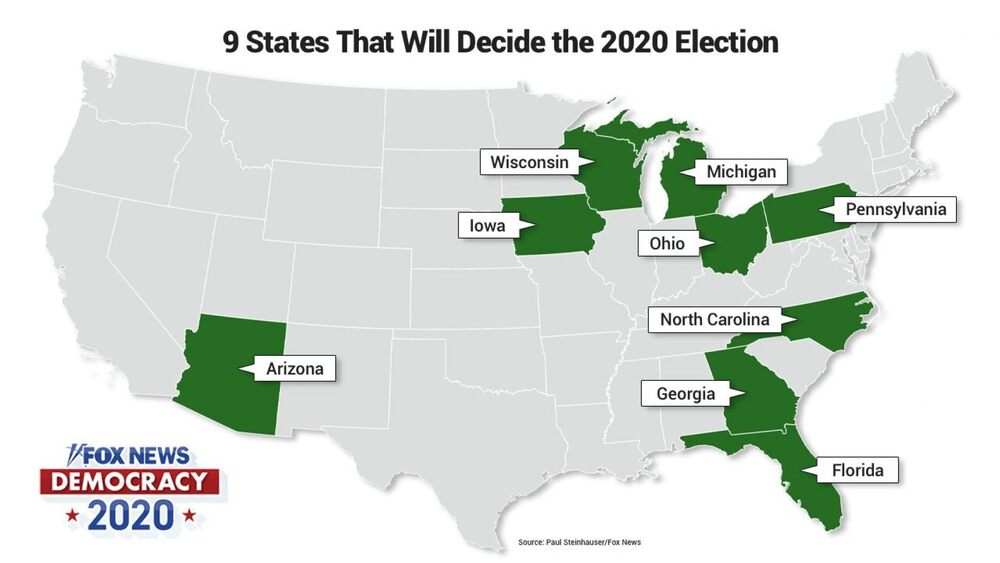
Below is a look at the nine states that will likely decide who wins the US presidential election.
Florida
With 29 electoral votes up for grabs, Florida is the largest of the traditional battlegrounds.
Twenty years ago, it was the state that decided the presidential election between then-Texas governor George W. Bush and Vice President Al Gore. President Bush won the state by five points in his 2004 reelection.
President Barack Obama carried the state by razor-thin margins in both 2008 and 2012. Then, four years ago, Trump narrowly edged out 2016 Democratic nominee Hillary Clinton.
An average of the most recent polling in the state shows Biden holding a slight lower-single-digit lead over the president. An average of the most recent public opinion polls indicates Biden with a slight lower single digit edge over Trump. Both of the standard bearers and their running mates have campaigned in the state in recent days or will return later this week.
Biden – during his most recent stop last week in the Sunshine State – highlighted to supporters that “Here in Florida you can determine the outcome of this election. We win Florida and it’s all over.”
Arizona
Arizona has long backed Republicans in presidential elections.
President Bill Clinton in 1996 was the only Democratic candidate to win the state since 1952. But Trump carried the state by just 3 points four years ago. An average of the most recent public opinion polls in Arizona indicates Biden with a lower single digit advantage over the president in the battle for the state’s 11 electoral votes.
As with Florida, the president’s handling of the coronavirus pandemic appears to be doing him no favors with the state’s crucial senior voters.
North Carolina
North Carolina’s seeing plenty of candidate traffic, and its airwaves are being flooded with ads.
Then-Democratic presidential nominee Senator Barack Obama carried the state in 2008 by a razor-thin margin over Senator John McCain. Four years later, Republican nominee Mitt Romney won the state’s 15 electoral votes by roughly 2 percentage points over President Obama.
Polls on the eve of the 2016 presidential election indicated Trump with a 0.8 percent edge over Democratic nominee Hillary Clinton. Trump ended up winning the state by 3.6 points.
Fast forward four years and Biden currently has a lower-single-digit edge over the president in an average of the most recent polls.
Pennsylvania
Four years ago Trump became the first Republican presidential nominee to win Pennsylvania since George H.W. Bush in 1988. Trump carried the state by less than 1 percent over Clinton, to capture Pennsylvania’s 20 electoral votes.
But the Biden campaign has heavily concentrated on Pennsylvania, which is the former vice president’s native state. And during his nearly four decades in the Senate representing Delaware, Biden was known as Pennsylvania’s third senator.
An average of the most recent public opinion polls in Pennsylvania indicates Biden with a mid-single-digit advantage over the president.
Wisconsin
Like Pennsylvania, Trump in 2016 broke the Democrats' quarter-century winning streak in Wisconsin with a narrow victory over Clinton.
But as is the case in Pennsylvania, Trump is underperforming with key constituencies, including suburban voters. Also working against the president – the coronavirus – which has hit Wisconsin particularly hard.
An average of the most recent public opinion polls in Wisconsin indicates Biden with a mid-single-digit advantage over the president in the battle for the state’s 10 electoral votes.
Ohio
Ohio has long played a crucial role in presidential elections. It was the state that famously put President George W. Bush over the top in 2004, as he won a second term in the White House.
Obama narrowly carried the state in 2008 and 2012. Four years ago, it appeared it would be another close contest, with an average of the polls on the eve of the election indicating Trump narrowly ahead of Clinton. But Trump ended up swamping Clinton by eight points, flipping the state from blue to red and winning Ohio’s 18 electoral votes.
Trump’s margin of victory was the largest by any presidential candidate in nearly three decades. Fast forward four years and Ohio – at the beginning of this presidential cycle – wasn’t expected to be a battleground.
But the race has tightened and both campaigns are heavily investing in the Buckeye State. An average of the latest polls indicates the race is basically all tied up in Ohio.
Iowa
Obama carried Iowa by six points in the 2012 election, but Trump flipped the Hawkeye State four years ago, topping Clinton by nine points, even though the final surveys suggested a much closer margin.
As with Ohio, it wasn't on the battleground radar a year ago.
But Iowa's very much in the spotlight now, with an average of the latest public opinion surveys in the state indicateing Biden with a slight lower-single-digit edge.
Georgia
Southerner Bill Clinton in 1992 was the last Democrat to carry Georgia in a presidential election.
Long a red state, Georgia tightened in the 2016 election, when Trump captured the state’s 16 electoral votes by just 5 points. The president, apparently playing some defense, held a rally in the state late last week.
An average of the last public opinion surveys in Georgia suggests Biden with a razor-thin lower-single-digit edge.
Michigan
Democrats carried Michigan for a quarter century in presidential elections until Trump won the state by a tight margin four years ago.
But the president's support among White working-class voters doesn't appear to be matching the 2016 levels and Black turnout, which was down four years ago, appears to be re-energized.
An average of the most recent public opinion polls in Michigan indicates Biden with an upper-single-digit lead over the president in the battle for the state's 16 electoral votes.-Fox News