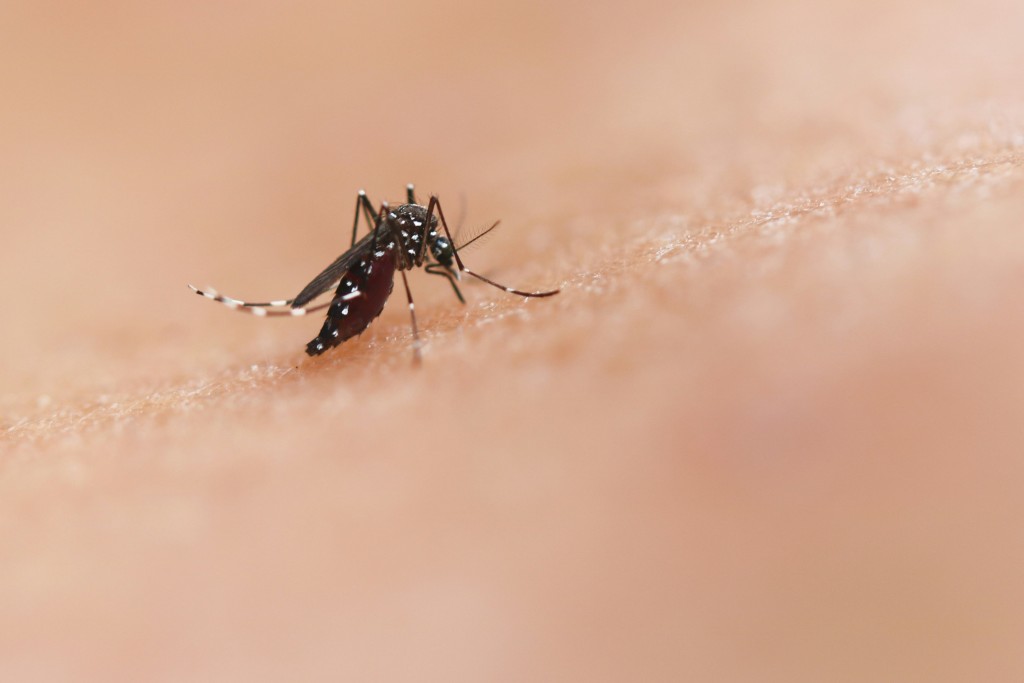
As summer rains increase, conditions become favorable for mosquito breeding. The Food and Environmental Hygiene Department (FEHD) announced on June 9 the latest batch of ovitrap indices for Aedes albopictus for the first half of June, covering 10 surveillance areas. Notably, the ovitrap index in Fanling South reached 31.8%, indicating extremely widespread distribution of Aedes albopictus. Additionally, indices in areas such as Tai Po West, Ho Man Tin, Wong Tai Sin East, Yau Tong, and Cha Kwo Ling were above 10%. Beyond common remedies like applying saliva or scratching with fingernails in a cross pattern, a Harvard doctor teaches one simple action to relieve mosquito bite itching – with results in as little as 2 seconds.
According to foreign media Mirror, Dr. Trisha Pasricha, a practicing physician and author who graduated from Harvard Medical School, points out that most people are told "don't scratch" when bitten by a mosquito, because constant scratching triggers inflammation and makes the situation a hundred times worse. She proposes an extremely simple method to stop the itching:
The 1-Action Method to Stop Mosquito Bite Itching:
- Method: Extend two fingers and gently, repeatedly rub the mosquito bite area.
She personally demonstrated that within just a few seconds, the itching miraculously and quickly subsides, without causing skin inflammation or damage. After the instructional video was posted, it immediately sparked heated discussion online. Numerous netizens suffering from insect bites exclaimed in comments: "I've spent most of my life scratching crazily around bites. I had no idea just rubbing for 2 seconds would work!" Another netizen tested it and reported back: "Sometimes I unconsciously rub to avoid scratching, and now I know it's actually effective!"
This seemingly simple action has a solid scientific basis. Pasricha cited recent research from the University of Miami Miller School of Medicine, explaining that after a mosquito bite, nerve fibers in the skin are activated in an uneven, patchy pattern. The strong itching sensation is caused precisely by this contrast – where some nerve fibers are stimulated while surrounding fibers are not. Based on this medical principle, when we gently rub the affected area and its surroundings with our fingers, we generate a strong counter-signal. This counter-signal effectively suppresses the discomfort and fundamentally blocks the itch sensation from being transmitted to the brain.
Pasricha added that the most remarkable aspect of this technique is that you don't need to rub the exact center of the bite. Rubbing near the bite, within the same dermatome (skin segment supplied by a single spinal nerve), is sufficient. Moreover, she believes this method can also effectively soothe itching caused by eczema.
Source: Mirror