Read More
Nearly 30% of Hong Kong's population suffers from high blood pressure, which is also known as the "silent killer" because it often has no obvious symptoms in its early stages. A traditional Chinese medicine (TCM) practitioner notes that patients often experience symptoms such as neck tightness and headaches. In addition to consistent medication and lifestyle adjustments, daily acupressure on 6 key points can also help stabilize blood pressure and alleviate discomforts like headaches.
ADVERTISEMENT
SCROLL TO CONTINUE WITH CONTENT
TCM practitioner Dr. Wong Chin-shui shared on his personal webpage that most high blood pressure patients have no obvious symptoms initially. Over time, symptoms may include tightness, soreness, or pain in the back of the neck, headaches, dizziness, and in severe cases, even nausea, vomiting, convulsions, or coma. The American Heart Association sets the blood pressure standard at 130/80 mmHg, aiming to remind patients to detect and treat it early. Wong explains that long-term high blood pressure can cause blood vessels to rupture under excessive pressure, or cause tissue from the vessel walls to flake off and block blood vessels, leading to fatal complications such as:
- Myocardial infarction (heart attack)
- Stroke (cerebrovascular accident)
- Decline in kidney function
- Retinopathy or even blindness
Wong explains that TCM does not have the disease name "high blood pressure." Its symptoms are categorized under "dizziness," "headache," "liver wind," etc. The root cause in TCM is an "imbalance of liver and kidney yin and yang," while the manifestations involve "wind, fire, phlegm, and stasis." Common clinical patterns include liver yang hyperactivity and yin deficiency with yang hyperactivity.
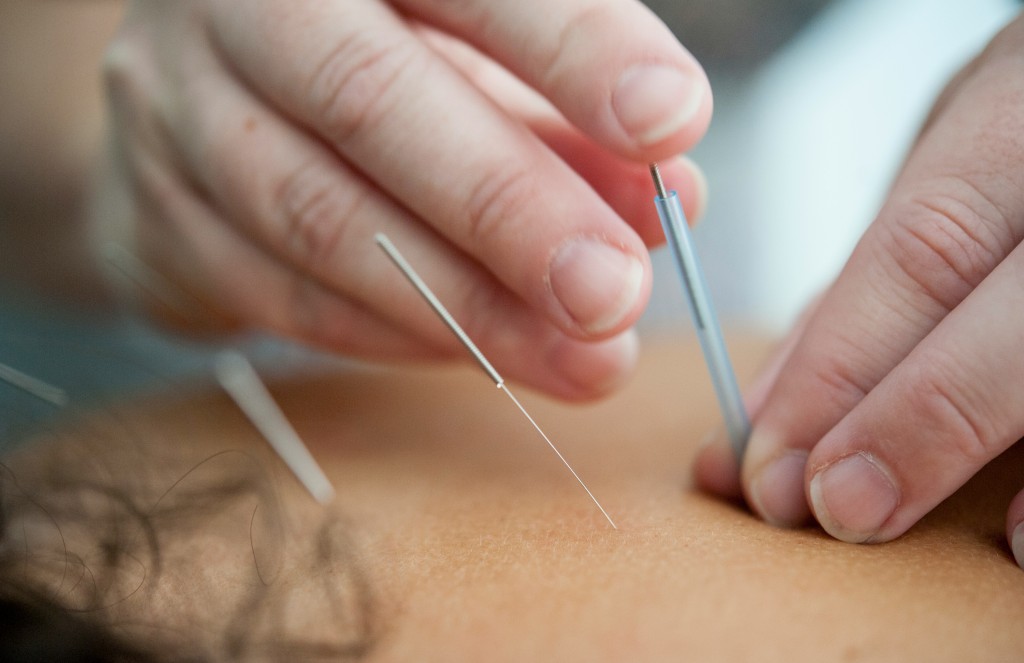
6 Major Pressure-Lowering Acupoints and Massage Techniques
High blood pressure patients often have the problem of qi and blood accumulating abnormally in the upper body. By massaging the head, ears, and lower extremities at "6 major pressure-lowering acupoints," it guides qi and blood to flow downward, thereby alleviating the discomforts of high blood pressure.
1. Baihui (DU20)
- Location: At the top of the head, at the midpoint of the line connecting the apexes of both ears and the line from between the eyebrows.
- Method: Massage with the pads of both index fingers, applying focused pressure on the point.
- Effect: Promotes blood circulation in the head, relieves head fullness and headache.
2. Fengchi (GB20)
- Location: At the nape of the neck, in the depression between the trapezius muscle and the sternocleidomastoid muscle, at the level of the hairline.
- Method: Press both points simultaneously with the pads of both index fingers.
- Effect: Promotes blood circulation in the head, relieves head fullness and headache.
3. Jiangyagou (Pressure-Lowering Groove)
- Location: On the back of the ear, a groove running from top to bottom.
- Method: Press along the groove from top to bottom with fingertips, or apply a row of ear seeds.
- Effect: Promotes blood circulation in the head, relieves head fullness and headache.
4. Luolingwu (Luoling Five)
- Location: On the dorsum of the hand, in the depression about 0.5 cun proximal to the base of the second and third metacarpophalangeal joints, towards the wrist.
- Method: Press lightly with fingertip or finger pad for 3-5 minutes each time.
- Effect: Improves blood circulation in the head, relieves head fullness and headache.
5. Yanglingquan (GB34)
- Location: On the lateral aspect of the lower leg, in the depression anterior and inferior to the head of the fibula.
- Method: Press lightly with fingertip or finger pad for 3-5 minutes each time.
- Effect: Improves blood circulation in the head, relieves head fullness and headache.
6. Taichong (LR3)
- Location: On the dorsum of the foot, in the depression distal to the junction of the first and second metatarsal bones, about 2 cun proximal to the margin of the web.
- Method: Press lightly with fingertip or finger pad for 3-5 minutes each time.
- Effect: Improves blood circulation in the head, relieves head fullness and headache.
What is Hypertension / Prehypertension?
According to the Hong Kong Population Health Survey 2020-22, 29.5% of the non-institutionalized population aged 15-84 in Hong Kong has hypertension. The average daily salt intake for people aged 15-84 is 8.4g, which is 168% of the WHO's recommended total daily salt intake. According to the Hong Kong Department of Health, if blood pressure rises and remains persistently high, it may lead to serious health problems like stroke, coronary heart disease, heart failure, chronic kidney disease, and even premature death.
- Hypertension: When an adult's systolic blood pressure is consistently 140 mmHg or higher, or diastolic blood pressure is consistently 90 mmHg or higher.
- Prehypertension: When systolic blood pressure is between 120 and 139 mmHg, or diastolic blood pressure is between 80 and 89 mmHg. Extra attention should be paid in this case.
What Causes Hypertension?
- The cause of hypertension is unknown in about 90% of individuals. This type is called "primary" or "essential hypertension," and its cause may be related to heredity. "Primary hypertension" typically appears after middle age.
- The remaining 10% of individuals may have hypertension caused by other diseases, such as kidney disease or endocrine disorders. This type is called "secondary hypertension."
What are the Complications of Hypertension?
Having hypertension without proper treatment or control can lead to severe or even fatal consequences, including:
- Coronary heart disease and heart attack
- Heart failure
- Stroke
- Retinopathy (damage to blood vessels in the retina)
- Kidney failure