Read More




Hong Kong shares rise at open
58 mins ago





Mother and daughter die in successive falls from same Tai Koo Shing block
11-06-2026 00:05 HKT

100 y/o biologist David Attenborough shares 4 longevity habits
07-06-2026 12:00 HKT
Consider this: emissions of greenhous gases - GHGs - related to AI are predicted to soar more than tenfold between now and the end of this decade, from 68 million to 718 million tonnes of carbon dioxide equivalent, according to Accenture.
Big Tech is well aware of the growing pressure to use clean energy and cut emissions and is now tapping into nuclear power, despite public fear over the disposal of nuclear waste and the risks of radioactive leaks.
POWER HUNGRY
GenAI tools are being increasingly used the world over, and developers are rolling out more and more computing-hungry visual processing while slashing prices in the battle for market dominance.OpenAI's ChatGPT from the United States had over a million paid business users in September, while ByteDance's Doubao from China saw its daily use jump thirty-threefold to 4 trillion tokens from July to mid-December.
But GenAI consumes considerable electricity and thus emits even more CO2. If a user asks an AI large language model to generate a picture 1,000 times, the most inefficient model consumes 11.49 kilo Watts per hour - as much as 950 smartphone charges on average, a study by HuggingFace and Carnegie Mellon University shows.These 1,000 tasks are estimated to generate 1,594 grams of CO2, roughly the equivalent of 6.6 kilometers driven by a petrol-powered car.
Data on the cloud also costs energy.A 1-gigabyte video stored in the cloud for a year will consume 65.7 kWh which produces 15.3kg of CO2e, only 11 percent less than the 17.2 kg CO2e generated by a petrol car over 100 km, according to researchers at Loughborough University in the UK.
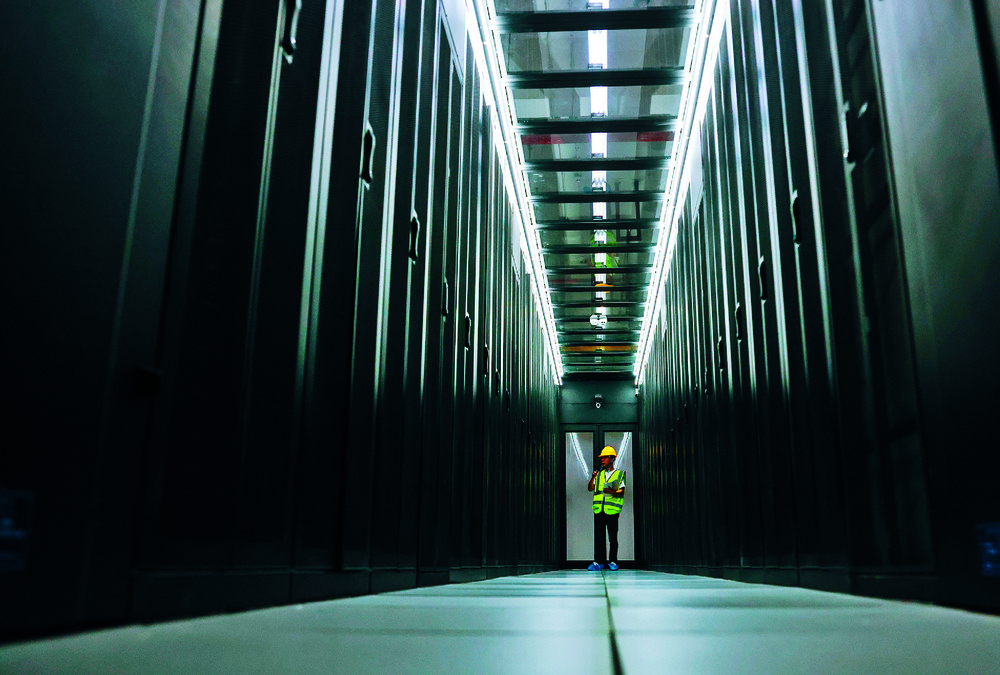
This makes it harder for global tech firms to eliminate their carbon footprint, as they already need to use nearly 1,300MW hours of power to train an LLM like GPT-3, about as much electricity as consumed by 130 homes in the US per year.Data centres and data networks each account for about 1-1.5 percent of global power usage and are responsible for 1 percent of energy-related GHGs, the International Energy Agency says.
As tech giants accelerate the applications of AI, the industry is expected to use up to 3.5 percent of the world's electricity by 2030, equivalent to the current consumption of Japan, the world's fifth largest electricity user, says IT consultant Gartner.Notably, the surging demand from AI firms for electricity has delayed the retirement of coal and gas-fired power plants in the US, with the number of those phased out declining 45 percent year-on-year in the first half of the year, data from the US Energy Information Agency shows.
China, though, is ahead of the game in this aspect, thanks to a decades-long push for renewable energy. Green power now accounts for over a third of all electricity generated and tech giants like Tencent (0700) have built new data centers in western China where wind and solar energy are abundant.CLEAN INVESTMENTS
Nevertheless, to stay committed to their net zero goals, Big Tech is now turning to clean nuclear energy.Google, whose GHG emissions surged by 48 percent during four years to 14.3 million tonnes in 2023, has signed its first nuclear deal with Kairos Power to buy 500MW of clean electricity for its growing data center businesses, following similar moves by Microsoft and Amazon.
Facebook-owned Meta is searching for nuclear power providers to acquire an additional 4GW of electricity in the US before 2030.Nuclear power has also got the attention of bankers, with 14 international financial institutions including Goldman Sachs teaming up to support nuclear power construction.
Meanwhile, investors are betting on nuclear energy providers, pumping their shares up.In the US, NuScale Power, a small modular reactor or SMR developer, has skyrocketed 520 percent and Oklo, a nuclear startup backed by OpenAI chief executive Sam Altman has jumped 115 percent this year.
In Hong Kong, CGN Power (1816), part of the state-owned China General Nuclear Power Group and the world's second-largest nuclear energy firm - has risen about 36 percent this year.But CNNC International (2302), the overseas arm of state-owned China National Nuclear Corporation, the major developer and landlord of nuclear power plants in the mainland, has plunged 23.5 percent this year.
BOC International projects electricity will remain a market focus next year, supported by a rare global consensus.But instead of power plants, BOC International is betting on firms that produce uranium - the fuel for nuclear plants - with CGN Mining (1164) its top pick.
Though CGN Mining is down 5 percent this year, the bank expects it to hit HK$2.1 apiece, indicating a 28 percent gain from the current price of HK$1.64.Morgan Stanley has a buy rating for CGN Power, citing easing concerns about slower decreases in electricity prices in the short run and raised the target to HK$3.69 apiece, 31 percent higher than its price of HK$2.81.
BOC International set its target at HK$3.2 per share.Meanwhile, small modular reactors have gained investments from Google, Amazon and Oracle due to their smaller size and lower electric consumption.
But despite NuScale's rally, concerns remain about high generation costs and its wave of layoffs.Some governments are also in nuclear mode, while others won't touch it with a barge pole.
China recently completed construction of the world's first commercial SMR and wants to explore elusive nuclear fusion - the holy grail of energy - while Russia, Japan, South Korea and Thailand are also looking at building SMRs.Besides, Japan plans to restart most of its existing reactors to meet surging AI demand, despite regulatory hurdles and public opposition amid the ongoing clean-up of the Fukushima plant, which melted down 13 years ago after being hit by a massive tsunami - the second worst disaster, after Chernobyl in 1986, in nuclear power history.
But Germany and Taiwan have banned and phased out nuclear energy.CARBON TRADE
In the meantime, AI players have other options on hand.Carbon credits or offsets allow owners to emit a certain amount of CO2 or other GHGs by buying certificates linked to projects that reduce GHG emissions.
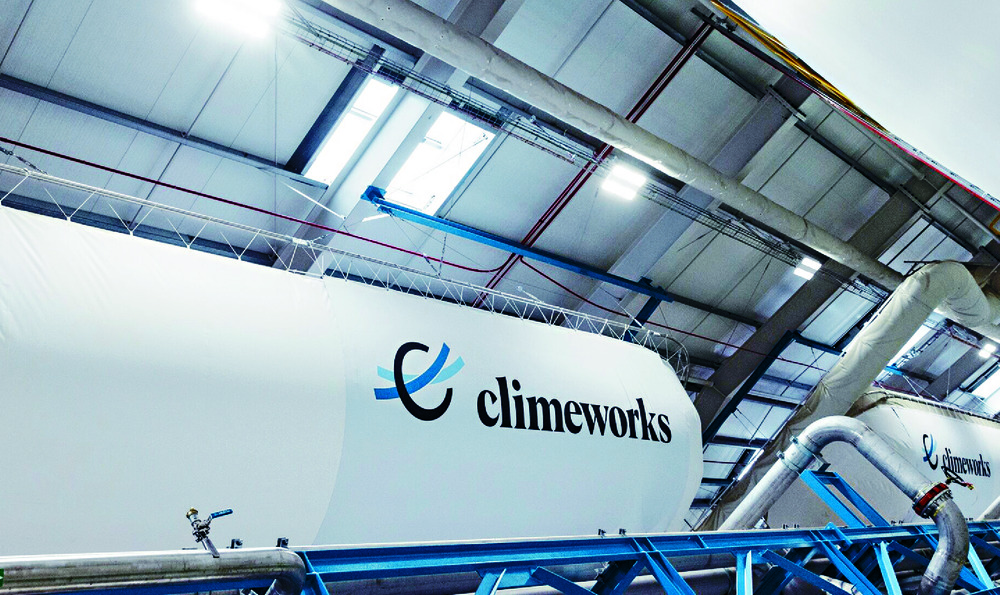
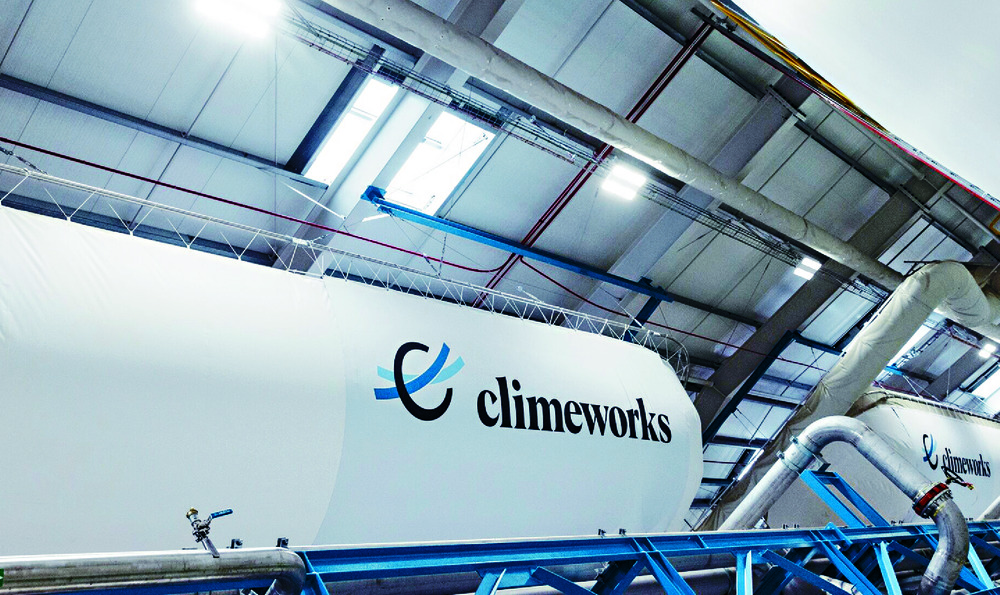
One such option is direct air capture, in which CO2 in the air is removed by chemical sorbents or filtered and later stored or used. But DAC costs are high, varying from US$600 to US$1,000 per tonne of CO2.PwC expects carbon credits would be further tokenized on the estimated adoption of US$16 trillion worth of assets, while Morgan Stanley believes voluntary carbon offsets will swell 49 times to US$100 billion between 2023 and 2030.
But carbon trading is also controversial, with Greenpeace alleging that some offset projects indulge in double-counting amid a lack of standards and regulations.To tackle surging AI emissions, the International Monetary Fund advocates imposing an electricity tax on AI firms of US$0.032 per kWh or US$0.052 including air pollution costs, which could raise as much as US$18 billion a year.
The IMF also wants governments to coordinate over carbon prices to avoid AI firms relocating to places with lower standards.Experts say AI can has the potential to mitigate 5-10 percent of all GHG emissions by 2030 as its technology advances, but it's too early to tell if nuclear energy will be the magic bullet that hits the bull's eye between performance and emissions.
Still, with the right investment and amid growing AI demand, it just might.