Read More


HK braces for natural gas shortage
02-04-2026 08:00 HKT
In less than a decade from now, Hong Kong's well heeled may be able to do a weekend jaunt to New York in a mere four hours while flying at five times the speed of sound.
And boast that they did it without harming the planet.
That is, if all goes to plan for European startup Destinus, which has entered the race to revive supersonic travel alongside leading contender Boom Supersonic, Venus Aerospace and Spike Aerospace among others.
Commercial travel at speeds of more than Mach 1 has been off the table for two decades since the legendary Concorde flew into the sunset in 2003, but these companies and their investors are pressing ahead to bring supersonic travel back to the world by the 2030s, though none of their planes have even been built.
Hypersonic hope
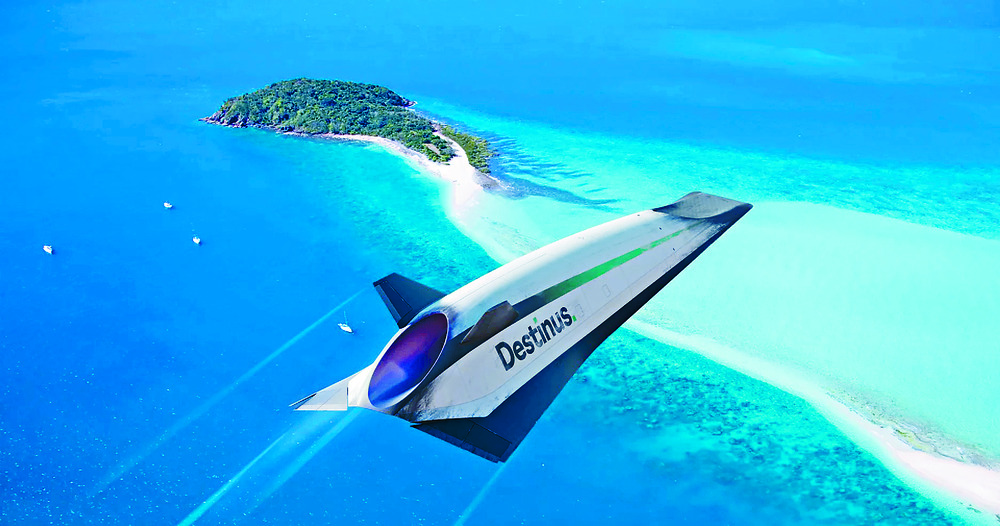
Destinus says its hypersonic jet that will travel at Mach 5 or five times the speed of sound. And as it is fueled by hydrogen, it will not generate any emissions in line with the aviation industry's goal of net-zero emissions by 2050.
However, it will be at least seven years before the first commercial prototype takes to the skies.
And the operating cost would be comparable to business jet, should hydrogen prices drop by 25-50 percent.
"We want to develop something to fly faster and greener while most companies only want to be greener but to fly at normal speeds," says Phillip Silva, a cryogenic systems engineer at Destinus who is heading the construction of its hydrogen laboratories in Switzerland and in Spain.
The global aviation industry produces around 2.1 percent of carbon dioxide emissions and the International Air Transport Association has pledged to reach net zero flying by 2050 which will be largely achieved by the use of sustainable aviation fuel or SAF - a type of jet fuel made from biomass such as waste vegetable oil and animal fat, which can curb CO2 emissions by up to 80 percent.
While SAF makes up less than 0.1 percent of aviation fuel and is four times costlier than conventional jet fuel, the European Union will require airlines to fill their jets with at least 2 percent SAF by 2025.
Closer to home, The Hong Kong and China Gas Company (0003) is pressing ahead with the expansion of its biofuel venture EcoCeres, which produced 40,000 tonnes of SAF at its plant in the mainland last year.
One of Asia's largest green jet fuel producers, EcoCeres is now building a plant in Malaysia which will boost its total capacity of 650,000 tonnes and is looking to expand into the US and the Middle East, and also open offices in Switzerland and Singapore.
And though Hong Kong does not have any plans as yet for hydrogen in aviation, last Friday the government gave the green light for two more hydrogen trials to generate electricity -- one for a construction site in Lok Ma Chau for China State Construction Engineering (Hong Kong), and the other for Towngas, to charge electric vehicles at a site in Sai Kung.
Meanwhile, Citybus's first hydrogen fuel cell double decker bus will arrive in Hong Kong this month and trials could commence within the year.
Prototype on test
The Destinus 3, a liquid hydrogen-powered supersonic unmanned prototype, is expected to start subsonic and supersonic test flights next year. The startup's commercial jet would carry 28 passengers but eventually larger ones would accommodate as many as 280 passengers.
Though it's early days, Destinus is in talks with four airports - three of medium size and one international.
Silva says most international airports do not want their operations to be affected by hydrogen application studies but he adds that it would not be difficult to install hydrogen fueling facilities and only slight modifications would be necessary.
While Hong Kong is yet to introduce hydrogen in aviation, the UK plans to start zero carbon emission flights at small airports in 2025 which will be powered by gaseous hydrogen delivered by truck and liquid hydrogen for longer routes. These flights will gradually be scaled up to meet the government's net zero target by 2040.
Ultimately, new infrastructure including pipelines, liquefaction, storage and upgraded delivery to aircraft will be built at larger airports including Heathrow, one of the world's busiest airports.
In France, Toulouse-Blagnac Airport already has hydrogen filling stations while Group ADP, the operator of the three main Paris airports, has a plan to turn these airports into "hydrogen hubs." Copenhagen Airports in Denmark and Groningen Airport Eelde in the Netherlands are also looking at producing clean hydrogen.
"A hydrogen valley could be realized at many airports, where facilities of production and storage of hydrogen are available," says Silva.
Cost considerations
While liquid hydrogen is safer than gas, its production and transportation costs remain high, especially for green hydrogen, which is made from renewable energy in an emission-free process known as electrolysis.
Green hydrogen now costs US$4-6 per kilogram (HK$31.2-46.8), two to three times more than gray hydrogen made from natural gas, which does not capture CO2 emissions. Some expect green hydrogen could drop to US$0.5-1 by as early as 2030 while others find that unrealistic.
If the cost of hydrogen falls below US$3, then the operating cost would be comparable to business jets, says Silva, adding that Destinus will seek to buy green hydrogen from the Middle East, North Africa and Asia.
Equipping an airport with standard hydrogen infrastructure would cost US$20-25 million while the minimum cost for accommodating a Destinus prototype would be US$100 million, he says.
The Switzerland-based Destinus was founded in 2021 by Russian entrepreneur Mikhail Kokorich and has both European and American investors.
The Destinus hyperplane is expected to cost US$1 billion to develop, but it has a long way to go in terms of funding. It has so far raised US$40 million from venture capital and received US$10 million in research grants from the Spanish government, which wants to make the country a hydrogen energy hub.
Other contenders
Meanwhile other players are pressing ahead with ambitious plans as well.
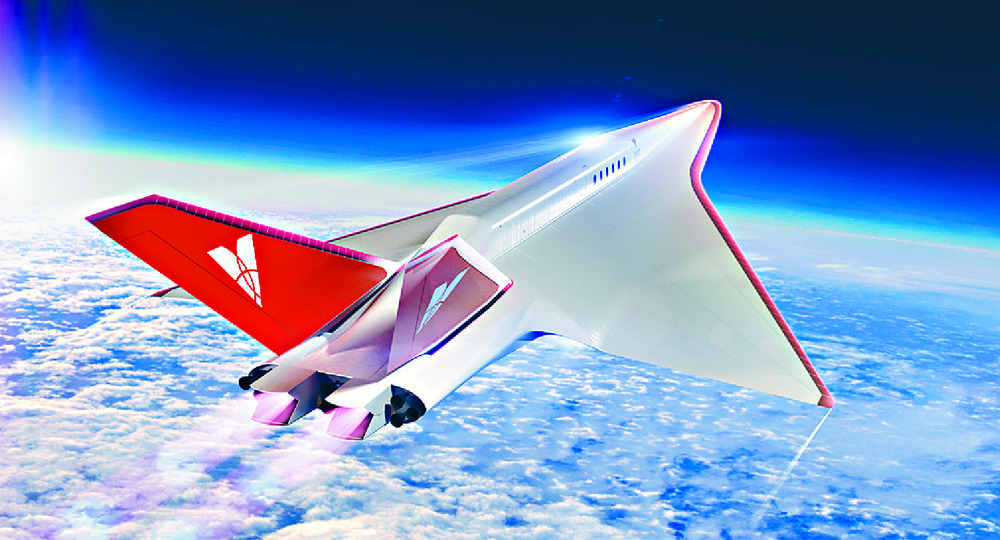
The US-based Venus Aerospace plans to build a 12-passenger business jet called The Stargazer that will travel at Mach 9 - nine times the speed of sound - at nearly 7,000 miles per hour and at a height of 170,000 feet.
Hypersonic testing on a small drone is expected to start shortly but no time line has been released.
The US based Spike Aerospace says it is now accepting reservations for its US$100 million S-512 supersonic business jet which will accommodate 12-18 passengers and fly at Mach 1.7. Again, no time line has been released.
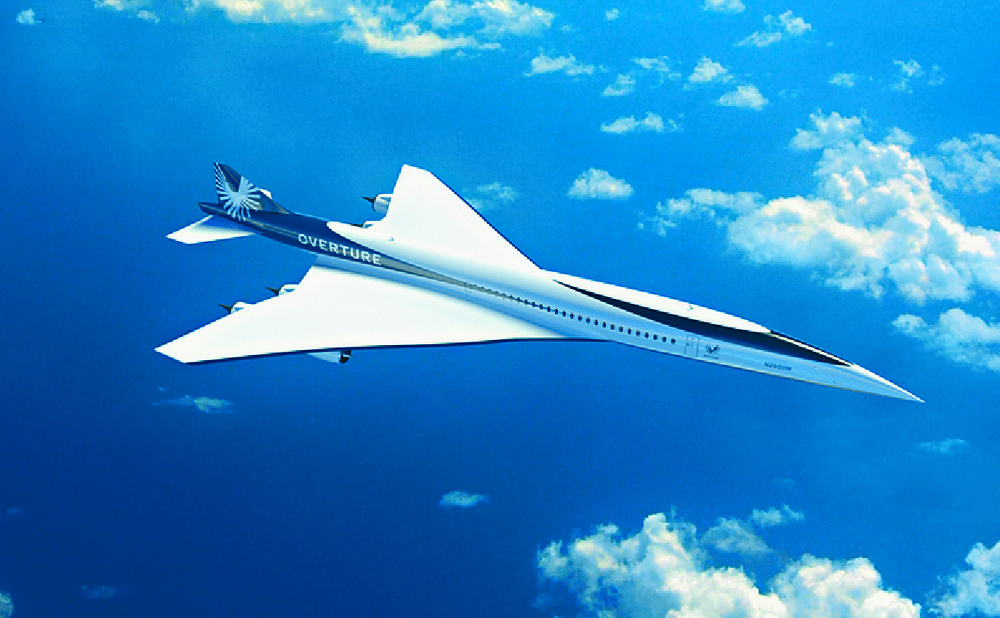
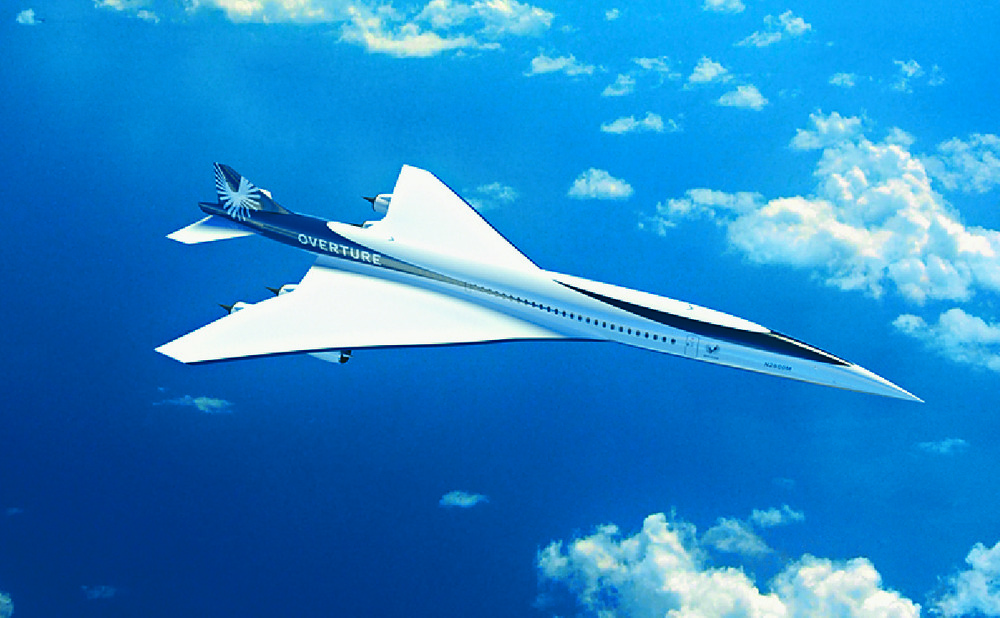
The best bet for the supersonic jet set for now would seem to be the Denver-based Boom Supersonic's Overture, which is designed to carry between 64 and 80 passengers at a speed of Mach 1.7 and an altitude of 60,000 ft, with engines that run on sustainable aircraft fuel.
United Airlines, American Airlines and Japan Airlines have placed with a total of 130 orders for the jet, of which 35 come with non-refundable deposits.
Boom is targeting a first flight in 2027 and certification of the aircraft in 2029 with the first flight taking to the skies that year.
But the return to supersonic travel has proven harder than expected: last year front-runner Aerion suddenly closed it doors with the US supersonic jet developer saying it had run out of funds to bring its AS2 jet to market, despite having won more then US$11 billion worth of orders for the 10-passenger jet.
So for now, jet setters will have to be content with flying below the speed of sound, and perhaps fork out more for a seat at the sharp end of the plane to take the edge off that 16-hour-marathon from Hong Kong to New York.