Traditional Swiss wrestling, known as "schwingen" in German, has been a male preserve for centuries - the ultimate test of manhood for Alpine alpha males.
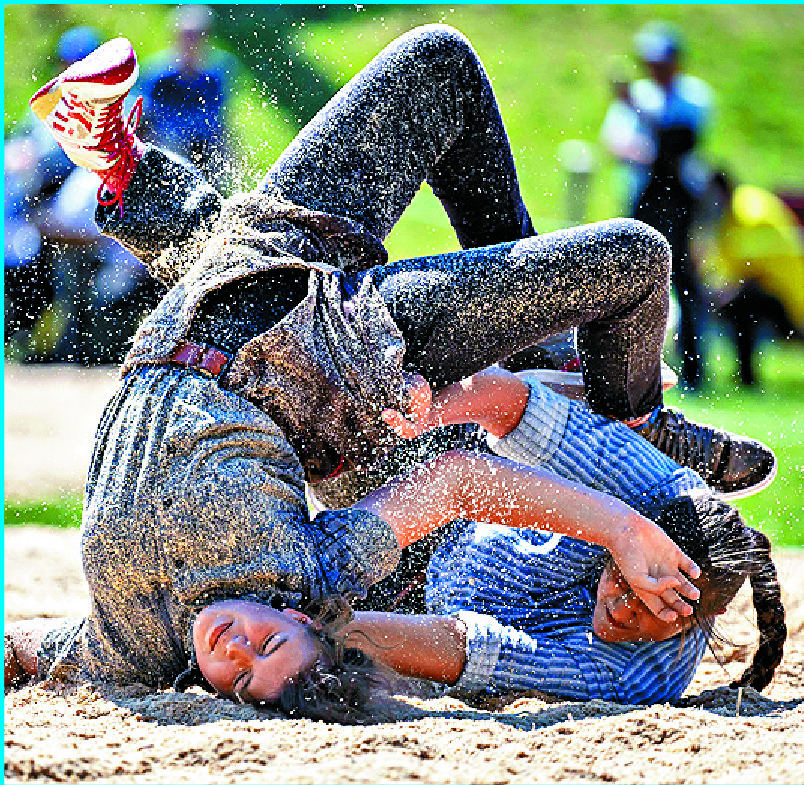
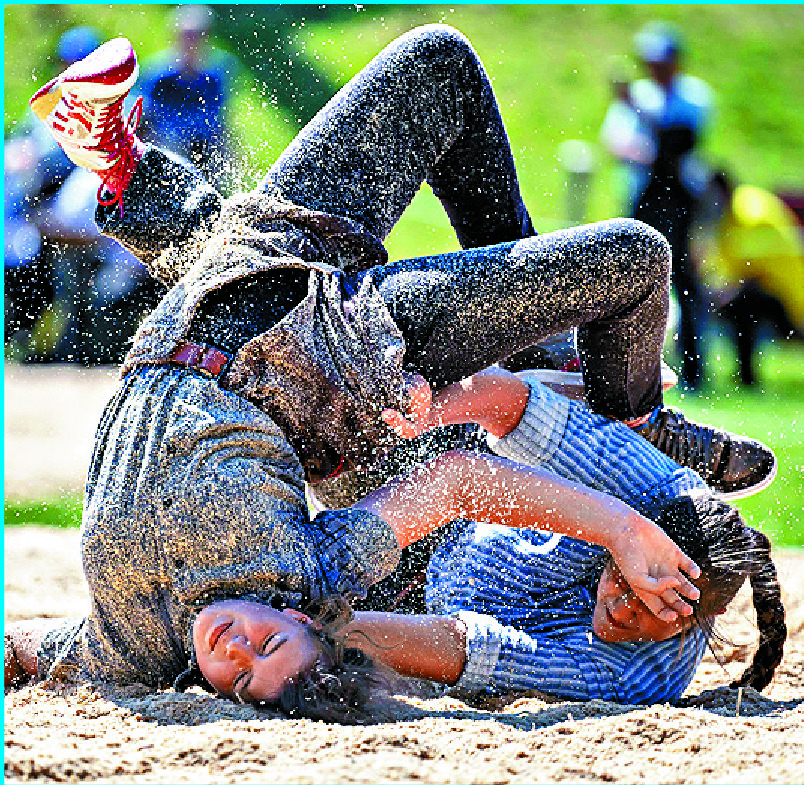
But a growing number of women are trying to muscle their way into Switzerland's top homegrown sport despite opposition from some men.
Schwingen pits two strapping wrestlers in baggy-belted breeches against each other. To win, they must pin their opponent's shoulder blades to the ground in the sawdust ring, with one keeping one hand gripped to the other wrestler's shorts.
While around 6,000 men are registered with schwingen clubs, only 200 women and girls are formally involved in the sport, which is also known as "hosenlupf" or "breeches lifting."
Faced with entrenched male opposition, the women created their own federation in 1992 and went their own way. But such is the level of overlap - with men and women using the same judges and venues - some feel a merger is only a matter of time.
Anne Cardinaux, head of the organizing committee of the Romandy wrestling festival in the hills above Lausanne, said that women wrestlers "are still not accepted among the men, not in the same federation.
"But they'll try to get there one day."
The national festival takes place every three years and draws crowds of more than 50,000, with the winner crowned the "schwingerkonig" - the king of the schwingers.
And the prizes are similarly old school. The top one for men is typically a bull. At Romanel, in a gesture of equality, the women's champion won a pregnant heifer.
"Normally we have lesser prizes. Five years ago we won a jar of honey and everyone was happy," said competitor Franziska Ruch, president of the Federal Women's Wrestling Association.
Competitors face six opponents throughout the day.
The Romanel grand final saw Isabel Egli triumph after a long battle with her competitor. The 26-year-old nurse was lifted shoulder-high to applause, then submerged in a pile-on as her Steinhuserberg schwingen clubmates and children charged in.
Once reserved for men, Swiss wrestling is now seeing female participation. AFP