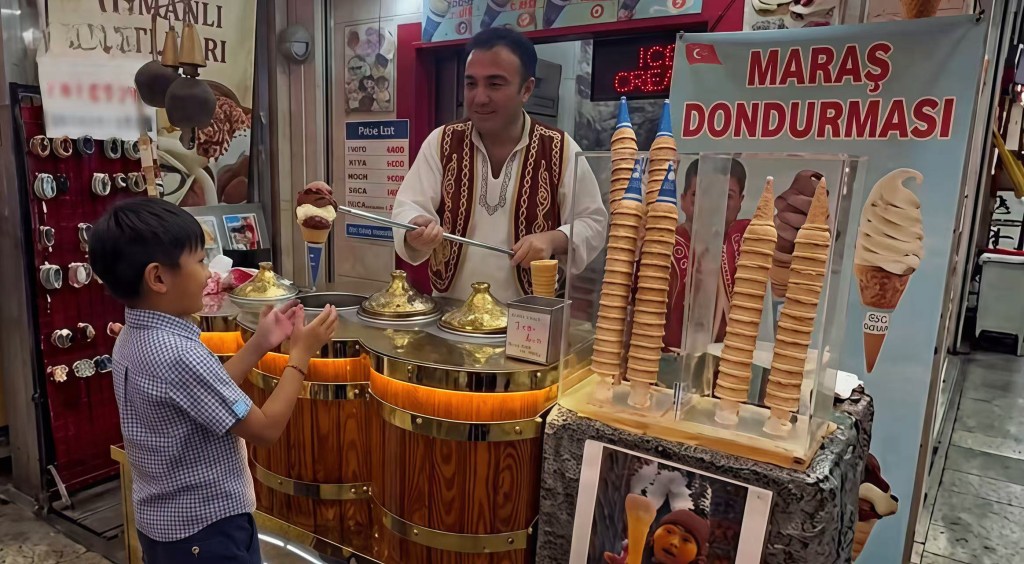
A Hong Kong boy who "outsmarted" a Turkish ice cream vendor's signature routine during a trip to Japan has become the focus of an online debate over the traditional performance.
A video shared by the boy's mother on social media showed the child grabbing the vendor's long metal rod and attempting to take the ice cream directly as the vendor was about to perform the traditional interactive routine, causing the performance to end abruptly.
The mother later praised her son's independent thinking, saying he had watched multiple videos of Turkish ice cream performances beforehand and planned how to "break" the routine. She said her son saw the performance as a way of being "tricked" and chose not to participate.
The incident drew mixed reactions online. Some criticized the boy's behavior as rude and said interrupting the performance showed disrespect for the cultural tradition. Others defended him, arguing that customers should not be expected to take part in an interactive performance when buying ice cream.
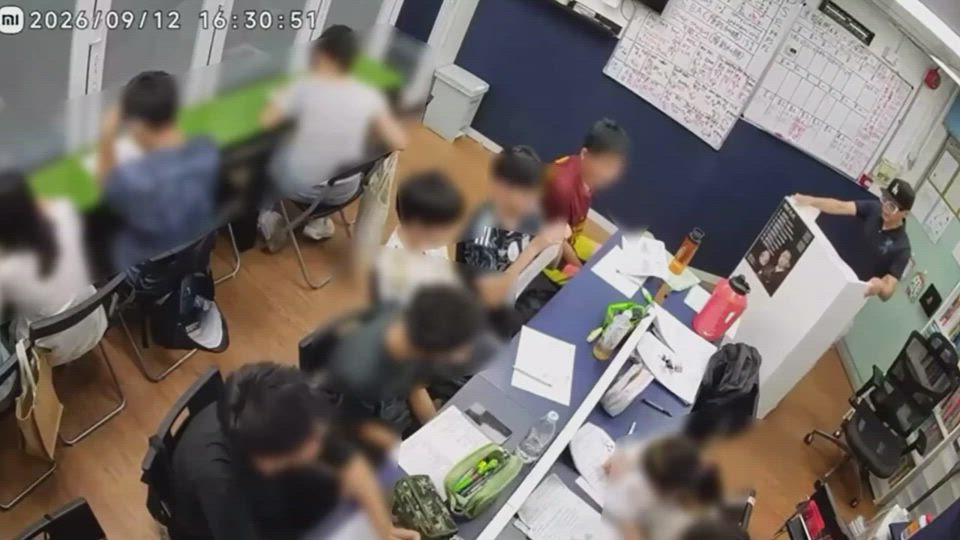
Sing Tao Probe, a sister publication of The Standard, found that Turkish ice cream has become increasingly rare in Hong Kong, with a local Turkish restaurant owner citing difficulties in hiring trained vendors and sourcing authentic ingredients.
Sum, owner of Hong Kong Turkish restaurant Turkeyano, said the routine was not about fooling customers but represented Turkish hospitality. He explained that the playful interaction is a cultural tradition in which vendors use performances to entertain customers before handing over the ice cream.
He added that customers who do not wish to participate can simply tell the vendor, while professional ice cream makers should be able to judge customers' willingness through their reactions.
Sum said Turkish ice cream once gained popularity in Hong Kong around 10 to 15 years ago but has since declined in popularity. He attributed this to the shortage of trained vendors, difficulties importing traditional ingredients, and high operating costs in the city. His restaurant also stopped selling Turkish ice cream after facing weak demand and challenges in obtaining work visas for Turkish ice cream vendors.