Hongkongers heading to Shenzhen for bargain-priced prescription glasses may end up paying the price in other ways, with an investigation uncovering concerns over counterfeit frames, misleading claims about branded lenses and inadequate eye examinations.
As northbound spending continues to grow, many people have been crossing the border to buy glasses at a fraction of Hong Kong prices. While some customers have praised the affordability, others have complained online about dizziness and blurred vision after wearing glasses bought on the mainland.
An investigation by Sing Tao Probe, a sister publication of The Standard, visited eyewear markets in Dongmen and Futian, two popular destinations for Hong Kong shoppers, and identified three potential pitfalls.
The first involved counterfeit designer frames. At one optical shop that claimed to be authorized by Zeiss and HOYA, staff admitted that branded frames, including Seiko and Charmant, were "1:1" replicas rather than genuine products. The salesperson said authentic frames were too expensive and that few customers were willing to buy them.
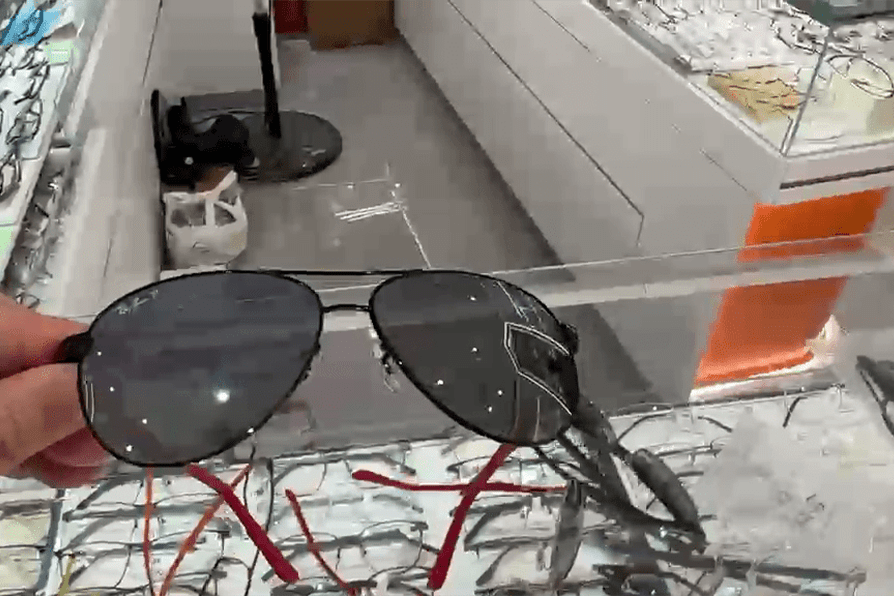
Ray-Ban sunglasses were also on sale from 280 yuan, well below the price of genuine products.
The second issue involved branded lenses. While locally made lenses were priced at less than 30 yuan, Zeiss lenses cost around 1,200 yuan. Staff initially described them as "German Zeiss" products and claimed they were authentic, but later acknowledged that the lenses were manufactured in China using German technology.
Responding to the findings, Zeiss Hong Kong said its vision care products are manufactured at multiple production sites worldwide and that it had not identified any widespread practice of Hong Kong optical shops sourcing lenses from mainland stores for resale.
The third concern centered on eye examinations. At one shop, the eyesight test took only about three minutes. Staff briefly presented a professional certificate issued by mainland authorities before putting it away.
According to publicly available information, holders of such certificates are generally qualified to measure a customer's prescription but are not licensed to carry out comprehensive eye health examinations.
The glasses purchased during the investigation were later examined by a Hong Kong optical shop. Although the prescription was accurate, the mainland shop had failed to measure the wearer's pupillary height, resulting in reduced visual clarity.
Registered Hong Kong optometrist Chan Man-ki said Hong Kong has required mandatory registration of optometrists since 1996. Most practicing optometrists are registered under Part I and undergo five years of university training, enabling them to detect eye diseases such as glaucoma and cataracts in addition to conducting vision tests.
She added that qualification requirements on the mainland vary, with optometrists in many optical shops primarily responsible for measuring prescriptions rather than carrying out detailed eye health assessments.