Scammers posing as struggling small food businesses on social media are luring Hongkongers into phishing scams by exploiting their willingness to support local entrepreneurs.
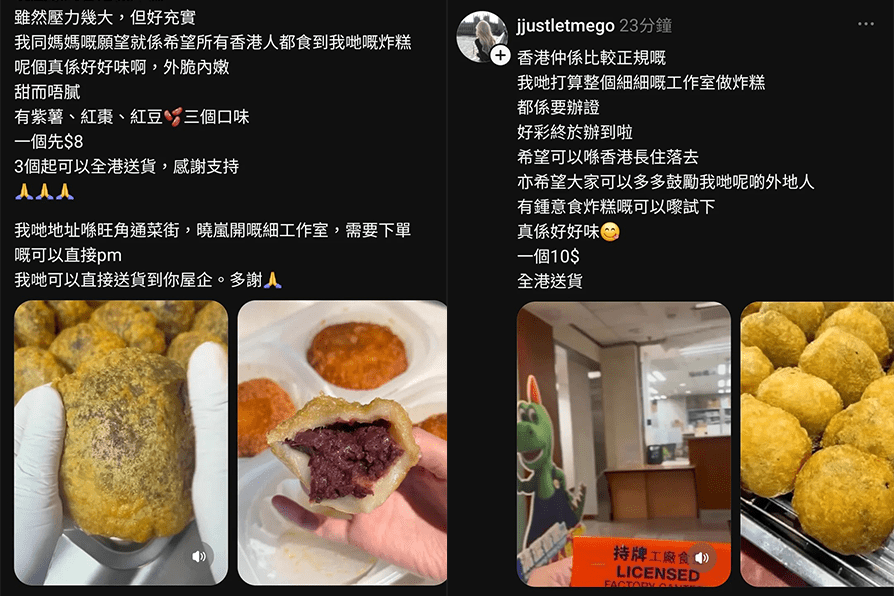
The fraudulent accounts, which have gone viral on social media in recent days, advertise handmade snacks ranging from fried rice cakes and nougat crackers to Basque cheesecakes and Dubai chocolate mochi. Each claims to be a newly established family-run business offering unusually low prices and free delivery across Hong Kong for purchases of just HK$30.
One of the most widely shared accounts claims to operate a fried rice cake shop in Mong Kok, telling followers: "We just came to Hong Kong to make fried rice cakes. Although life is stressful, it's very fulfilling. My mother's dream is for everyone in Hong Kong to try our fried rice cakes."
The posts feature glossy food photos and what appears to be a food factory license to convince customers that the business is legitimate.
However, online users soon questioned how the shop could afford territory-wide delivery for such a small order. Others who contacted the seller said it failed to provide a specific shop address despite claiming to be based on Tung Choi Street in Mong Kok.
Some netizens also found that the license shown in the posts belonged to a factory canteen at a different address in the New Territories, which is not authorized to sell directly to the public.
People who nearly fell victim to the scam said the seller eventually sent them a suspicious payment link that appeared to be from a delivery or e-commerce platform. Victims were then instructed to complete an "identity verification" process, during which someone claiming to be a customer service representative contacted them via LINE.
The callers allegedly asked buyers to transfer thousands of Hong Kong dollars through the Faster Payment System (FPS) as part of the verification process. Once the money was transferred, it could not be recovered.
Users who warned others in the comments that the accounts were scams said they were promptly blocked.
The same tactic has also been used to promote fake nougat cracker shops and Basque cheesecake businesses, with multiple accounts recycling identical sales pitches and food images to create the impression of popular local brands.
Netizens urged shoppers to stay vigilant when buying from unfamiliar social media sellers and avoid clicking suspicious payment links or transferring money for so-called identity verification.