Read More


Por Lo Shan hill fire erupts in Tuen Mun
2 hours ago







Lan Kwai Fong sees crowds ahead of Halloween
21 hours ago

Screen glitches and cracked displays plague Apple's iPhone Duo launch
24-10-2026 18:45 HKT

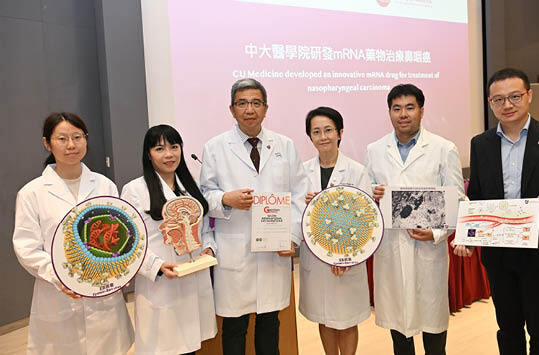
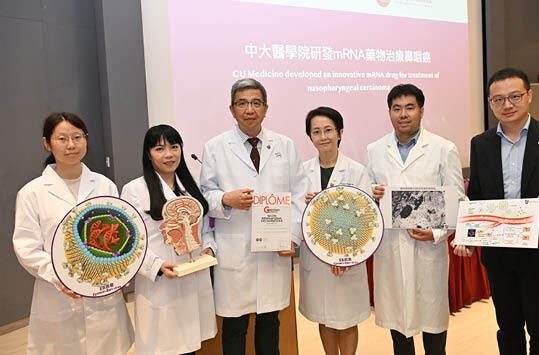
Researchers at the Chinese University's medical school have developed a new type of mRNA-based drug to treat the most common cancer among Hong Kong men aged 20 to 44 - nasopharyngeal carcinoma.
Also known as the "Canton tumor," NPC is a distinct type of head and neck cancer with the highest incidence rates reported in southeast Asia and southern China. The primary cause of NPC is an Epstein-Barr virus infection.
While over 95 percent of the global population has been infected with EBV at some point, the virus can remain latent in certain cells and eventually lead to the development of NPC in a small subset of infected individuals.
The innovative mRNA-based "smart bomb" drug targets the EBV virus specifically found in NPC patients. When injected into the bloodstream, it triggers an EBV-specific suicide mechanism that kills the NPC cancer cells.
The lipid nanoparticles of the drug do not affect normal cells, resulting in far fewer side effects compared to chemotherapy.
Animal studies on mice have shown promising results, with the drug effectively killing cancerous cells while leaving vital organs like the heart, lungs, liver and kidneys unaffected, suggesting a favorable safety profile.
This ground-breaking drug comes as part of a joint collaborative investigation between researchers from the department of anatomical and cellular pathology at CUHK and The Jackson Laboratory in the United States.
Professor Anna Tsang Chi-man announced that the first human clinical trials could likely roll out in the next four years, noting that the team was still in the early phases of development and testing stages.
Advanced-stage NPC patients or those who have shown no improvement even after traditional treatments like radiotherapy and chemotherapy will be the first to be invited for the trials.
Professor Lo Kwok-wai "anticipates that this novel EBV-targeted drug can work in synergy with immunotherapy for better treatment outcomes."
He added: "Other than NPC, the nanoparticle can also serve other EBV-associated cancer types in the future."