Read More
Henry SiuThe show, involving 600 drones, was scheduled to precede the fireworks display at 9pm.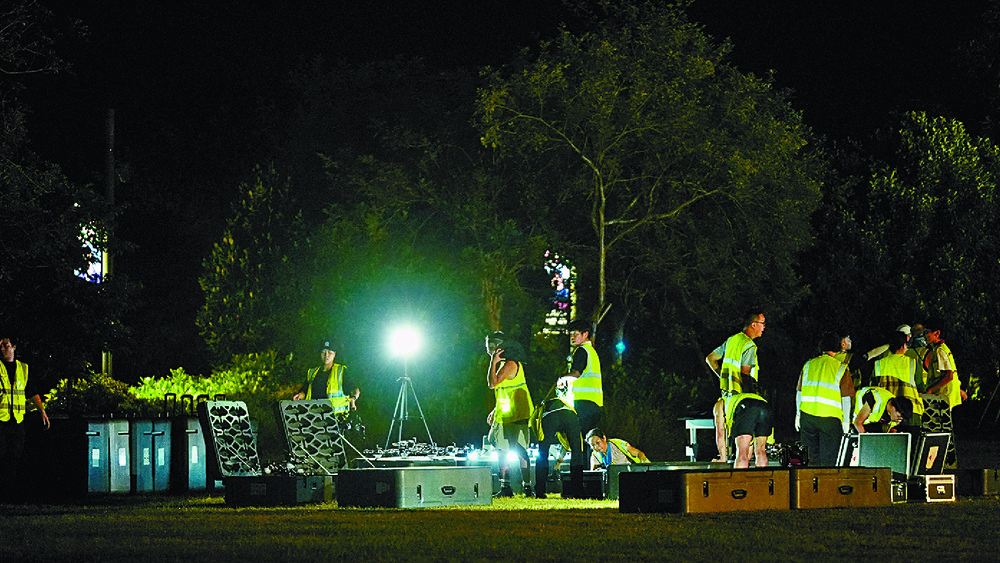
A second drone show to celebrate National Day over the Victoria Harbour last night was canceled due to weather issues.
ADVERTISEMENT
SCROLL TO CONTINUE WITH CONTENT
But the Leisure and Cultural Services Department announced minutes before the scheduled time that the drone show could not take place due to weather problems.
It explained that drones could not receive good satellite positioning signals due to the occurrence of ionospheric scintillation - a rapid modification of radio waves caused by small-scale structures in the ionosphere - over Victoria Harbour.
The fireworks display was slightly postponed to 9.05pm last night.
An audience member, Wong, said although it was a pity that the drone show was canceled, she was still looking forward to seeing the fireworks."Good things are always hard to come by, so I am not too disappointed," she added.
This came after a drone show scheduled for Monday night at the West Kowloon Cultural District was canceled due to signal interference caused by a solar storm, said Leung Wing-mo, former assistant director at the observatory.The show, part of the Next Generation Chorus, comprised 2,099 drones.
Organizers spent nearly an hour trying to remedy the situation to no avail. Prerecorded footage of the drones' rehearsal was projected on screens at the location instead.A government statement said the signal issue was determined "to be related to a meteorological factor" and that no human element was involved.
"All related parties immediately tried their best to remedy the situation, hoping the drone show could continue," the statement said.Organizers apologized to all guests - including performing students - for the inconvenience.
Andy Yeung King-sheung, chairman of the DNT FPV Drone Association Hong Kong, said the solar storm's effect on the South China coast only came to light 20 minutes before the show.Yeung pointed to a serious problem with the drones' real-time kinematic positioning system, which "showed errors increasing from five centimeters to one meter, a difference 19 times greater," Yeung said. "This made collisions in the air more likely. Based on safety concerns, we had to cancel the show."
Speaking on radio yesterday, Leung said 2024 and 2025 are peak years for solar storms. He said such storms can affect the Earth's magnetic field, making it hard to control machines accurately.henry.siu@singtaonewscorp.comOrganizers of the first drone show try to figure out what went wrong. SING TAO