Read More
Staff reporter
ADVERTISEMENT
SCROLL TO CONTINUE WITH CONTENT
The launch of a dedicated research laboratory for the low-altitude economy by the University of Hong Kong and Harmony Tech is a milestone in the development of the fast-growing sector in the city, says Karson Choi Ka-tsan, the founder of the mainland airspace management company.
Speaking at the university's first Joint Low-Altitude Summit, Choi, also a member of the HKU Court, said he was delighted to see HKU alumni actively engaging in low-altitude research and expressed confidence that the partnership between Harmony Tech and the university would drive innovation and research in low-altitude technology.
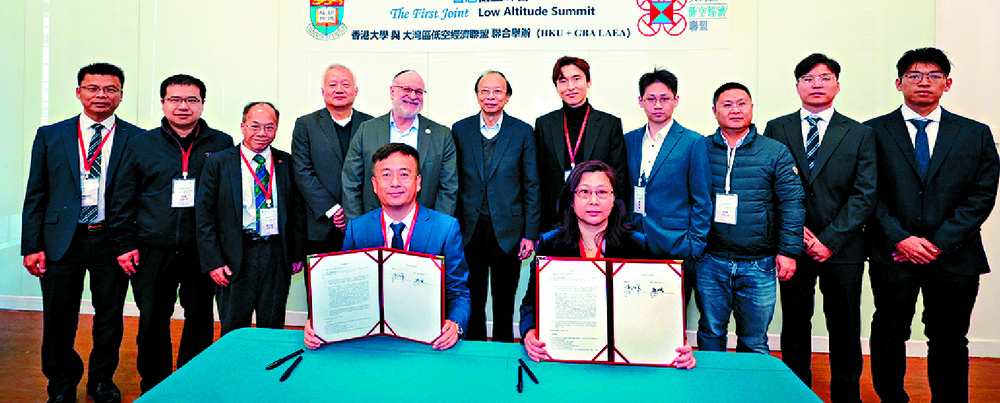
At the summit, HKU and Harmony Tech signed a memorandum of understanding to collaborate on areas such as airspace management, artificial intelligence and meteorology and jointly establish a research lab.
The low-altitude economy represents an entirely new economic development model, introducing numerous research topics and emerging technologies such as innovative aircraft and unmanned intelligent equipment, Choi said, emphasizing that its development would profoundly impact people's lifestyles.
He further noted that with China's low-altitude economy rapidly expanding and Chief Executive John Lee Ka-chiu's relevant development plans, integrating this sector within the Greater Bay Area is crucial for national development - an initiative Hong Kong is actively participating in.
Harmony Tech has been contributing to the development of the low-altitude economy of the GBA since 2019, focusing on the construction of takeoff and landing points and developing systems for low-altitude flight controls.
After six years of research and development, the firm's low-altitude air traffic control system 2.0 was launched in Zhuhai City, Choi said, adding that it has successfully undergone testing in collaboration with civil aviation departments in Hong Kong and Macau.
Choi highlighted the broad scope of technologies and applications involved in the low-altitude economy, the complexity of its management, and challenges such as a lack of regulatory framework from authorities.
He also mentioned the recent setup of HKU's low-altitude economy research institute, noting that this aligns with social development trends and will attract outstanding talent for the next round of innovative research.
"This will inject new impetus into academic research at the university and provide crucial support for technological breakthroughs in the low-altitude economy," said Choi, adding that "collaboration between academia and industry has always been an essential part of innovation, research and development."
The research center is led by HKU vice president and pro-vice-chancellor for research Max Shen Zuojun and Huang Lixi, professor of the Department of Mechanical Engineering, as its executive director. It is to formulate a white paper on the development of the low-altitude economy, which will outline the growth trajectory of the industry in the GBA and Hong Kong.
The institute was formed with the support of the Faculty of Engineering, Faculty of Science, HKU Business School and Faculty of Law, bringing together experts from various fields, Huang said.
These professionals will conduct research in areas such as sensing capabilities and digitization of low-altitude operational equipment, as well as potential logistics applications.
Applications for research funding will be open this year and the institute also aims to establish two joint labs, Huang said, adding that it will launch plans for developing prototypes of products and flight devices as well as work on supporting navigation technologies and related electronic devices.
Huang said the university will also introduce a doctoral program in the field of low-altitude technology and establish a streamlined pathway for outstanding master's students to transition to the doctoral program.
Last year, HKU announced plans to launch the world's first master's program in this field in September this year, aiming to enroll about 100 students.
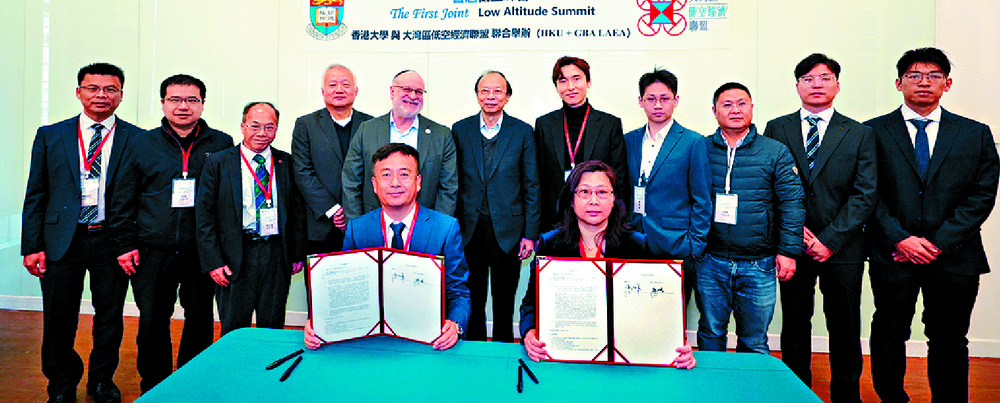
Max Shen and Harmony Tech chairwoman Jacqueline Kang show off the memorandum of understanding that was signed at the summit in the presence of Karson Choi, fifth right, and other officials and executives. SING TAO
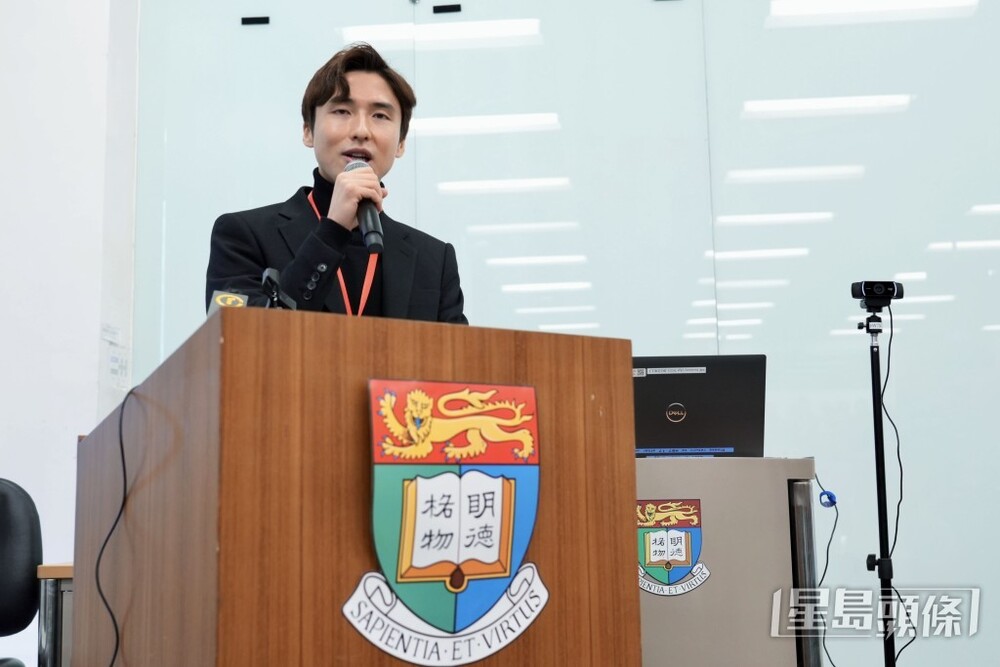
Max Shen
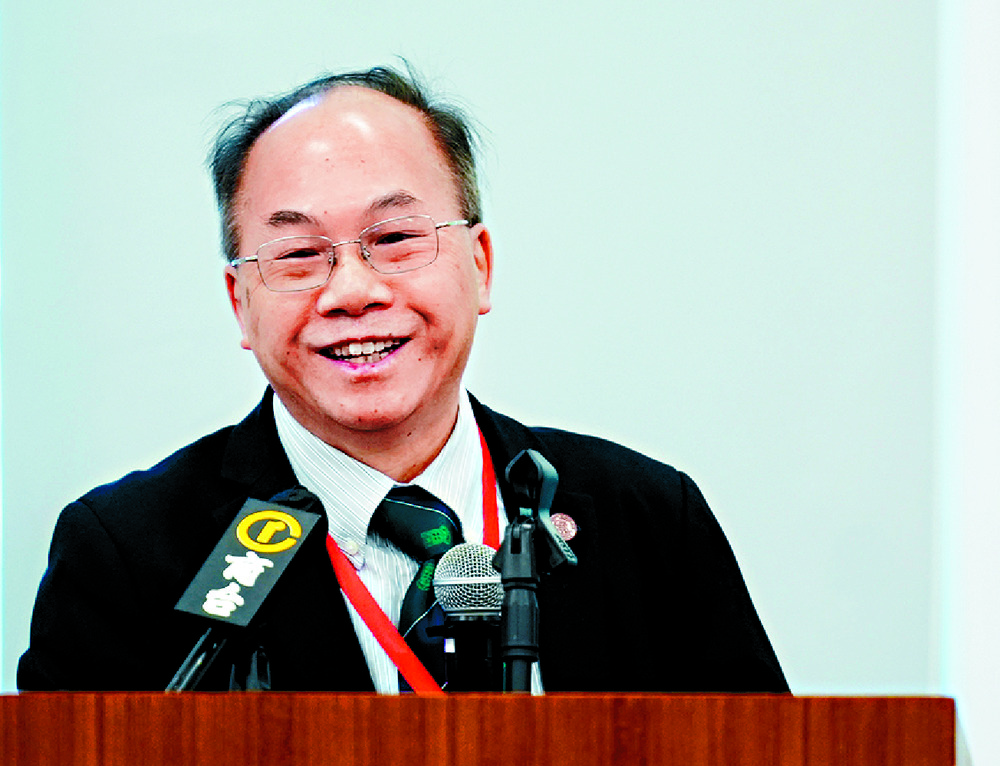
Huang Lixi
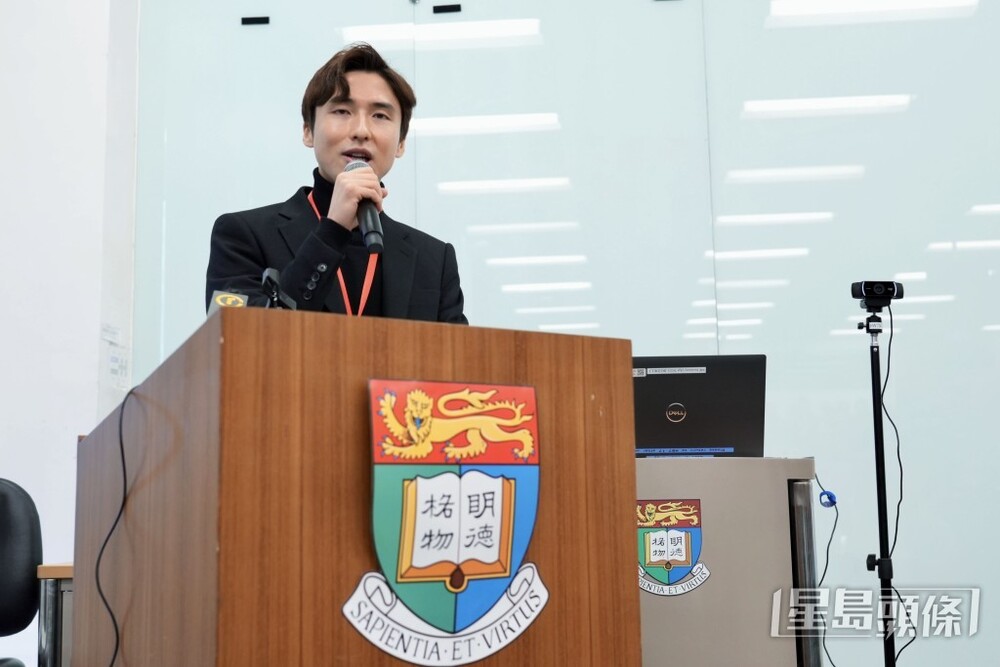
Karson Choi