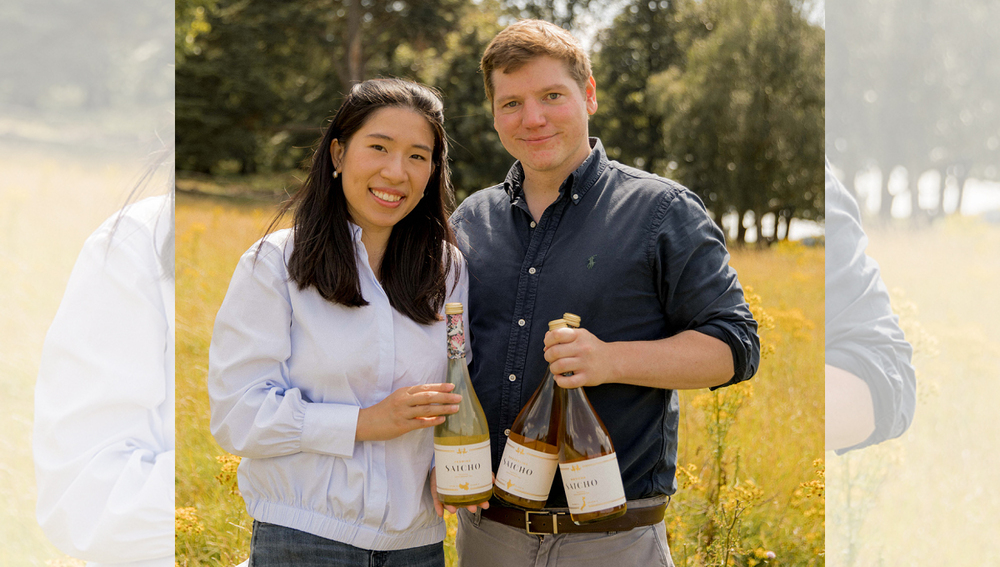
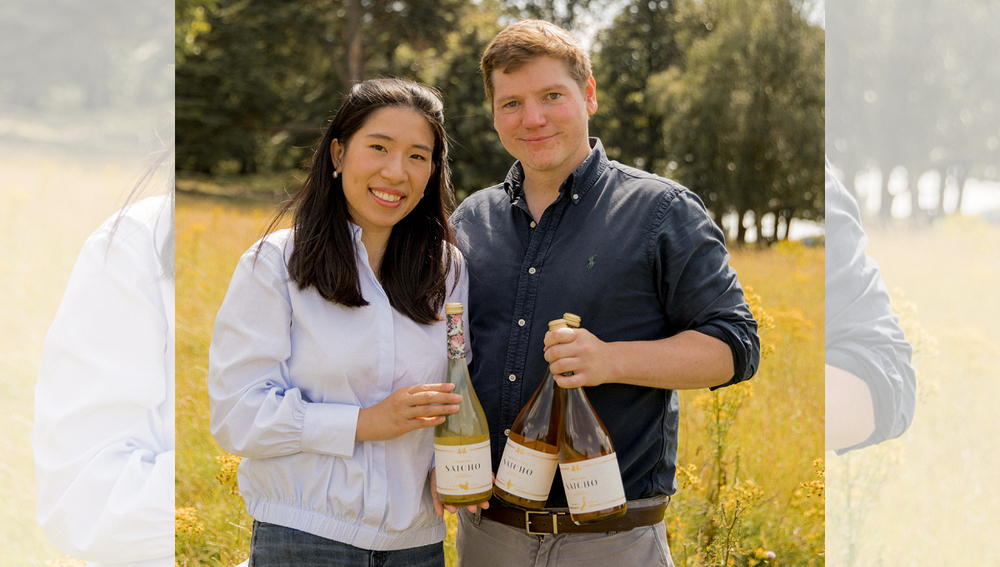
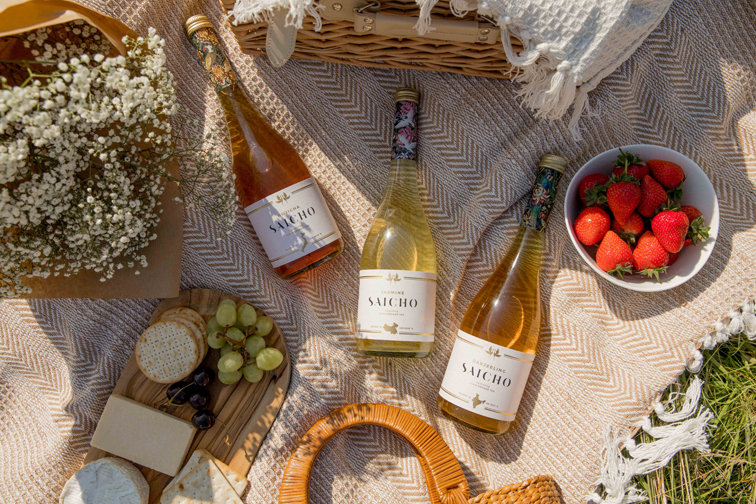
Saicho founders Charlie Winkworth-Smith and Natalie Chiu have combined their passion and expertise in food and drinks to create a new non-alcoholic beverage for fine dining.
ADVERTISEMENT
SCROLL TO CONTINUE WITH CONTENT
Born and raised in a traditional Chinese family, tea was very much a part of Chiu's daily life. Her father, an avid tea drinker, would go to tea shops to buy tea for daily use. "He used to be based in Shanghai, so he also brought tea for us to try when he came home. We got to try a lot of different things," she said.
She particularly recalled a tea called "monkey's pick" because of its funny name (it is a top-of-the-range Chinese oolong tea).
"So it was really exposure from my family that led us to all different types of tea," she said. "It was quite a natural process to select tea as our main ingredient for the brand."
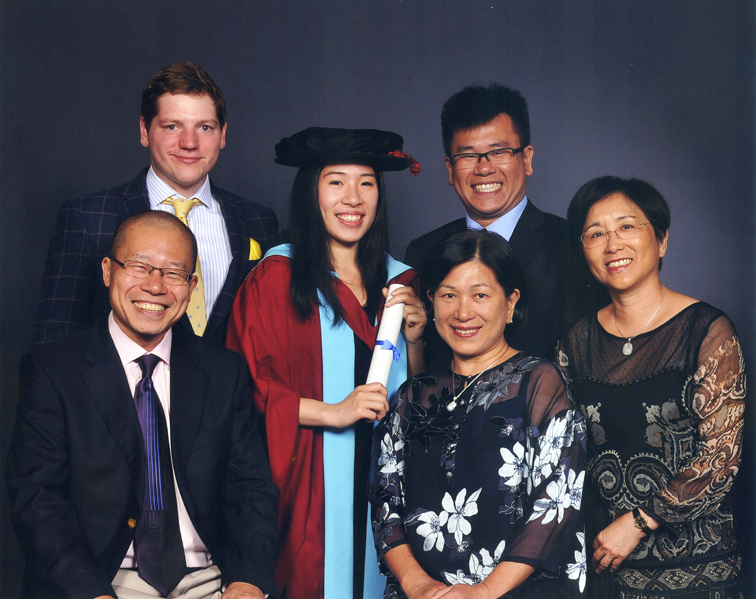
Her husband grew up in Derbyshire, England. The couple met when he was in his second year of a PhD in biomaterials and she in her first for a PhD in flavor science at the University of Nottingham.
The genesis of Saicho came from an entrepreneurial competition called the Ingenuity program at the university in 2017.
"We saw a competition at the university inviting entrepreneurial ideas," Chiu said.
"We went in with a half-formed idea of just wanting to make a good non-alcoholic drink, that's about as far as we were," added Winkworth-Smith. "But winning the competition gave us the belief that it was not a stupid idea, and a good idea that we should really start working hard on."
The idea came from the fact that Chiu could not drink alcohol. The pair were having a 10-course tasting menu at a London fine dining restaurant when they realized that Chiu could not have the same gastronomical experience as Winkworth-Smith.
"The waiter would come over and explain the food, and the sommelier would come over to me to describe the wine and why it paired well with the food," said Winkworth-Smith. "It took the sommelier about twice as long to explain the wine as the waiter for the food."
Chiu said: "We used to go around in restaurants a lot, it was very unusual to find any offerings for somebody that didn't really drink alcohol that would work with food."
Using the money they won, they started Saicho after Chiu graduated.
Winkworth-Smith had always dreamt of starting his own company - "but unless you get an idea for something, that is the tricky bit."
Chiu said: "I would have to say that entrepreneurship came more through the passion once we found what we wanted to do. Knowing that I would be bringing a product that I could be proud of, and also for others to enjoy, that really appealed to me."
Not only did their technical background help, their love for food and drinks also played a big role. "Sometimes with startups you need that passion to drive you forward," said Winkworth-Smith.
They noted a similarity between wine and tea. "It is not only that wine tastes great, but there is always a bit of a story to it: it matters where it is grown, the time of harvest, even the people who make it. And tea has that as well. It matters what time of year it is harvested, or the altitude that it comes from," said Winkworth-Smith.
"Tea has the history and the romance that wine has as well, but most importantly, it's also got bitterness and astringency so it can make a great companion to food."
It took two years for them to develop the sparkling teas before launching Saicho at the end of 2019.
"We would always have tea brewing in the corners. We were trying all sorts of teas, different fruit juices, different herbs, spices, everything," said Winkworth-Smith.
After repeated experiments, they realized that simplicity was key. "If you use really fantastic tea, it has all the complexity that you need from a drink. You don't need to be chucking in loads of other fruit juice flavors, or herbs or spices or anything like that," he said,
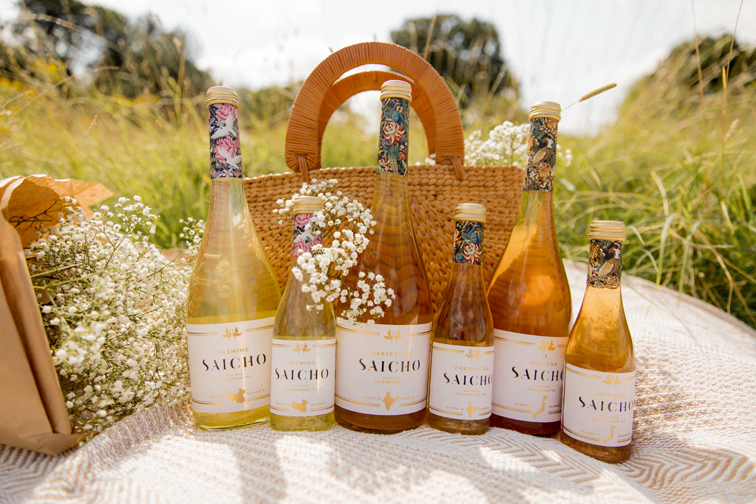
The sparkling teas were created by cold brewing single-origin jasmine, darjeeling and hojicha tea leaves for 24 hours and then putting them through a sparkling process.
"For our first threes, we wanted to choose teas that would demonstrate the breadth of flavor that you can get from tea, but also teas that would pair well with different sorts of food," said Winkworth-Smith.