Read More








Three arrested over missing fire door frames in public estate lift overhaul
16-10-2026 20:10 HKT
Credit card fraud hits foldable iPhone Duo launch
17-10-2026 12:23 HKT
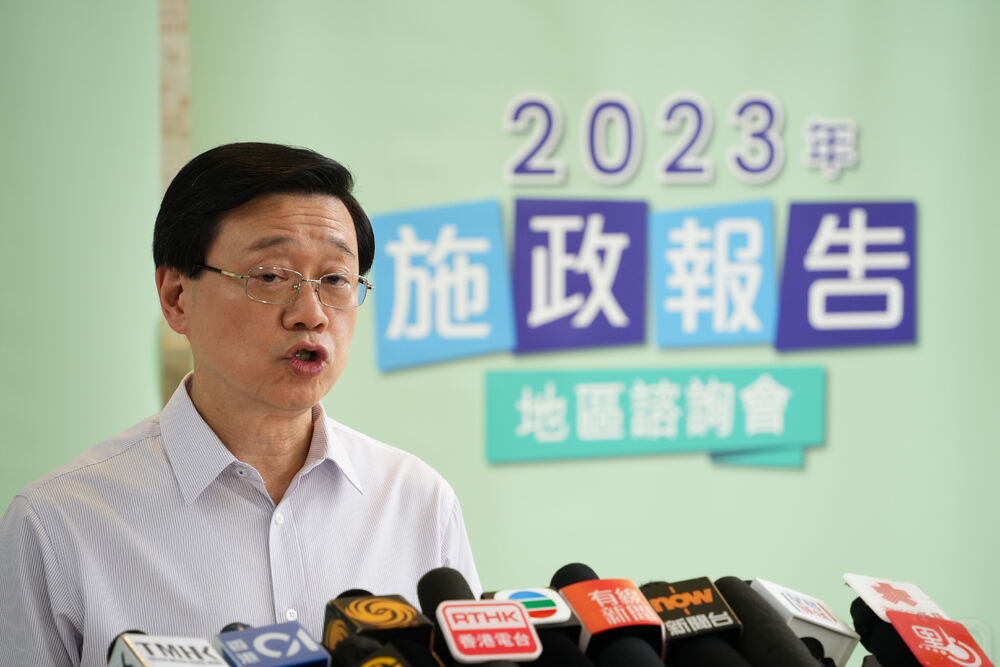
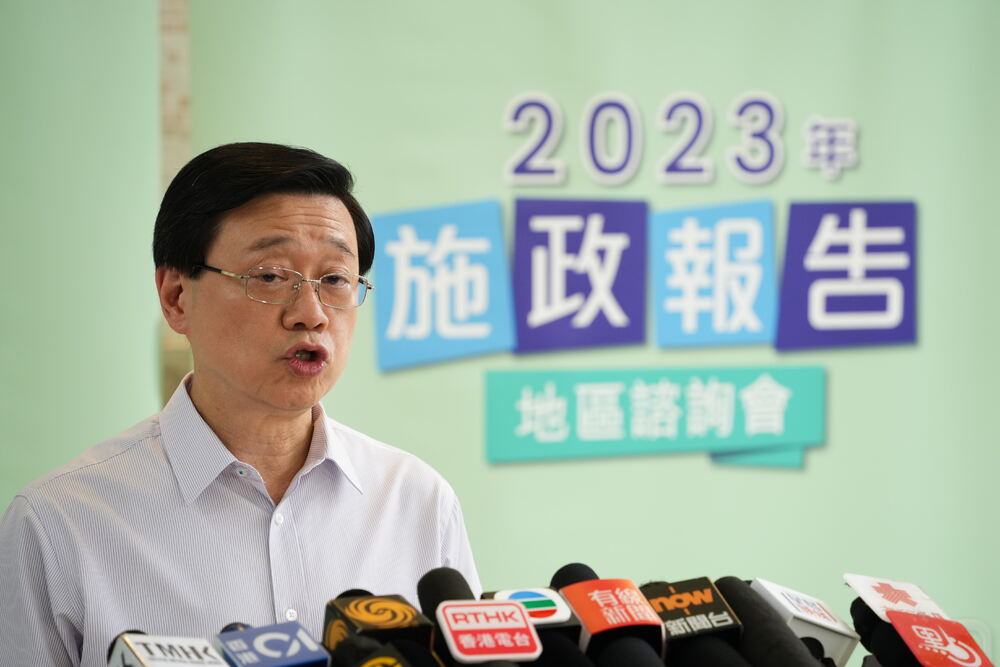
Chief Executive John Lee Ka-chiu says a working group will be formed to study ways to enhance the Hong Kong stock market's liquidity as China announces its own measures - including a stamp duty cut on stock trading - to boost turnover.
Lee said yesterday the working group will be led by Financial Secretary Paul Chan Mo-po, who will announce more details this week. He said he hopes the group will start its work immediately and provide recommendations before his policy address in October.
Asked whether authorities will consider cutting stamp duty on stocks, Lee said the group will examine different possibilities and include various views in its study, adding that he believes it will provide both short-term and long-term measures.
The market has seen a falling average daily turnover, which stood at HK$99.8 billion in June this year, compared to that of HK$166.7 billion in 2021.
This came as Beijing announced it will slash the stamp duty on stock trading by half effective today - the first time since 2008. The levy charged on stock trades will go down to 0.05 percent.
The move is a major boost to both the mainland and Hong Kong markets as it shows the Chinese government's determination to revive the market, said Kenny Ng Lai-yin, an Everbright Securities International's securities strategist, who expects the Hang Seng Index to potentially jump to 18,500 this week.
The city's benchmark fell 1.4 percent to below 18,000 on Friday, with a year-to-date loss of more than 9 percent.
Chinese brokers could still see a share price rise in the short term even if the market has partly priced in the move after Beijing vowed late last month to activate capital markets and elevate investor confidence.
However, in the longer term, analysts including Ng believe the cut will have a limited impact as investors' focus will still be on China's economy, especially the impact of the deepening problems in its property sector.
China also announced yesterday a cut in margin ratio for margin trading to 80 percent from 100 percent, effective from market closing on September 8.
It further regulated a share reduction behavior of controlling shareholders or actual controllers of listed companies, who will not be allowed to reduce their holding in a firm when it falls on its debut or its price falls below its net asset value.
Such investors are also not allowed to pare their stakes if the firm has not distributed cash dividends in the last three years or the amount of the cumulative cash dividends was less than 30 percent of the average annual net profit in the last three years.
Industry experts have been also advising the Hong Kong government to cut stamp duties on stock trading after it raised the levy from 0.1 percent to 0.13 percent in 2021.
Lawmaker Robert Lee Wai-wang has said the stamp duty on stocks could be temporarily exempted for the next six months to one year to stimulate trading while keeping it low in the long term.
This was echoed by Mofiz Chan, chairman of Hong Kong Securities and Futures Professionals Association, who called for the removal of stamp duties on stocks while noting that China's latest measures may not apply to Hong Kong given that the city's equity market is more mature and market-oriented.
However, Chan added that local regulators could lower the market value threshold for the listing of specialist technologies firms to attract more artificial intelligence startups amid a recent AI rally.
caroline.zheng@singtaonewscorp.com