Read More








China's wealthy are cashing out of the embattled real estate market at home and instead placing their bets on international property hot spots from east to west.
Property investments by Chinese in the US have doubled in a year while Australia has emerged as a top destination for Chinese home hunters so far this year.
With home prices continuing to slump in the mainland amid a real estate downturn and sluggish economy, some mainlanders see overseas property as a safe haven that will generate stable returns and appreciate in value, while others are buying them as future homes.
Their focus, according to analysts, is now on property in Western nations such as the US, the UK and Australia, as well as top Asian destinations like Japan, Thailand and Singapore.
Wealthy Chinese have been selling off their homes at a faster pace, especially in major cities.
In June, there were 2 million listings for second-hand homes in 13 tier 1 cities, a 25 percent increase compared to the beginning of the year when there were 1.6 million listings, according to the Shanghai E-House Real Estate Research Institute.
Shanghai saw the largest increase in the number of second-hand listings, surging by 82 percent to 180,000 homes.
The number of prime residences up for sale has also been on the rise this year with 240 luxury homes priced upwards of 25 million yuan (HK$26.9 million) put up the sale in Shanghai in April, a fivefold increase over the same month last year, according to data from Centaline Property Research Institute.
As many as 130 homes at Cuihu Tiandi, one of Shanghai's upscale residential developments, went on sale in the first five months of the year and two-bedroom homes that fetched 32-33 million yuan last year were being offered for 28-29 million yuan, according to reports.
Meanwhile, new home prices fell for the third straight month in September and last month, the value of new home sales among the 100 biggest developers was 27.5 percent lower from a year earlier at 406.7 billion yuan, according China Real Estate Information Corporation.
Property sales by floor area are down 7.5 per cent this year and investment is 9.1 percent lower, latest data from the National Bureau of Statistics shows.
And property foreclosures in January-September rose to 584,000 homes from 441,000 in the same period last year, according to the China Index Academy on Saturday.
Down under at the top
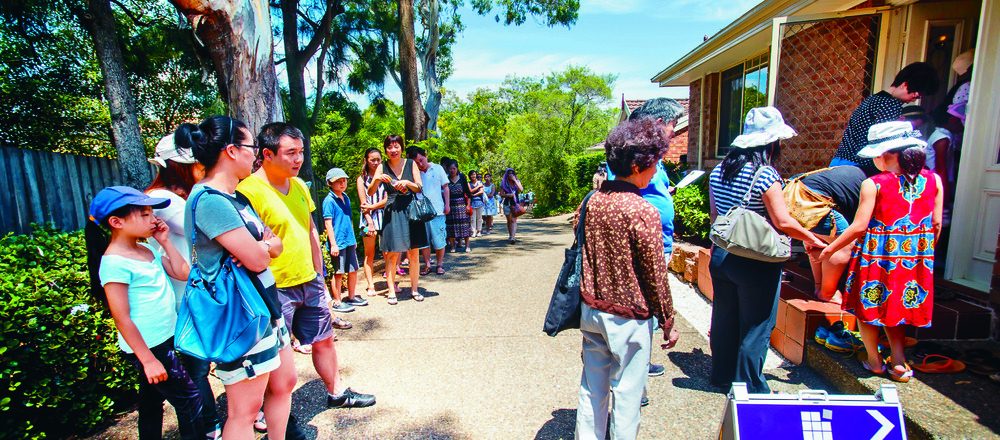
Australia is currently the top choice for mainland home hunters, with a growing number of Chinese headed down under to either study or move to the country permanently, according to the Malaysia-based real estate platform Juwai IQI.
The other four top spots go to Canada, US, UK and Thailand.
Data from the Australian Foreign Investment Review Board shows that around A$700 million (HK$3.5 billion) worth of residential real estate proposals from Chinese buyers were approved during the first quarter of 2023.
Real estate expert Tom Panos, meanwhile, says that "A$8 million a day of Australian property being snapped up by buyers in China."
He says mainlanders prefer to buy real estate in Australia as they like the country's education system, lifestyle, relatively low pollution levels and overall safety.
Juwai IQI estimates 712,000 mainlanders will migrate to the US, Canada and Australia from 2023 to 2025 with about 10 percent of them headed down under, further boosting Chinese property investment overseas.
American dream
Meanwhile, despite the exchange-rate challenges posed by the strong greenback and rising prices in the US, Chinese investment in American real estate continues to grow.
Chinese nationals were the biggest buyers of US property for the 12 months ended March 2023, accounting for 13 percent of the total transactions made by foreigners, data from the National Association of Realtors shows.
During the same period, their purchases of built homes in the US more than doubled to US$13.6 billion (HK$106.08 billion) and their median purchase price for a home was US$723,200, almost double the US median home price of US$419,103, according to Redfin.
The data does not fully represent the purchasing power of mainlanders as it does not include statistics for off-plan or unbuilt homes.
Big on Japan
Japan is a favored destination for Chinese home buyers, and the weak yen - which has fallen from 19 to 20 against the yuan since the start of this year - is whetting their appetite for Japanese real estate.
Favored destinations include Tokyo, Osaka, Hokkaido and Nagoya with investors buying into apartments, guest houses, luxury towers, farms and even small islands.
Earlier this year, a mainlander disclosed on Douyin, the Chinese version of TikTok, that her family bought an uninhabited island in Japan to develop for tourism.
Though the reserve price was set at US$600,000, she said they ended up forking out US$60 million - more than 100 times the base price - for the 700,000-square-meter Yanaha Island, a popular fishing and camping site.
While Chinese interest in Japanese real estate is not new, the profile of investors has changed since China exited its stringent zero-Covid policy and reopened its borders last December.
Before the pandemic, the majority of mainlanders buying property in Japan were the ultra wealthy, but now the number of middle-class home buyers are increasing as well, according to a Japanese real estate agent.
Data from Airbnb shows gross rental yields for bed and breakfast properties in Japanese tourist hot spots such as Matsue could reach 11 percent a year, outperforming returns of popular financial products in China at present.
Thai attractions
In Southeast Asia, a growing number of Chinese are buying property in Thailand, attracted by the country's international schools and quality health care.
Top choices include Bangkok, Chiang Mai and the beach resort of Pattaya, according to Mesak Chunharakchot, president of the Thai Real Estate Association.
"Chinese buyers are not only purchasing homes but also enrolling their children in international schools and welcoming their parents to Thailand to help care for their grandchildren," he says, adding that at the Singapore International School of Bangkok, the number of Chinese students has grown to 13 percent from 6 percent in 2019.
Singapore swing
Chinese were the biggest foreign buyers of property in the lion city from 2016 to 2022 and accounted for 6.9 percent of foreign purchases of private apartments last year, the highest proportion since the pandemic, according to data from Singaporean real estate firm OrangeTee & Tie.
However, in an effort to control prices, Singapore has doubled stamp duties for foreign buyers to 60 percent, the highest among major markets, and increased levies for purchasers of second homes in late April, though the tax hikes do not apply to buyers from certain countries including the US.
Chinese buyers are also facing fresh restrictions in the US, with several states recently passing laws limiting property purchases by Chinese nationals out of geopolitical concerns.
Florida now prohibits Chinese nationals from buying property within 10 miles of military bases, airports or critical infrastructure, with Governor Ron DeSantis declaring that the sunshine state is standing up against the US' greatest geopolitical threat - the Chinese Communist Party - upon signing the bill in May this year.
After failing to get an interim junction against the law, a group of Chinese people living in Florida are now appealing the ruling, which serves as a painful reminder to mainlanders about anti-Asian sentiment in America and the hurdles they may face when buying property in destinations such as the US.