A hidden gem of the art world, Central Asian art—influenced by nomadic traditions and historic colonialism—is being unearthed by CHAT (Centre for Heritage, Arts and Textile) in Hong Kong to bring its brilliance out of the old Silk Road with a contemporary approach.
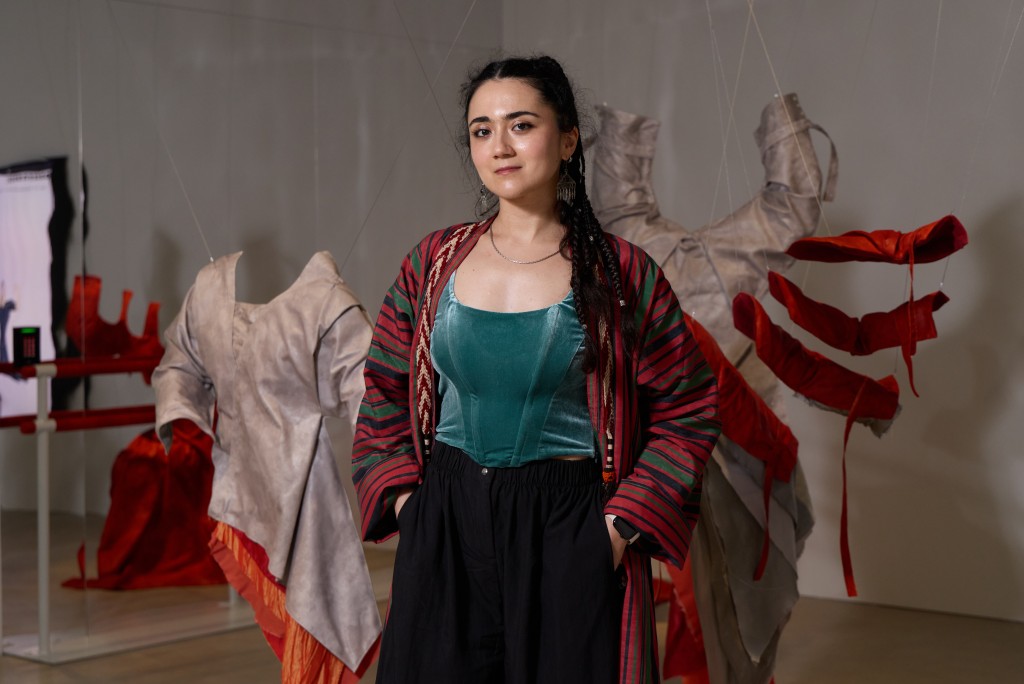
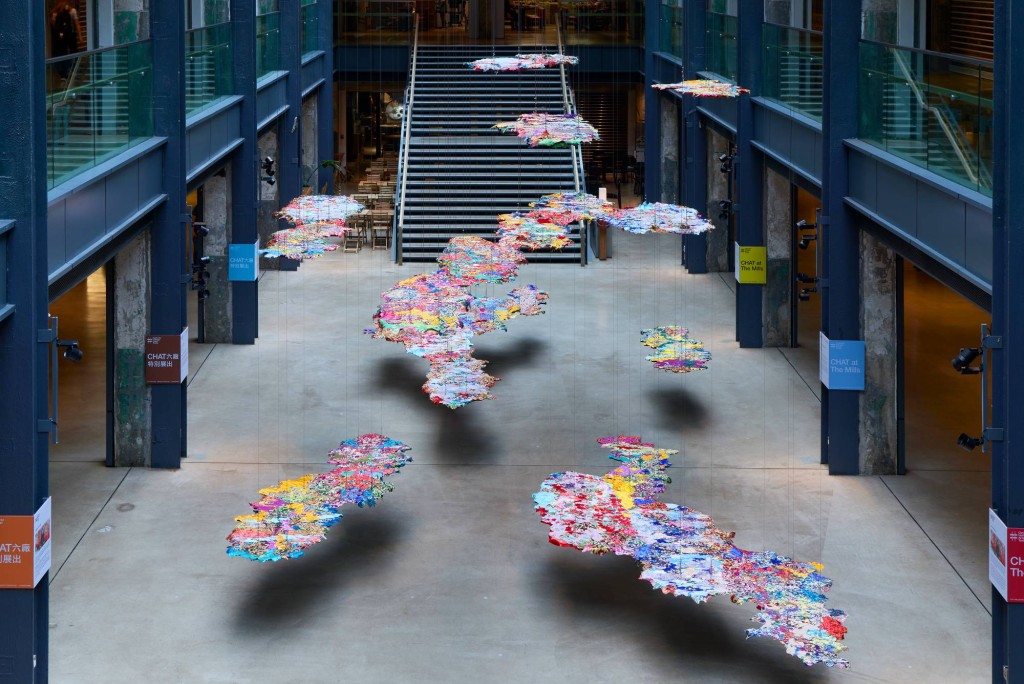
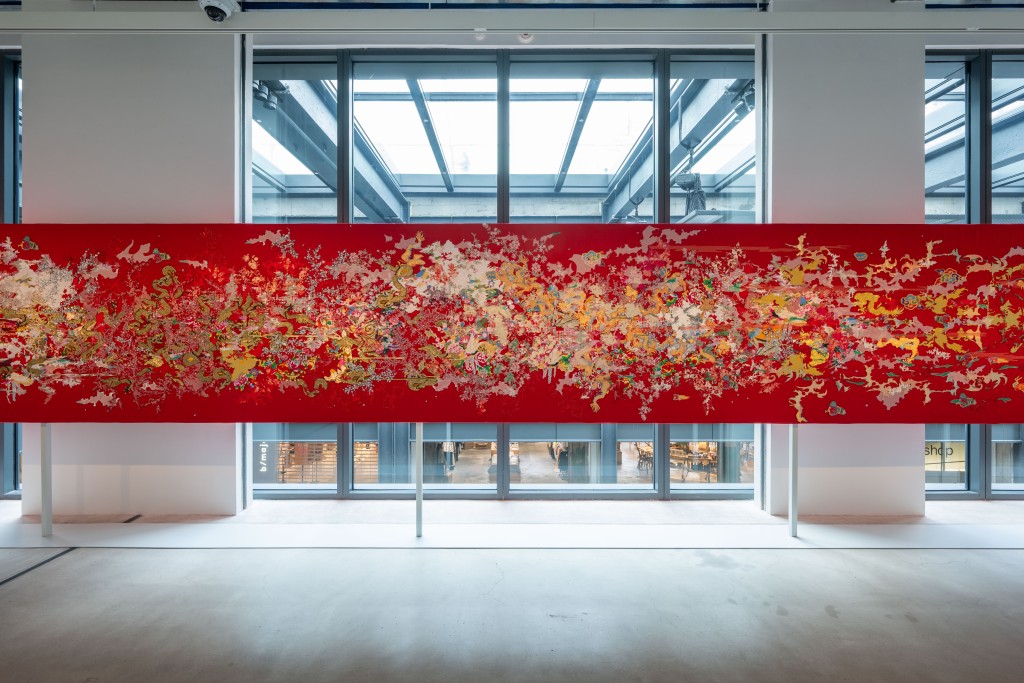
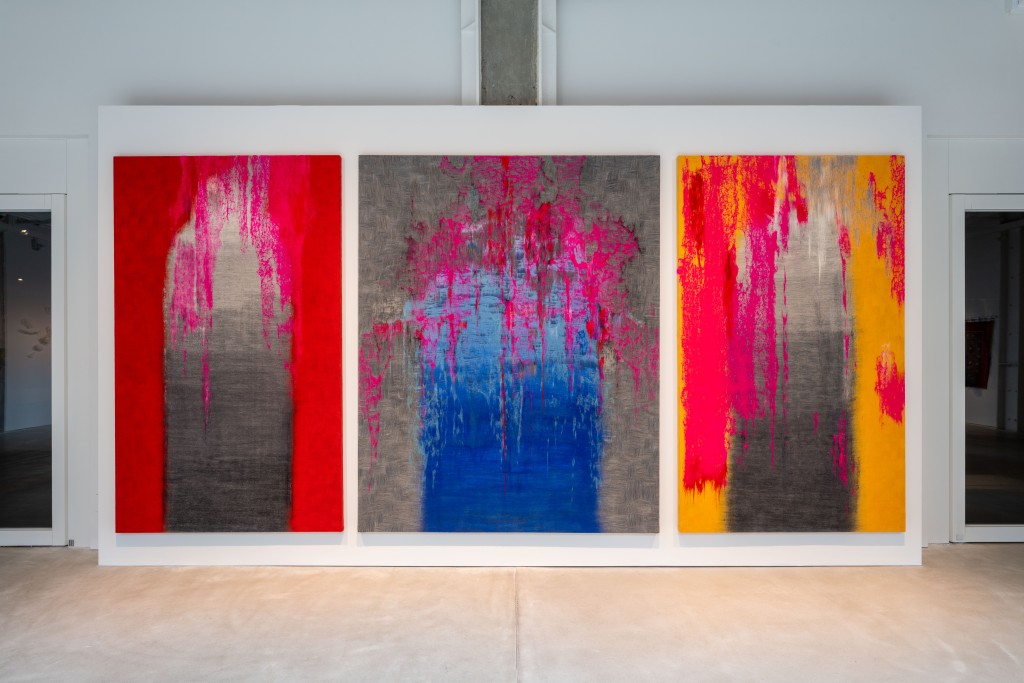
In the recent exhibition Threading Inwards, which explores textiles as living pathways that intertwine into spiritual maps, the institution features Uzbek visual artist Aziza Kadyri, who represented her country at the 2024 Venice Biennale.
Kadyri works across textiles, installation, performance, sculpture, and creative technologies, combining traditional elements with the personal and collective histories of Soviet-era Uzbekistan.
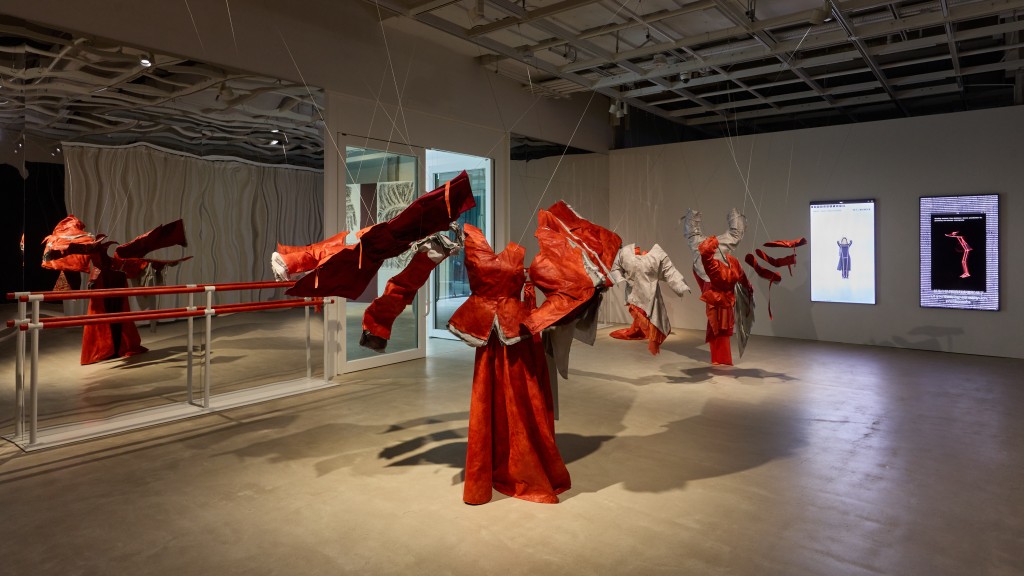
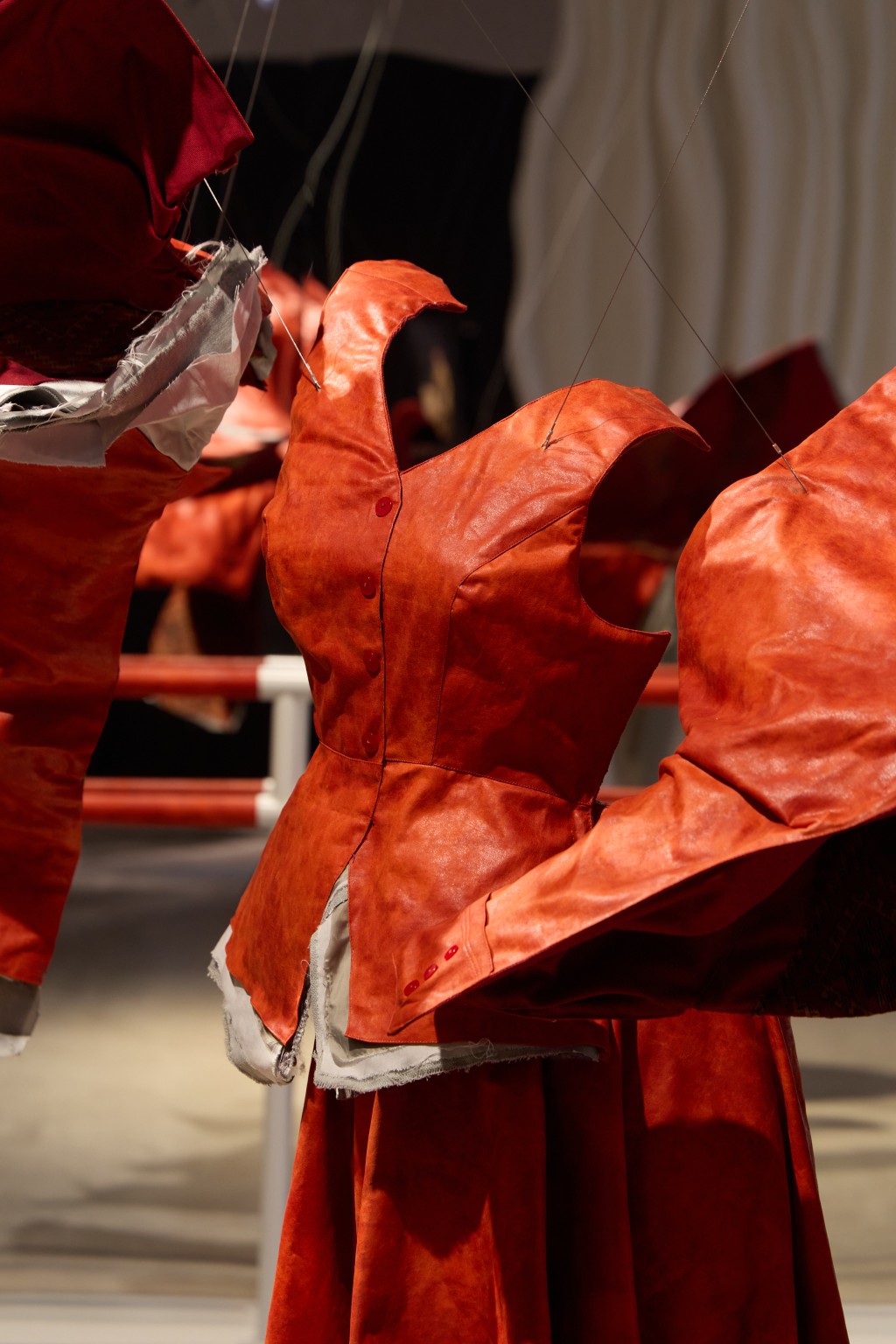
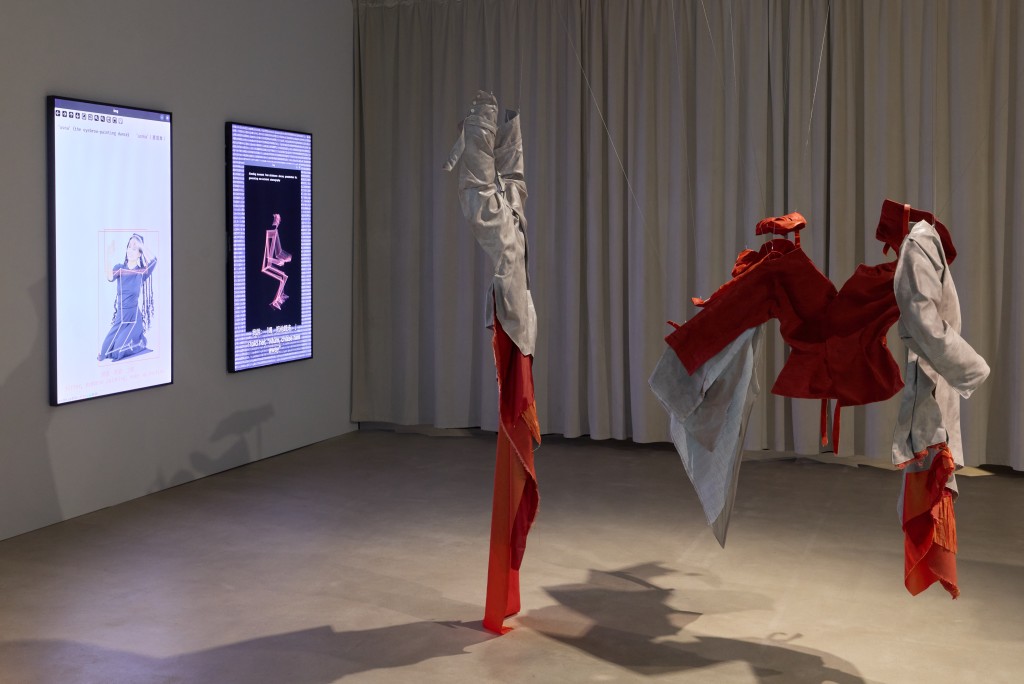
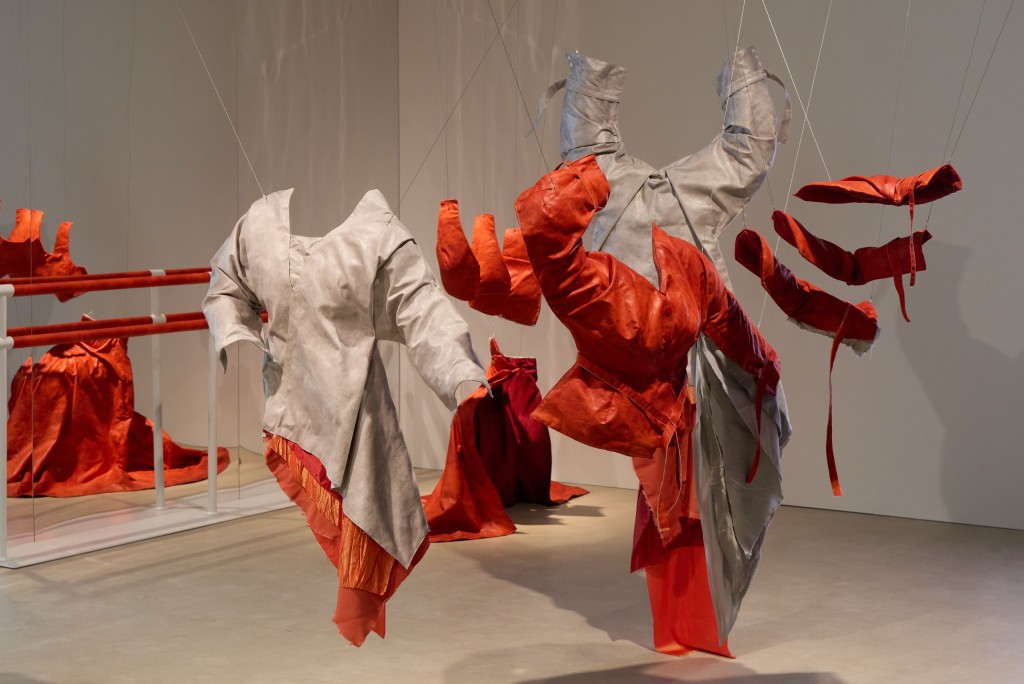
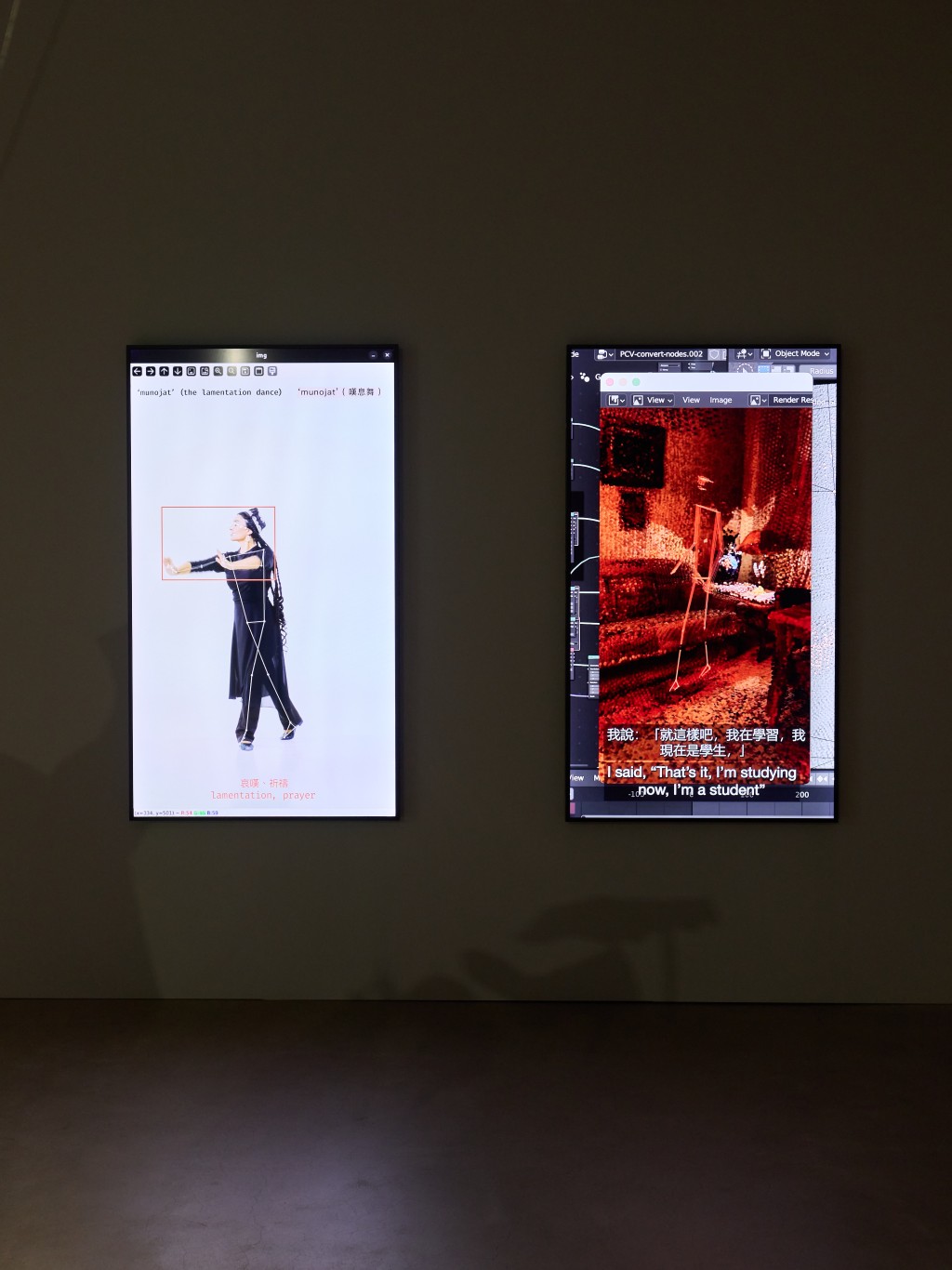
Showcased at CHAT, Her Stage (II) is part of an ongoing series that engages with the concept of the body in space as a vessel for memories and unfulfilled dreams, echoing her focus on social invisibility, displacement, and identity formation.
It centers on the story of her grandmother, who sacrificed her dream of becoming a professional Uzbek folk dancer to meet societal expectations in the 1950s, underscoring the tension between personal ambition and the constraints of the patriarchal and socialist structures of that era.
Through digital technologies such as machine learning, AI, and pose tracking, Kadyri intertwines her grandmother’s gestures with traditional Uzbek dance movements, creating a digital choreography that represents this dream that never came true.
This approach stems from a broader, more complex, and rich Central Asian heritage, which makes the region's art unique across both traditional and modern eras.
Historically, there has been a heavy influence from Persian and Iranian culture, which is reflected in many of the crafts, arts, and depictions. This long-standing cultural continuity was drastically interrupted in the late 19th and early 20th centuries by a shift toward Russian and Soviet influence.
“You have the Soviet modernist buildings, these incredible concrete blocks, but then on the facades of them, they have these fantastic Persian-inspired mosaics,” Kadyri explains of the appealing compositions carried by Central Asian art.
Kadyri's focus on textiles is also deeply connected to Uzbekistan's economic backbone: cotton exports. Ranking among the top 10 cotton-producing countries globally, cotton is nicknamed "white gold" in the country.
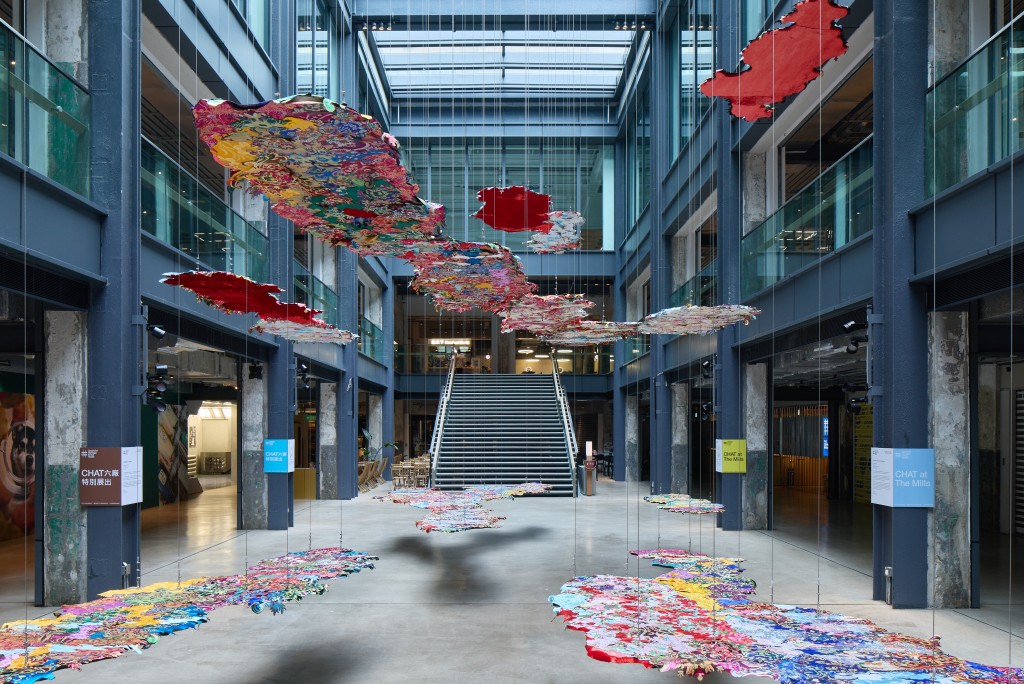
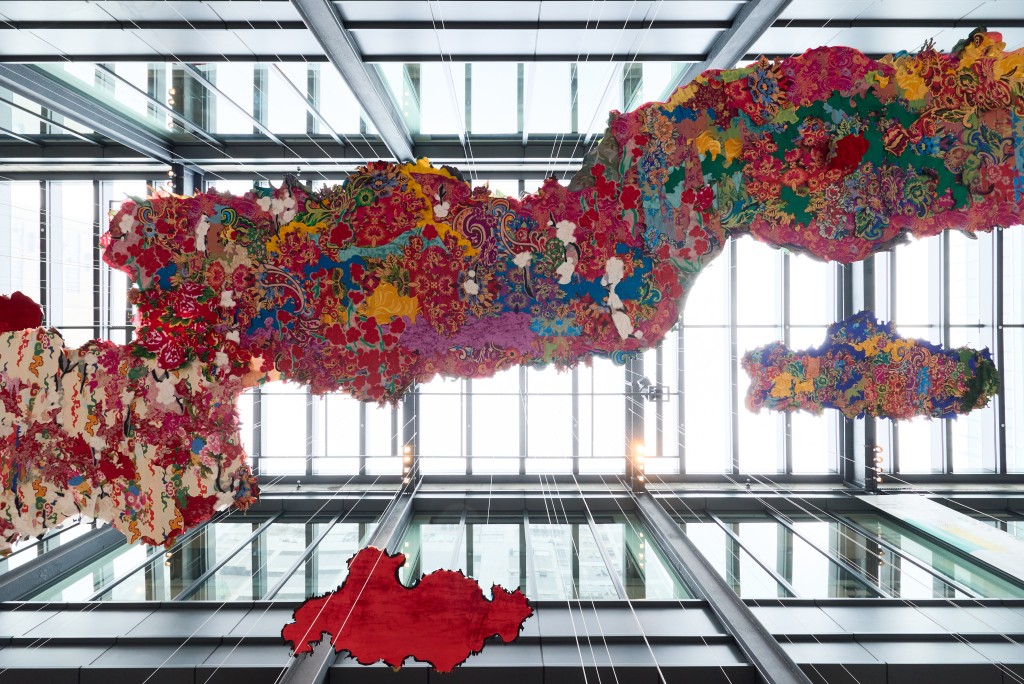
She highlighted the Suzani, a type of embroidered decorative tribal textile that she frequently works with. Derived from the Persian word for "needle," Suzani are highly valued for their beautiful decoration and fine craftsmanship.
The artist stressed that despite the common belief that the embroidery is exclusively Uzbek, it is a shared heritage across the region, as the borders between Central Asian countries were drawn artificially in the first half of the 20th century.
She also noted her interest in the "language" of this embroidery, as it takes on different characteristics and styles in each country, intertwining as the culture flows.
In Kadyri’s eyes, the region's art is heavily based on its textile traditions due to its historically nomadic lifestyle, which also breaks a long-standing sentiment in the Western world – the distinct separation enforced between "fine art" and "craft."
“In Central Asia, those two cannot be separated,” she states assertively. “The only art that you can really transport around is something that has to be flexible.”
She pointed to her work with female embroiderers over the last five years as an example. “A Suzani that a woman made was one of the only ways of accessing her inner world, of seeing her,” she noted.
She believes that this representation of a woman, which was created in a time and space where women couldn't be seen in public, transcends basic craft. “To me, it is a really fine art,” she added.
Rooted in her Uzbek heritage, Kadyri has seen an emerging force of her fellow artists stepping onto the international stage, which is driven by growing global interest in the region, as well as frequent visits from international curators.
“At this moment, getting this international exposure, whether in Europe or in East Asia or somewhere else, is still very needed for the artists that are developing in the region,” she said.
She also expressed gratitude to CHAT for spotlighting Central Asian art for years, which allowed her to visit Hong Kong for the first time under CHAT’s invitation.
Located in Tsuen Wan, CHAT is part of the heritage conservation project at The Mills, the former cotton-spinning mills of Nan Fung Textiles, where textiles serve as the institution’s entry point into history and culture.
From 2023 onwards, it has continued inviting Central Asian artists to participate in CHAT’s group exhibitions, including Gulnur Mukazhanova, Aziza Kadyri, Aziza Shedenova, Almagul Menlibayeva, and others.
CHAT curator on the ‘surprising familiarity’ of HK and Central Asia, linked by textiles
Central Asia has never been a stranger to Hong Kong—historically, culturally, or geographically. For over three years, CHAT has been bringing the distant image of the region closer to the city’s art scene through an ideal medium: textiles and craft traditions.
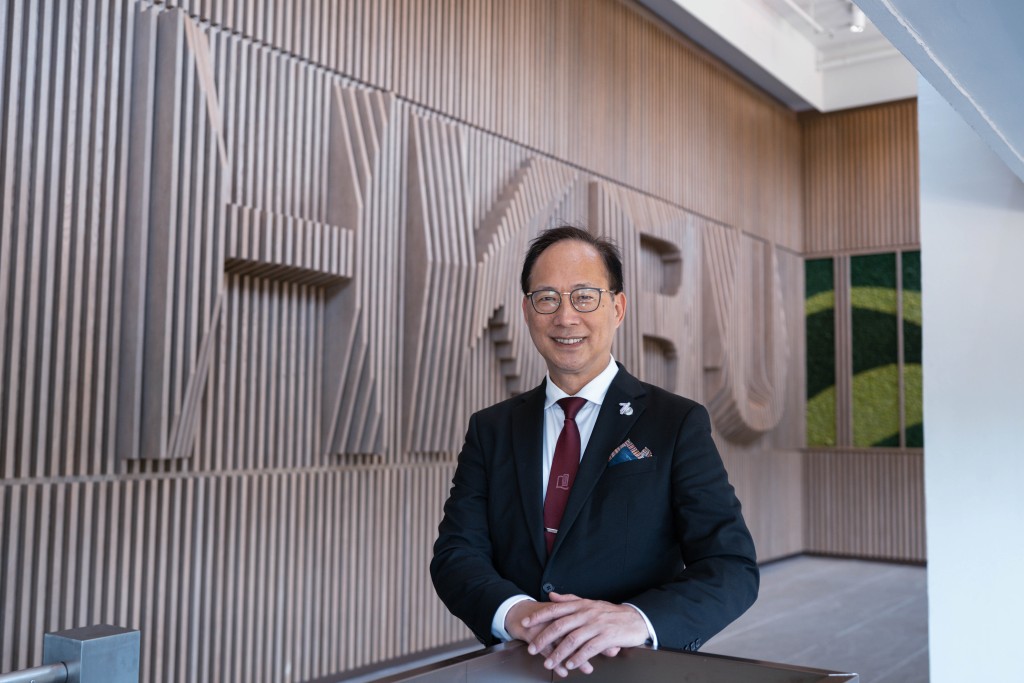
“Central Asian art is not exotic; it can feel surprisingly familiar, even for audiences encountering it for the first time,” said Wang Weiwei, the curator of exhibitions and collections at CHAT.
Wang explained that the journey into Central Asia wasn’t a single curatorial decision. Instead, it unfolded gradually, similar to following a thread.
The starting point traces back to 2022, when the institution began focusing on narratives that lead beyond familiar regions. Central Asia caught Wang’s attention when she realized how often the region is overlooked in the contemporary art world, which “created a sense of curatorial responsibility.”
Following intensive research, Wang discovered an extraordinarily rich textile tradition in the region, characterized by distinct materials, techniques, and ornamental languages.
However, the deeper motivations to launch a series of dedicated exhibitions were inspired by the region's lived experience of complexity and coexistence. People in these lands, Wang explained, have navigated the Soviet era, post-Soviet transformations, and competing religious and political forces.
Exploring Central Asia, Wang believes, helps audiences move beyond binary thinking and develop more nuanced ways of understanding contradiction and difference.
Meanwhile, she pointed out the long-standing connection between Hong Kong and Central Asia, and stated that the region “sits at the heart of Silk Road histories”, which are deeply embedded in the Chinese cultural imagination.
During the Soviet era, many of the silks and rayons that later became part of Central Asian dowry traditions were produced in China. Even today, Central Asia remains one of the largest markets for Chinese fabric exports.
Wang stressed that Hong Kong has always been a city at the intersection of trade routes, believing this spirit of movement to be deeply ingrained in the city’s identity.
“When Hong Kong audiences encounter Central Asian ornamental patterns, they are encountering something that, perhaps without realizing it, has long been part of an interconnected world they already live within,” Wang said.
Another characteristic shared between Central Asian societies and Hong Kong is constant societal change. The suppression and revival of nomadic traditions, as well as the tensions between globalization and local identity that the region experiences, are not abstract concepts for Hong Kong audiences.
These issues deeply resonate with Hong Kong—a city living through its own transformations, negotiating its heritage, and navigating what to preserve and what to become.
Wang noted that these connections are well-presented through textiles, making them highly accessible. Audiences don’t need specialist knowledge to feel the warmth of felt, recognize the intense labor in embroidery, or be moved by the vibrant colors of ikat.
Folk craft and contemporary art share something universal, which is a fundamental human desire to create, express, and pass knowledge from one generation to the next, she added.
Wang concluded that Hong Kong audiences have reacted incredibly positively to the series of exhibitions spotlighting the region.
“What has moved me most is how Hong Kong audiences have approached these exhibitions with genuine curiosity and openness, even when the cultural references are completely new to them,” she said.