For a city like Hong Kong, where convenience takes high priority, there is a tendency to overlook the vital importance of minimizing pollution and waste.
One of the key areas being addressed by the Environmental Protection Department is the ever-increasing consumption of beverage in plastic containers and cartons. Tens of millions of plastic containers are used every year and most of them are disposed of in rubbish bins and taken to landfills.
We all know that plastics take hundreds of years to decompose, and the huge amount of plastic waste dumped in landfills not only adds to the load to fill up the scarce land resources but also causes long-term environmental impacts such as spreading of microplastics. There is a need to find ways to reduce plastic disposal and foster a recycling culture.
Enshrining the principle of “polluters pay” and the element of “eco-responsibility,” the producer responsibility scheme – or PRS – requires relevant stakeholders, including manufacturers, importers, wholesalers, retailers and consumers to share the responsibility for the collection, recycling, treatment and disposal of end-of-life products.
To implement each PRS more efficiently, an amendment bill was passed by the Legislative Council in July to establish a common legislative framework for different schemes applicable to different products. Moving forward, the government will timely introduce the subsidiary legislations to gradually extend PRSs to more products, taking into account prevailing circumstances.
The new scheme to be implemented follows a market-led approach instead of imposing levies under a government-led approach. Plastic beverage containers and beverage cartons, ranging from 100 milliliters to two liters, will be covered by this new scheme.
Beverage suppliers may either choose to be responsible for recovery of such containers and cartons or engage registered scheme operators with recovery services from the market to help.
Compared to the overall plastic recycling rate, which is about 14 percent in 2023, the initial target for plastic beverage containers will be set at 30 percent, ultimately targeting to approach 75 percent, the rate already practiced in other cities. For beverage cartons, the initial target will be set at 10 percent with a plan to ultimately ramp up to 50 percent.
Apart from opening doors for new recyclers to enter this market, the scheme promotes the use of reverse vending machines – or RVMs. The pilot scheme, introduced only a few years ago, has recovered some 200 million plastic beverage containers since its inception. By further promoting RVMs, suppliers can bolster their image as sustainability leaders. Should they offer attractive rebates as in-store discounts, it must help in customer retention and increased sales.
This market-led approach should also help to encourage behavioral change as it should motivate the public to recycle, eventually strengthening waste separation habits and fostering long-term environmental responsibility.
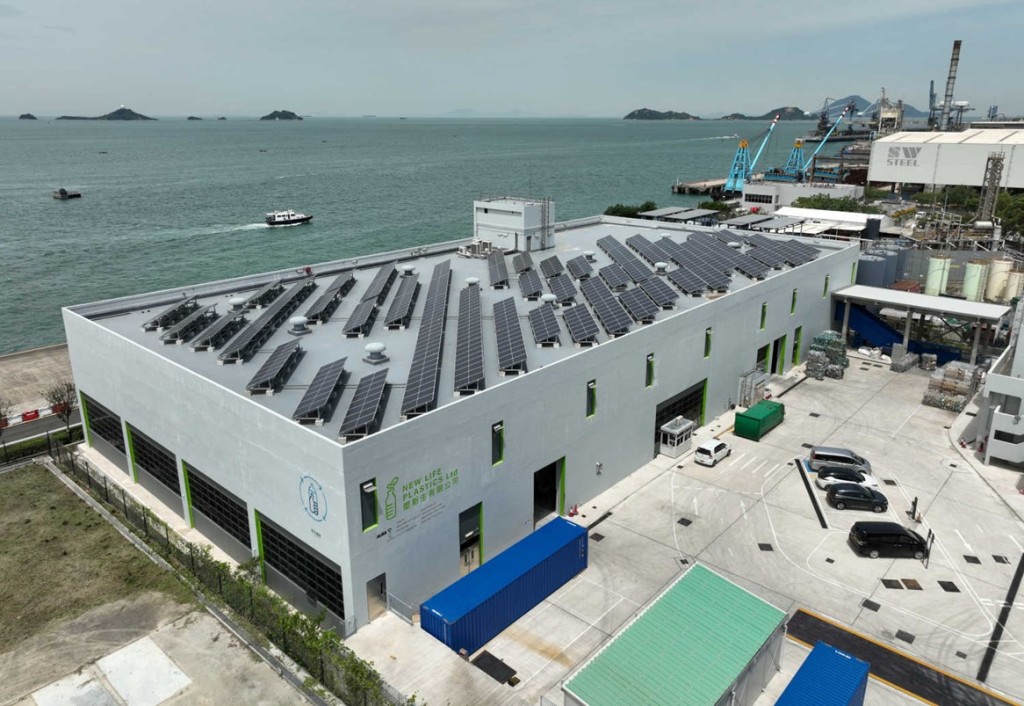
There are various plastic recycling facilities in Hong Kong and the quantity of plastics recycled locally in 2023 was about 126,600 tonnes. As an example, a recycling company in Tuen Mun EcoPark, – established as a joint venture between an international beverage manufacturer and a local waste collection firm – started operations in January 2022. With a capacity of 900 tonnes of PET bottles per month, the facility upcycles the plastic waste into high-quality recycled PET – or rPET – flakes that meet food-grade ready standards.
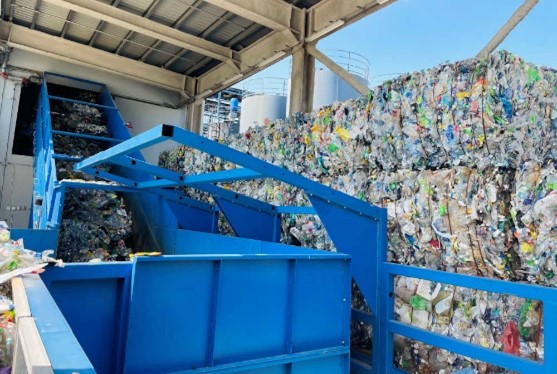
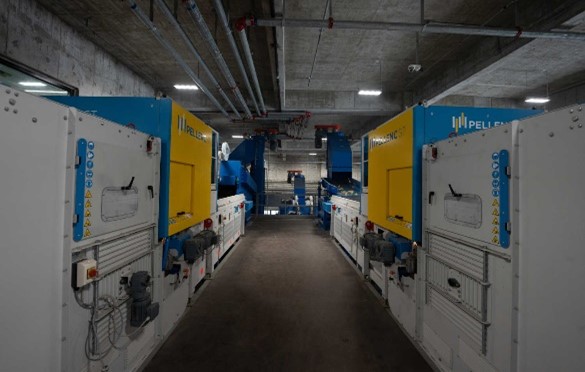
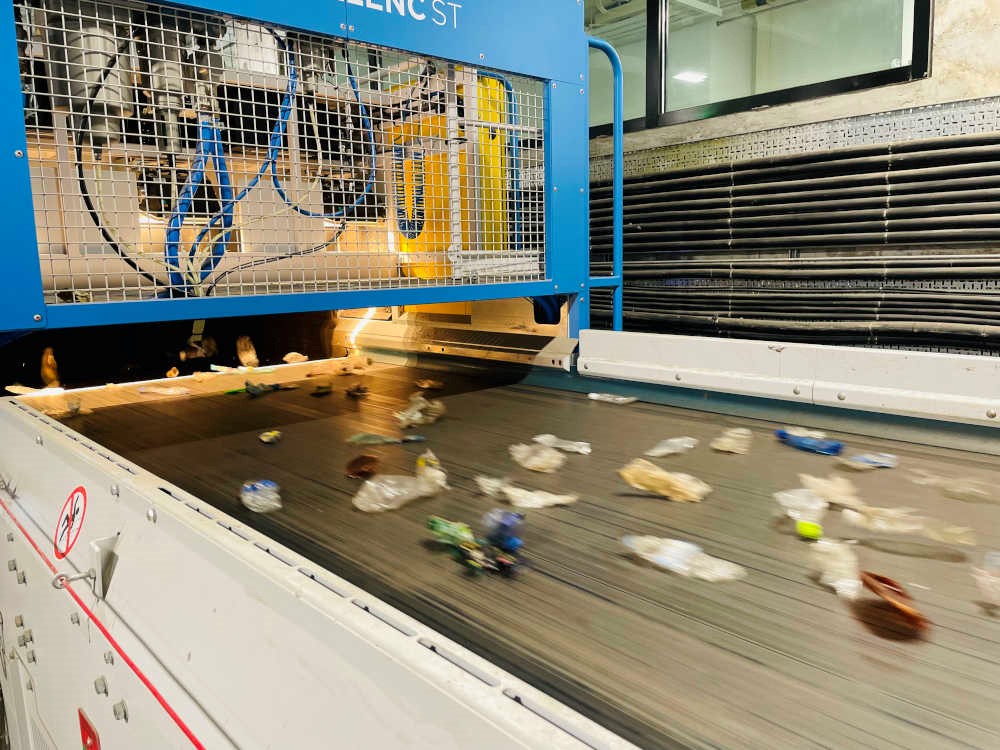
Their process starts with de-baling, where bottles are fed into the processing line via an in-feed conveyor. Metal separation and label removal follow, ensuring that only pure plastics move forward. Advanced optical sorters then categorize the bottles by type (PET or high-density polyethylene) and color (transparent or colored), based on wavelengths of light reflected. Any remaining impurities are manually sorted, ensuring the highest quality of recycled materials.
The bottles then undergo wet shredding. The plastic is cut into flakes and dirt, and residual liquids are rinsed out. Industrial detergents, defoamers, and caustic soda are used in the washing process with hot water for PET bottles to meet food-grade standards. The flakes are then rinsed, dewatered, and air-dried before undergoing a final quality check. The end product of high-quality rPET flakes will become key ingredients for various manufacturing applications.
For waste beverage cartons, Hong Kong’s first modern paper pulping facility at EcoPark will begin trial operation by the end of the year, with full operation expected next year, with a view to processing greater variety and volume of wastepaper in Hong Kong. This should be sufficient to handle all locally collected cartons, marking a significant milestone in our recycling journey.
It is gratifying to see our government attacking pollution and waste with a market-led strategy, promoting suppliers to devise their own collection and recycling chain, to embark on a fast journey to recycling of plastic and carton waste, bringing us in line with other cities in reducing and recycling waste.
For us, the reduction in waste dumped to the landfills and the reduced risks of spreading microplastics is worth our applause.
Veteran engineer Edmund Leung Kwong-ho casts an expert eye over features of modern life