I know there are a lot of bus enthusiasts in Hong Kong. They sometimes stand in the roadside just to take a photo of their favorite bus model. But I only came to understand why they can be so attracted to old buses when I had the opportunity to see vintage ones on display in an event organized by Citybus recently.
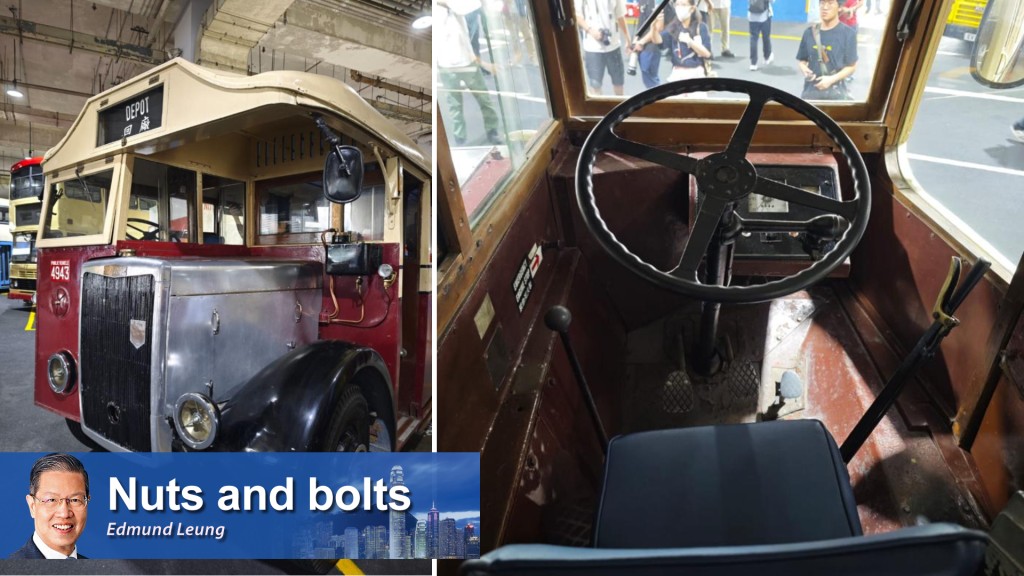
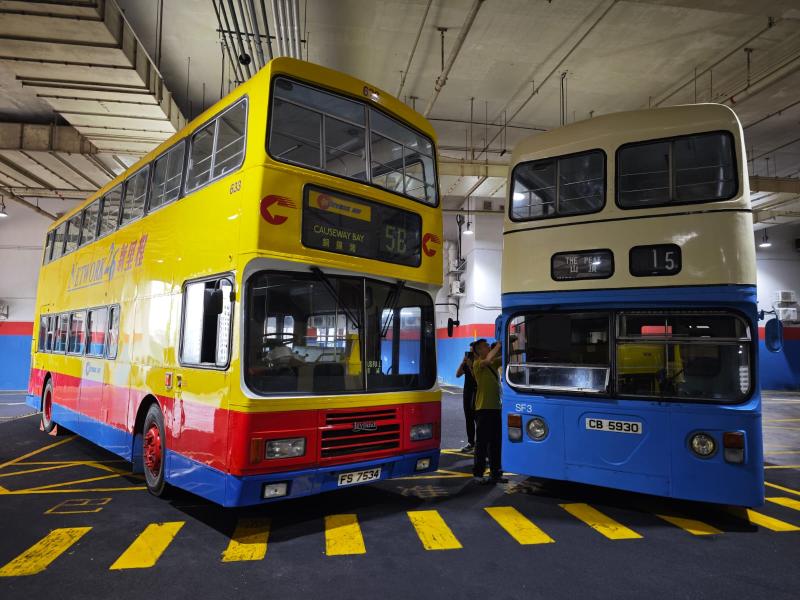
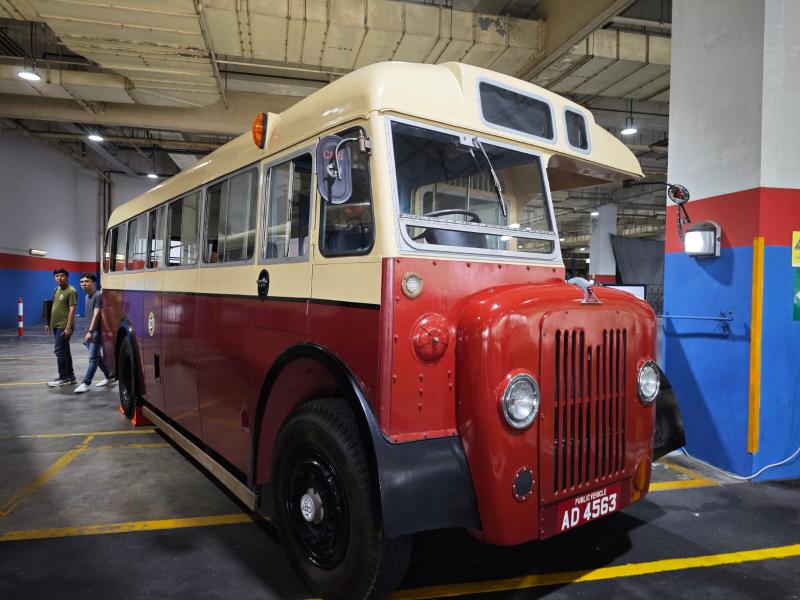
On display was a full range of buses that have served us on the Hong Kong Island since World War II. Famous names include Tilling Stevens, Guy Arab and various models of Leyland buses from the Atlanteans, Fleetline to the main range of Olympians, which later became the Volvo make, when British Leyland broke up and was rescued by the Swedish vehicle group in the 1980s.
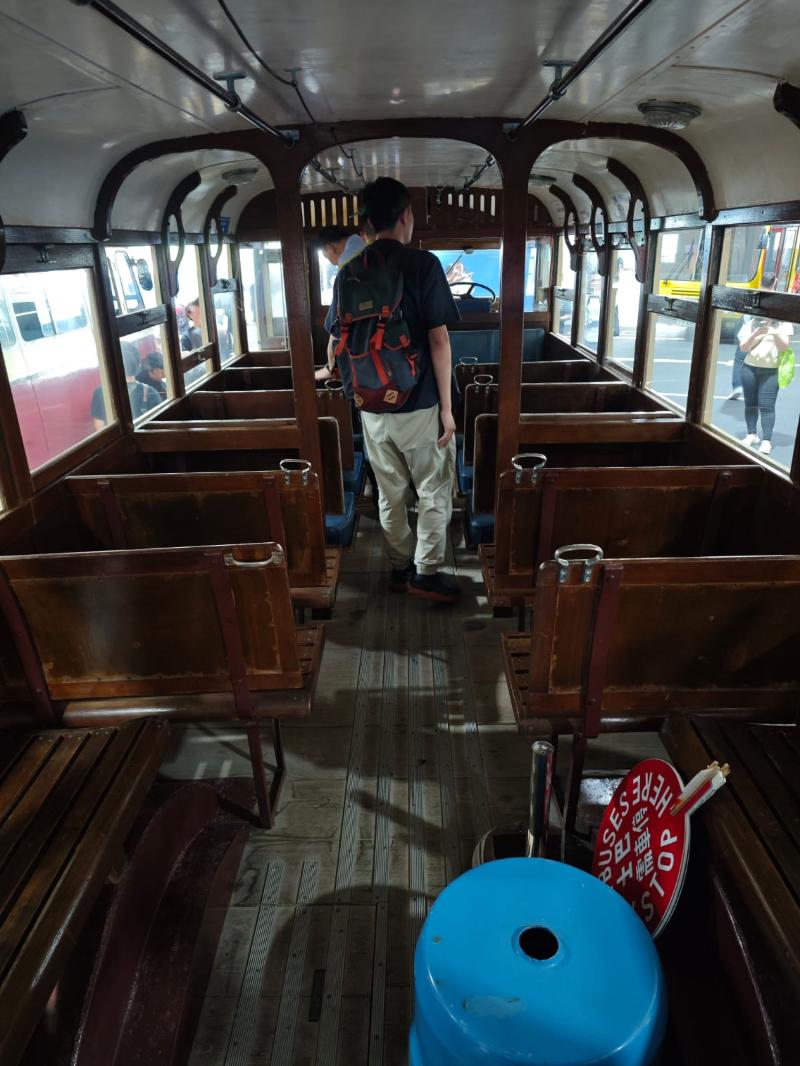
The interior of Tilling Stevens bus that includes wooden seats.
Hong Kong was under colonial rule until 1997, and our franchised buses were required to be made in the United Kingdom or within the British Commonwealth.
The Transport Department also impose stringent requirements to ensure safe and reliable service for our citizens.
For use on public roads, there is a limit on the weight for each wheel axle – aimed at avoiding excessive wear to minimize damage and frequent repair of our road surface.
For our double-decker buses, which are sometimes fully loaded, the axle loads could exceed the limit. This is why we were the first among all cities to start using three-axle chassis to spread the heavy axle loads of our jumbo double-decker buses.
Bus engines also must not be allowed to emit excessive emission and have followed the best tailpipe emission standards through the years to the present Euro 6 Standard, helping to improve our air quality in city centers.
Readers may be pleased to note that the emission level of Euro 6 diesel engines can be even lower than Euro 6 petrol vehicles for private cars, especially as they run on roads with warmed up engines, compared to private cars, which often run cold for short distances with their emission control systems running ineffectively.
To ensure reliable service with infrequent breakdowns to minimize disruption to passengers and other road users, buses are required to be scrapped after a maximum age of 18 years. That is another reason why we do not see vintage buses in service, even though some of them may still be in perfectly serviceable conditions.
It is also pleasing to see that the service and maintenance schedules are designed to ensure total safety and high reliability by experienced teams of engineers and skilled technicians working tirelessly and effectively. Together with efficient procurement of spare parts and essential replacement components, they all help to make bus fares competitive and affordable.
But what attracted me most to the display was not just the vintage look of the old buses, but also the nostalgic memories they brought back from my school days.
I went to school on buses in the 1950s to ’60s, and the scent of the wooden body frame and seats of these vintage buses, with the old paint and varnish, reminded me of my young days at school, traveling to Bonham Road from Central.
I remember vividly watching the skilled driver, wearing a singlet and shorts, bracing his left leg on the bus fascia to heave the heavy steering wheel while negotiating sharp curves on that road. With precision, he clipped the tight and narrow road apex within a few centimeters of the pavement at what I thought was a high speed of 40 to 50 kilometers an hour. Yet, no matter how close it seemed, he always avoided touching the pavement – and never once crossed over the double white lines.
My dream then was to become a bus driver as I thought that was the epitome of speed driving, even accepting that it would be an uncomfortable experience as there was no air-conditioning to keep the driver’s cabin cool in the summer heat.
I also remember the bus conductors, who not only sold tickets and punched holes in our student monthly passes but also tried – often unsuccessfully – to stop us from boarding crowded buses. They would block the doorway with their arms and body, but we usually dodged past them and slipped inside. Still, they were generally patient and tolerant, and treated us like they were our kind uncles.
The display of the vintage buses records the history and evolution of the bus service in the last 70 years, gradually evolving with ever increasingly powerful engines and efficient transmission systems to enable the fully loaded buses to climb inclines on the steep slopes on Hong Kong Island – such as Garden Road (Cotton Tree Drive was not built at that time) – and later in the 1990s with air-conditioning systems adding an even heavier demand on the engines.
The improved layout, with coin collection receptacles placed behind the driver’s cabin and a new system directing passengers to enter through the front gate and exit through the rear, eliminated the need for bus conductors. This change significantly reduced manpower requirements.
At the same time, the bus service network expanded rapidly alongside our growing economy over the decades, making these efficiency improvements essential to meet rising demand.
Bus service accounts for more than 30 percent of our public transport journeys, and the routes and service intervals are continuously refined to meet our growing city. We should be thankful to the knowledgeable team of engineers and technicians who serve a vital role to ensure high levels of safety, reliability and comfort for passengers to enjoy their daily journeys to and from work.
Veteran engineer Edmund Leung Kwong-ho casts an expert eye over features of modern life