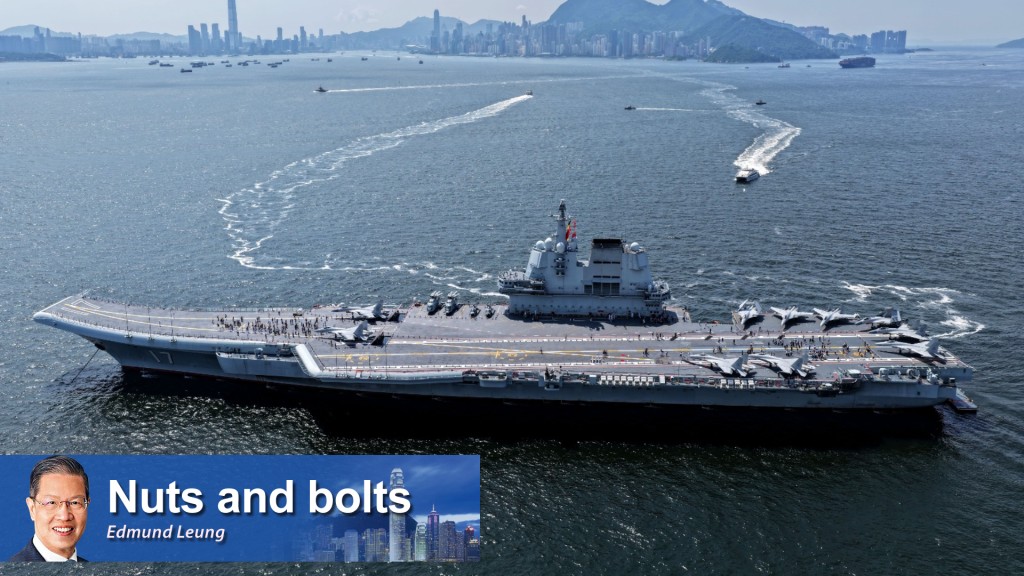
The Shandong aircraft carrier visited Hong Kong last week for a five-day visit, rousing enthusiastic attraction among citizens, especially students, to visit it. An aircraft carrier is an important component of a navy combat and defense system for a country, and China already has three of them.
I wrote on this some three years ago and I think it is time to revisit the subject as aircraft carriers have a lot of unique engineering features.
China started to build aircraft carriers many years ago to strengthen its naval defense system. A Ukrainian vessel was converted to become the Liaoning some years ago as our first aircraft carrier. The Shandong, weighing 60,000 tonnes, was the first aircraft carrier totally designed and built indigenously in China.
Work on it started in 2013 and it was ready for service in 2020. A third carrier, the Fujian, is much larger at 80,000 tonnes and uses an electromagnetic catapult system instead of a canted deck for the faster launching of aircraft.
Aircraft require a runway to gather speed before they have enough lifting force to take off. In a land-based airport, a runway strip some 300 meters is the minimum length, but long runways are difficult to fit in a sea-going vessel.
However, with the very high power-to-weight ratio for fighter planes – as distinct from commercial aircraft built to carry a large capacity of passengers and goods – the length of a runway can be shortened.
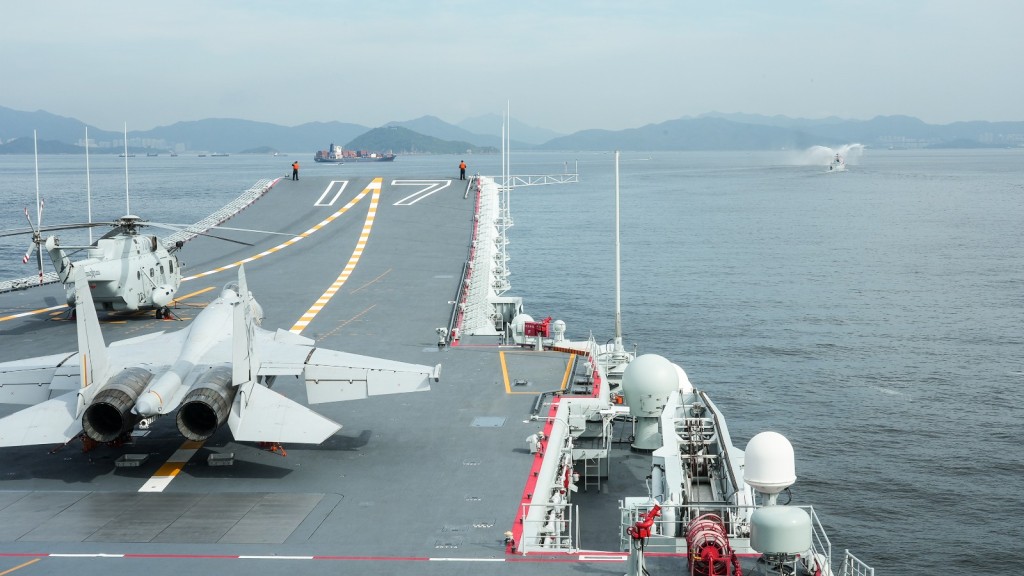
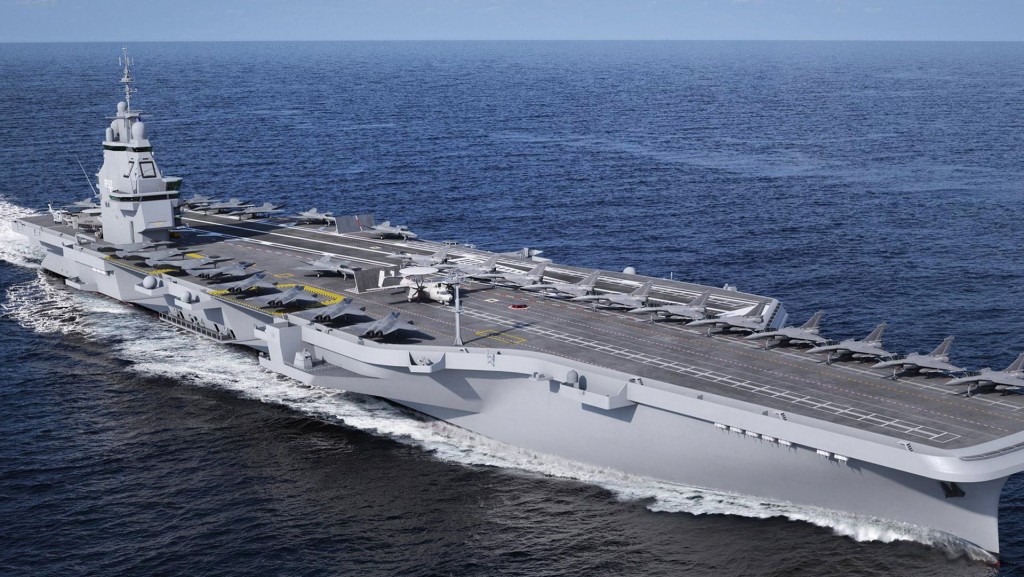
To further assist take-off operations, a canted end of the runway, like a ski-slope, helps to lift the aircraft, and the Shandong uses a 15 percent canted section at the front end for this purpose. Hence the reason for the raised deck that distinguishes it from other aircraft carriers.
The Shandong aircraft carrier, which visited Hong Kong recently, has a deck that can allow for two runways. XINHUA
The Shandong has a deck that can allow for two runways, to enable quicker turnaround of taking off and landing, all within the total length of 310m and 75m across, though this already has an area of about two football pitches.
Modern aircraft carriers use a propulsion method to launch fighter planes as it is more versatile. Steam propulsion systems can launch planes up to 200 kilometers per hour at a short distance on the vessel deck, but charging the steam cylinders to power the pistons takes time and may affect the quick launching successively.
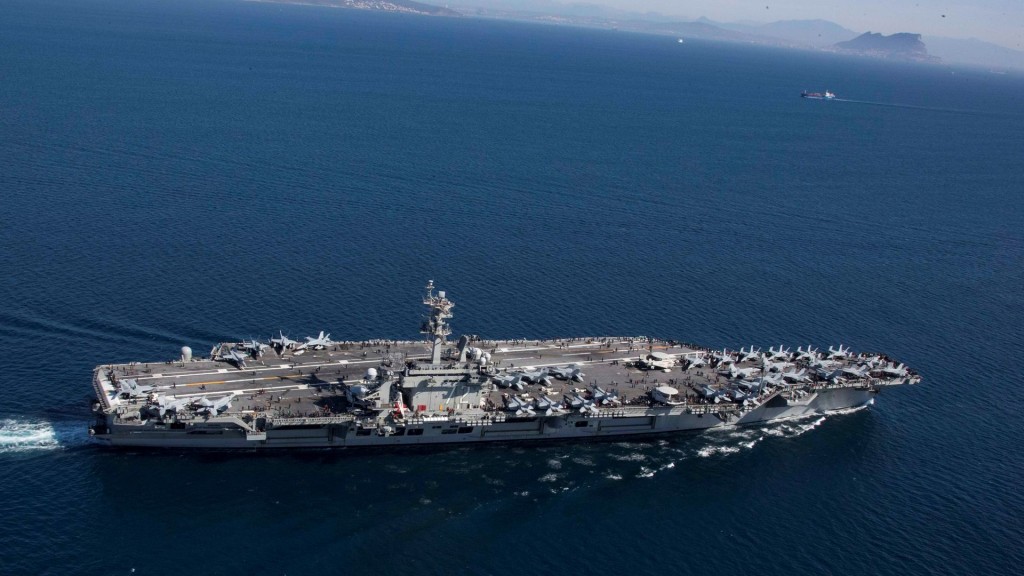
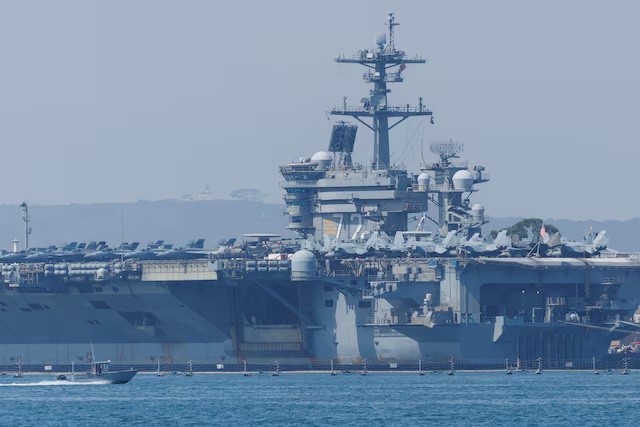
The Fujian uses an electromechanical propulsion system as it is more versatile and can recycle much faster, helping to launch a series of fighter planes almost continuously. It also does not require a large steam generator which favors only nuclear power vessels as Chinese aircraft carriers use conventional fossil fuel.
Additionally, the electromechanical propulsion system eliminates the need for continuous maintenance of steam pistons, ensuring more reliable operation – a critical factor for naval applications.
For effective combat, aircraft carriers use both helicopters, which can carry a much larger capacity of navy officers and equipment for more efficient surveillance, and different models of fighter planes for quick launching of missiles at high speed.
As we can see from the display on the flight deck, the Shandong carries a series of aircraft, from helicopters to fighter planes, totaling 36 in number.
Previous generations of fighter planes use folding wings for easier storage, but with the new carriers’ much larger carrying capacity, fixed-wing aircraft, which are much better for flying and maneuvering, can be stowed.
Landing fighter planes calls for even more difficult challenge as it is necessary to bring them to a complete stop from some 200kph as they touch down, all within a runway distance of some 200m.
Mechanical arrestors, usually by strong polyester bands attached to the deck, provide the strong forces to decelerate the planes, as air brakes and wheel brakes will not be effective and accurate within such short distances, especially on a slippery flat metal surface exposed to weather.
But the high stresses caused at these landing maneuvers require strengthening of the fuselage structure and landing gear of the fighter planes for repeated operation without weakening.
The deck is generally flat and free of any surface structures, and the forecastle and observation tower are located at one side. Sections of the deck can be lowered and raised as hatch covers to allow various aircraft to be lifted to the deck and returned for quick stowage.
Unlike sea vessels for commercial operations, which are built to carry maximum capacity with low fuel costs, aircraft carriers are designed for fast movements – so lightness and versatility are key features. Speed and reliability are vital features, and those require a lot of precision engineering input.
Engineers design different machines for a wide variety of purposes, but those in the military services follow a different philosophy and require special training. For security purposes, their technology is not usually shared with the public, unlike those for civil and commercial service.
Veteran engineer Edmund Leung Kwong-ho casts an expert eye over features of modern life