Read More









Varying service quality among sign language interpreters in Hong Kong has forced more than 80 percent of deaf people to turn to friends or colleagues instead, a survey has found.
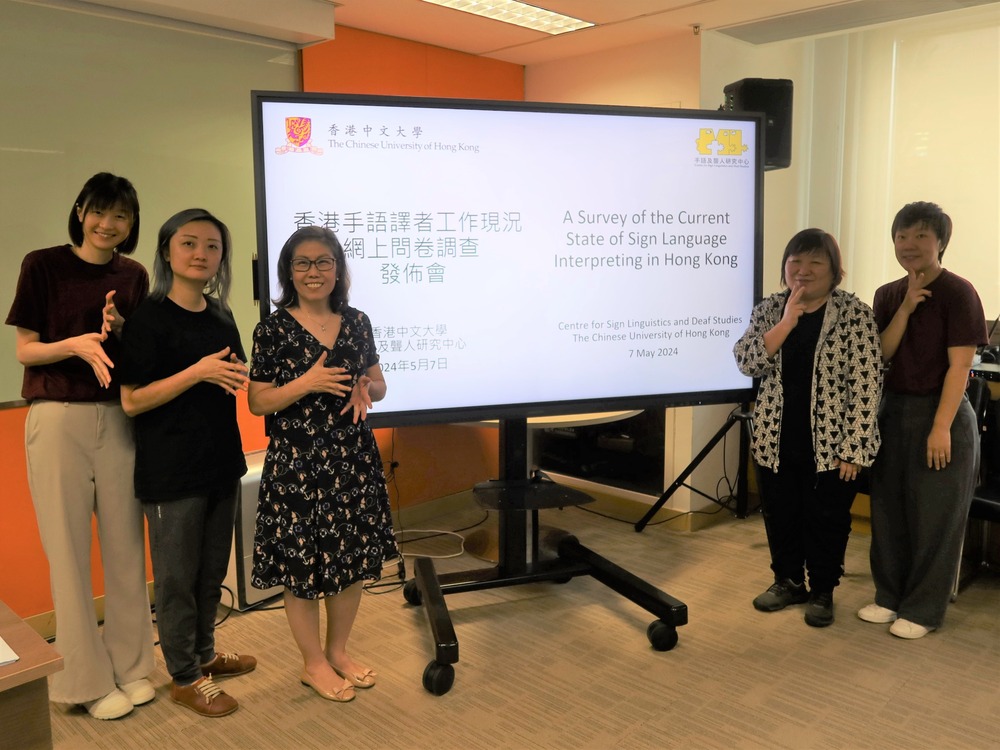
The survey, conducted by the Chinese University’s Centre for Sign Linguistics and Deaf Studies, has shed light on challenges faced by deaf individuals in accessing quality interpretation services.
The online poll in March and April took in 185 respondents – 31 deaf interpreters and 154 normal-hearing interpreters.
Nearly half were found to have less than five years’ experience.
Around 60 percent are under 45 years old, and the majority lacked significant experience.
Joyce Pun, a sign interpretation service user and deaf interpreter, recounted a bad encounter at one stage with a voluntary interpreter who had a poor attitude.
“The interpreter was late and hadn’t made any preparations before each interpretation service,” Pun said.
The interpreter also failed to translate content involving specialist terminology accurately and even “added personal opinions during a class, undermining the integrity of the interpretation service.”
She asked the Hong Kong Council of Social Service to address the issue, but it refused, saying the interpreter was “doing a good deed” by volunteering. That, Pun said, neglected the importance of interpretations to the deaf.
The center called on the government to step up training for interpreters and set up a territory-wide accreditation system for testing interpreters.
Project investigator Chan Yi-hin said there are no associations to provide guidance and support for sign language interpreters in Hong Kong and no accreditation system to verify their abilities.
She said 86 percent of the respondents agreed that accreditation would contribute to professional development for interpreters overall, with 54 percent expressing their willingness to participate in accreditation assessments.
Regarding the standard of the accreditation assessment, Chan said, the government could refer to developments in countries such as the United States, which had a comprehensive system for training sign language interpreters.
“In the United States, interpreters undergo written exams to test their knowledge, skills tests to assess their abilities, and must meet specific academic criteria,” she said.
Establishing a robust quality assurance system in line with international standards can benefit deaf people, the industry and society as well, she added.