Read More






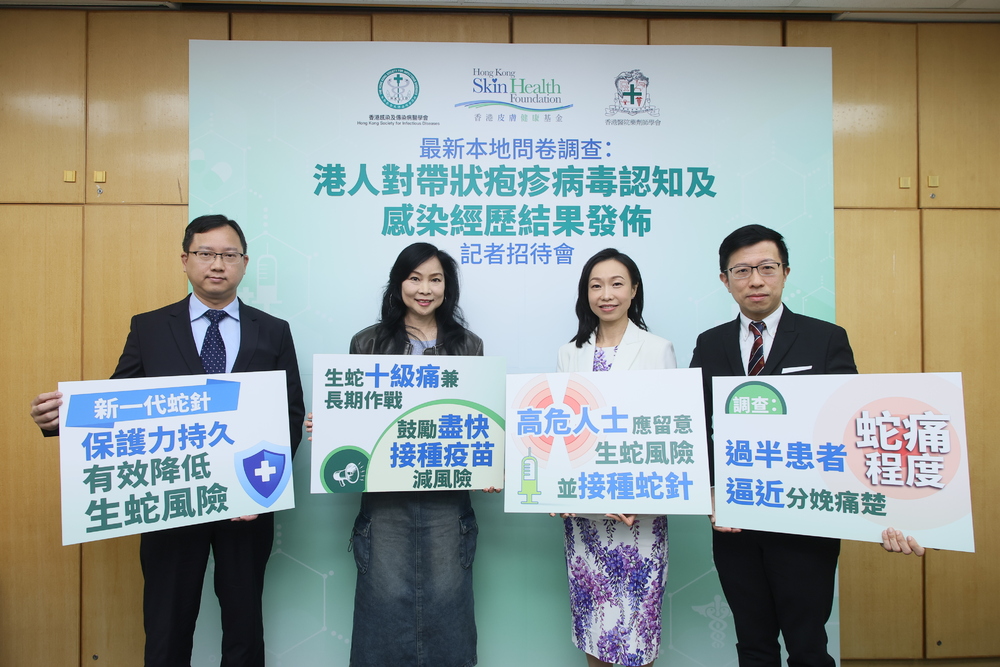
One in three adults in Hong Kong has experienced shingles at some point in their lives, according to a survey conducted by the Hong Kong Society for Infectious Diseases, the Hong Kong Skin Health Foundation, and the Society of Hospital Pharmacists of Hong Kong.
The survey involved 2,743 citizens aged over 18, and revealed that over 30 percent of respondents had contracted shingles, with 60 percent of them experiencing the disease and its complications for more than a month.
Shingles, a common disease in the city, is caused by the varicella-zoster virus - the same virus responsible for chickenpox.
Ada Lin Wai-chi, the president of HKSID, explained that after recovering from chickenpox, the virus remains in the nerves of the body.
"When the immune system becomes weak or under pressure, the virus can reactivate and manifest as shingles," she said, adding that research indicates that over 90 percent of Hongkongers have had chickenpox.
The survey also revealed that 60 percent of shingles patients had endured severe pain, with 15 percent of them describing the pain as being comparable to giving birth.
Kingsley Chan Hau-ngai, a dermatologist and president of HKSHF, said: "Shingles can significantly impact patients' quality of life, affecting their mood and sleep due to the intense pain. Even without physical contact, the rash itself can cause continuous pain akin to being stung by needles."
Shingles can also lead to various complications, such as postherpetic neuralgia, where the pain and tingling persist even after the blisters have cleared.
Chan added that there is a growing trend of younger individuals, including those aged between 30 and 40, experiencing the disease.
"In some cases, patients in their early 20s or even teenagers have been affected, potentially due to academic pressure," he said.
Experts have observed low awareness and knowledge among Hongkongers regarding the disease and its prevention. The survey indicated that nine percent of respondents believed they would never experience shingles again after having it once.
Vice president of SHPHK So Yiu-wah said: "Individuals with weakened immune systems can still develop shingles multiple times."
Financial constraints, concerns over side effects and the belief that they do not belong to high-risk groups - such as those with cancer, chronic diseases or infectious diseases - were cited as reasons for the majority of respondents not receiving the shingles vaccine.
Shingles vaccines are currently not covered under the Vaccination Subsidy Scheme, placing the financial burden on individuals.
So said: "Some 80 percent of citizens hope for the government to provide free shingles vaccines for high-risk groups."
The three medical groups recommended that the government consider including shingles vaccines in the scheme based on the latest data and needs, along with increasing health education efforts to enhance public understanding of the disease and its preventive measures.
charlotte.wu@singtaonewscorp.com