Read More


Night Recap - October 2, 2026
12 hours ago
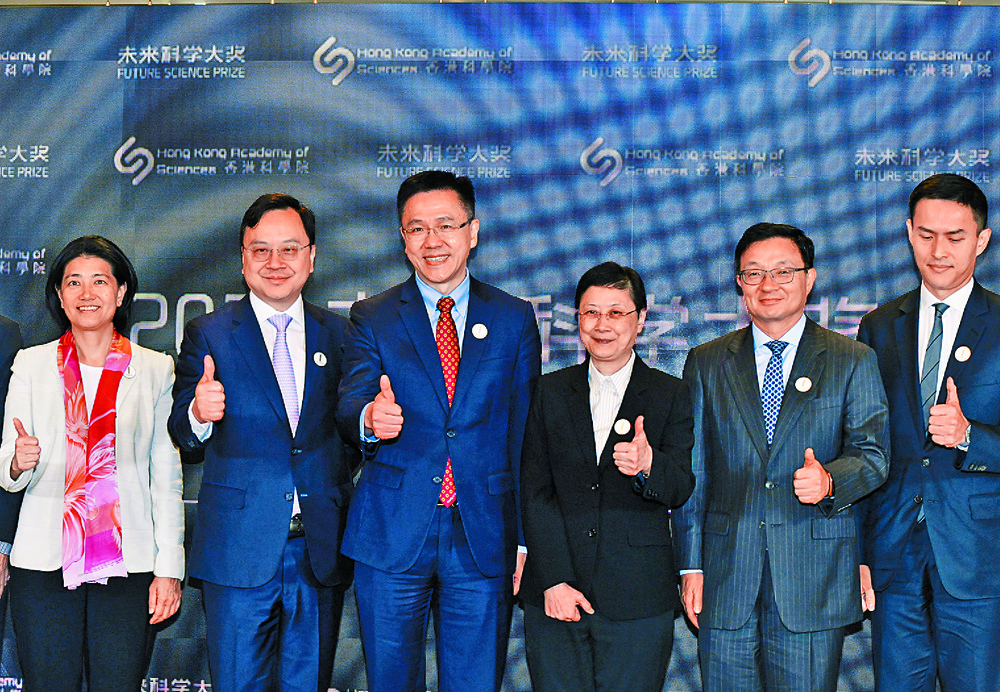
Eight mainland scientists have won this year's Future Science Prize, also known as the "Nobel Prize of China."
Winners in each category will receive US$1 million (HK$7.8 million), come October, in a ceremony in Hong Kong that is expected to see more than 100 top scientists attend.
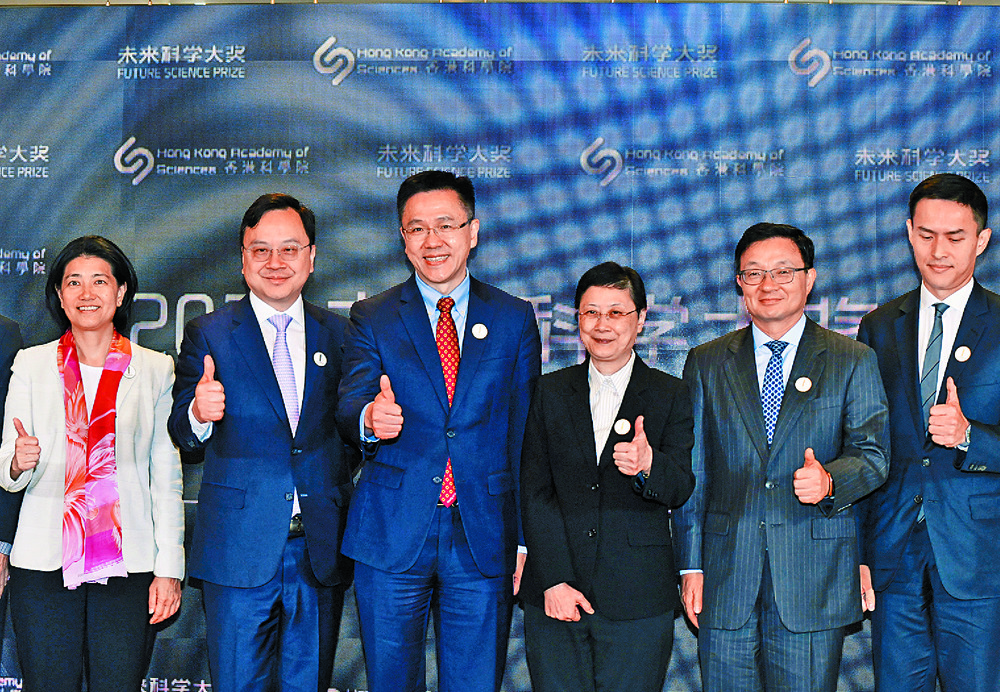
The awards were announced in a simultaneous press conference in Beijing and Hong Kong.
The life science prize was won by Chai Jijie and Zhou Jianmin, while the physical science prize went to Zhao Zhongxian and Chen Xianhui.
The mathematics and computer science prize went to He Kaiming, Sun Jian, Ren Shaoqing and Zhang Xiangyu.
Chai and Zhou primarily researched how the immune systems of plants helped them resist pest infestations.
Zhao and Chen made breakthrough discoveries in high-temperature superconducting materials and contributed to the systematic improvement of transition temperatures.
The mathematics and computer science award-winning team proposed deep neural networks that have propelled the development of artificial intelligence, enabling the networks to reach unprecedented depths and achieve previously unattainable capabilities.
This led to groundbreaking achievements, including AlphaGo, AlphaFold, and ChatGPT.
In the runup to the Future Science Prize ceremony at the Hong Kong Palace Museum on October 17, there will also be a science summit at Hong Kong Science Park on October 14 and 15 as well as an Asian young scientists fund project meeting at the University of Hong Kong on October 16.
The awards week will feature a series of activities that brings together nearly 70 top scientists from nine countries.
The summit will bring in more than 20 experts and scholars from around the world, including Nobel chemistry laureates Gregory Winter and Michael Levitt, Breakthrough Prize in Life Sciences laureate Shankar Balasubramanian, as well as members of the Chinese Academy of Sciences and the Hong Kong Academy of Sciences.
Secretary for Innovation, Technology and Industry Sun Dong said the events will enhance recognition of China's scientific development and promote Hong Kong as an international science and technology innovation hub.