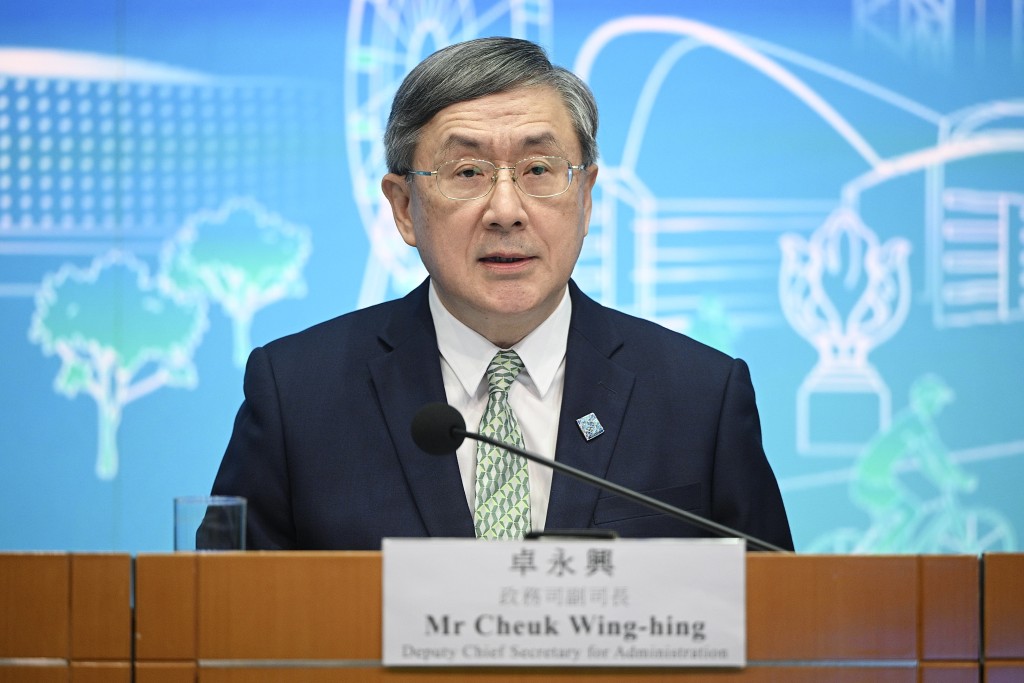
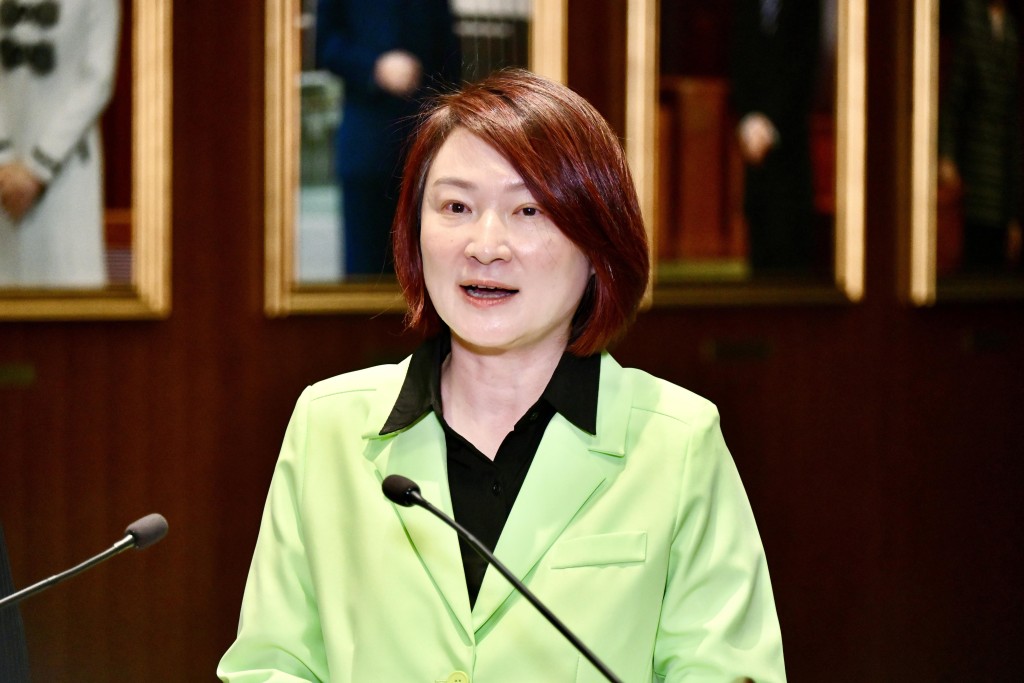
Responding to claims that Hong Kong's child allowances fall short of Singapore's, Deputy Chief Secretary Warner Cheuk Wing-hing stressed that birth incentives cannot be judged purely by monetary amounts, and that measures must be tailored to local conditions.
According to the Policy Address 2026, the government rolled out 11 new measures to encourage childbirth, including extending the HK$20,000 newborn cash incentive for three more years and launching a progressive reward scheme that raises the incentive to HK$30,000 for second and subsequent children born.
Speaking at the press conference on Monday, Cheuk described the 11 new measures as “very practical”. To explain the increase in the incentive for a second child, Cheuk said 57 percent of newborns in 2025 were first children, while 43 percent were second children, reflecting that many Hong Kong families are open to having more than one child.
The government hoped to encourage families to consider having another child with progressive incentives, enabling residents to feel the support for childbearing from society, he said.
Cheuk noted that the government formulated the measures based on Hong Kong’s actual circumstances, emphasizing that the newborn cash incentive launched three years ago has demonstrated the determination of the government.
He said a balanced approach to public policy is essential and overemphasizing one area could compromise resource allocation elsewhere, as the financial commitment for the fertility bonus is approximately HK$2.2 billion over the first three years, with additional funding allocated this year.
The current measures are well-suited to the prevailing circumstances and will be reviewed after two years of implementation and continuously refined to adapt to Hong Kong's evolving situation, he added.
He further noted that the government hopes to extend housing support to newborn families through faster public housing allocation with priority or concessions for Home Ownership Scheme flat purchases, and an increase in the mortgage guarantee limit for White Form buyers from 90 percent to 95 percent to help families in upgrading their housing environment due to childbirth.
As for after-school care services, Cheuk cited a survey conducted by The Hong Kong Polytechnic University on behalf of the government, which received favorable responses.
The findings showed that relevant families found the service effective in alleviating emotional stress for women, and working households’ monthly income increased by approximately HK$3,500 on average.