
Read More




Hong Kong will combat the use of AI in criminal activities, including deepfakes and AI-generated fraud, through legislation.
The government will study regulating deepfakes through legislation, as well as legislative powers to remove online content that may constitute financial fraud, including AI-generated fraud.
The Cybercrime Sub-committee of the Law Reform Commission (LRC) is reviewing existing laws from the perspective of cyber-enabled crimes. The sub-committee will also seek public views on tackling the production of pornographic images and online scams and fraud involving deepfake technology.
Later this year, the Financial Services and the Treasury Bureau will conduct a public consultation on expanding the legal framework to encourage sectors such as technology and telecommunications to enhance their ability to detect and remove fraudulent content, including content generated through the misuse of AI.
The government also plans to strengthen protection for users who are minors.
Under the Values Education Curriculum Framework (2026), the Education Bureau (EDB) will support schools in guiding students to use AI tools and resources appropriately and prudently, with proper values and attitudes.
A dedicated task force on minors’ use of social media will be established under the working group led by the Department of Justice. It will coordinate with relevant departments to review the risks associated with minors’ use of social media and assess the need for more targeted solutions, including legislative and administrative measures.
A Market Assessment of AI Ethical Risks will be promoted. The Innovation, Technology and Industry Bureau (ITIB) will select pilot departments that require bidders to comply with AI guidelines issued by the Digital Policy Office(DPO), and to submit safety and ethics compliance declarations for AI technologies used in procuring public-facing AI service projects. Subject to the pilot results, this requirement will be gradually extended to all bureaux and departments.
To promote the safe and orderly application of AI across industries, the DPO will reach out to industry bodies to drive the industry-led development of sector-specific AI application guidelines, accreditation and governance frameworks, and to provide professional advice and support.
The Hong Kong Monetary Authority and the Insurance Authority have drawn up action plans to foster responsible AI adoption and facilitate competency development among practitioners. The Securities and Futures Commission will supervise the establishment of robust governance frameworks, as well as industry risk-management and internal-control measures.
To examine legal liability arising from accidents caused by AI products, a working group led by the Department of Justice will review whether existing law is adequate for addressing liability issues resulting from accidents or damage caused by AI products, and how such issues could be addressed through legislative or regulatory measures, including “soft law” such as codes of practice, codes of conduct, and guidelines.
Guidelines on AI agent management will be introduced. The DPO is piloting the use of AI agents within the government and has incorporated relevant provisions into an AI adoption guide for departments. The government will promulgate AI agent safety-management guidelines applicable to society at large next year.
The government will also examine the impact of AI on employment, with the Labour and Welfare Bureau soon publishing the mid-term update of Manpower Projection, which will analyze the impact of AI adoption on Hong Kong’s labor market.
The government also plans to promote AI training to the general public.
More than 200 training courses and activities under the “AI for All” Inclusive Program will be rolled out by the first quarter of 2028, promoting AI awareness and responsible use in a tiered manner. The initiative aims to help the general public, university students, young researchers, and professionals harness AI for professional empowerment, and to support working people and SMEs in applying AI for practical improvement.
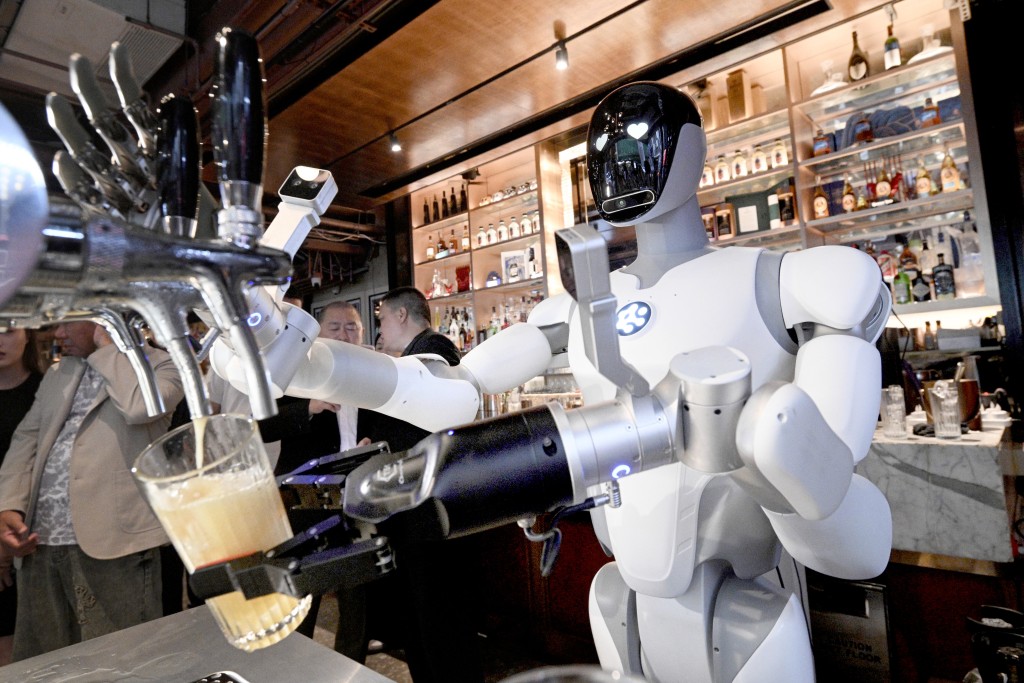
The government will also roll out the “Robots in the Community” Pilot Program to raise citizens’ awareness of embodied AI and promote digital inclusion.
Upon its upgrade, Upskill Hong Kong will launch an 18-month AI upskilling campaign in the first half of 2027, including a free online training course for all focused on AI applications in the workplace. Participants who complete the course may enroll for free in short-term, advanced AI application courses across various industries, with an expected benefit for around 40,000 employees.