
Read More
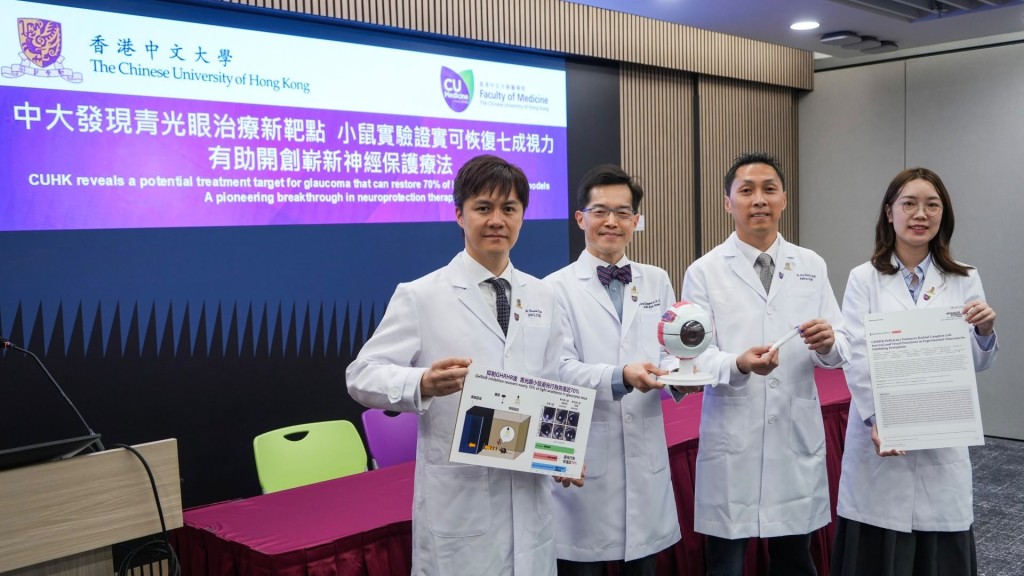
Researchers at the Chinese University's (CUHK) Faculty of Medicine have discovered that inhibiting the growth of the hormone-releasing hormone receptor (GHRHR) in eye tissues might restore nearly 70 percent of lost vision in glaucoma patients.
ADVERTISEMENT
SCROLL TO CONTINUE WITH CONTENT
Glaucoma is the second leading cause of blindness worldwide — with over 80 million patients — and the primary cause of permanent blindness in Hong Kong, affecting approximately 120,000 people locally. Current treatments mainly focus on lowering intraocular pressure but cannot restore the impaired vision.
Using the mouse models with glaucoma, the CUHK team found that suppressing the GHRHR — a neuroendocrine growth hormone-related protein in the eye — not only restores vision but also protects retinal ganglion cells and reactivates visual signal transmission.
It also results in the recovery of nearly 70 percent of impaired vision in these animal models.
Chan Pui-man, associate professor in the Department of Ophthalmology and Visual Sciences at CUHK, explained that inhibiting GHRHR helps suppress a harmful process known as ferroptosis, thereby aiding the recovery of damaged vision in patients.
Chu Wai-kit, also an associate professor in the same department, expressed hope that the therapy could be translated into clinical use within five to seven years, offering new hope to glaucoma patients.
The findings were published in the journal Advanced Science.