
Read More
A medication commonly used to treat diabetes and aid in weight loss could offer a major breakthrough in stroke treatment, improving post-surgery brain recovery by 20 percent in severe cases.
ADVERTISEMENT
SCROLL TO CONTINUE WITH CONTENT
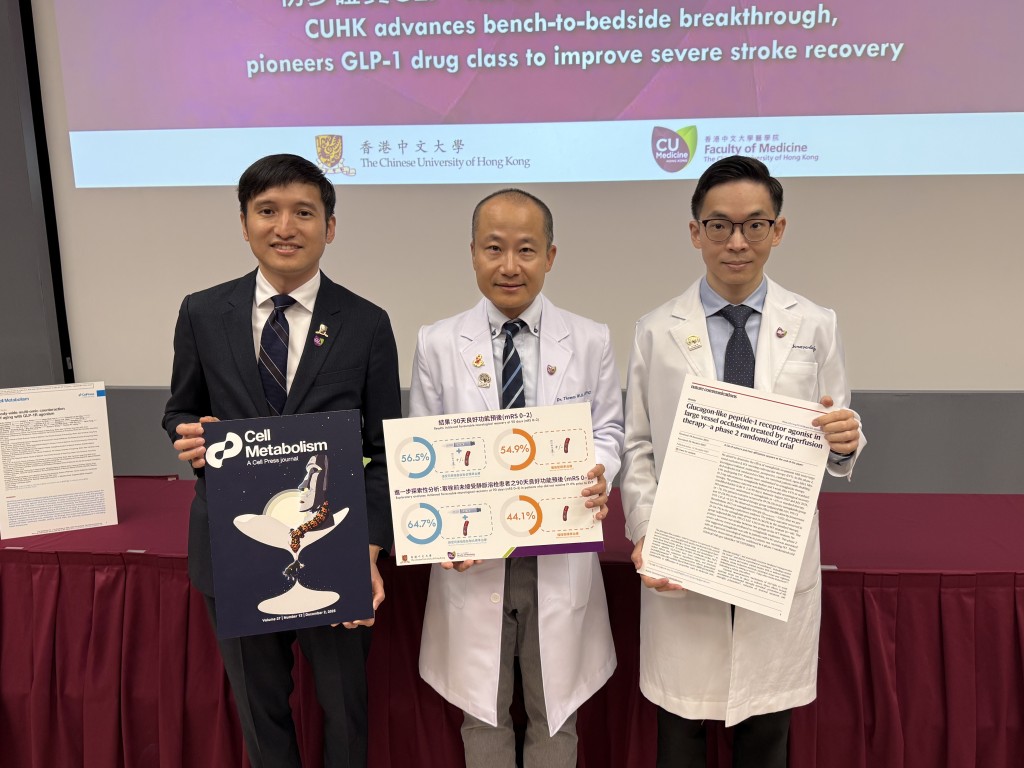
Preliminary research conducted by the Chinese University of Hong Kong (CUHK) reveals that GLP-1 drugs can significantly protect brain function and reduce long-term aftereffects for patients suffering from acute ischemic strokes.
As the global population ages, neurological diseases such as strokes—which often leave patients with severe, life-altering aftereffects—have become a growing public health concern.
The CUHK Faculty of Medicine recently announced promising research indicating that GLP-1, a drug widely known for treating diabetes and increasingly used as a "weight-loss injection," can enhance neurological recovery for specific acute severe stroke patients.
Professor Owen Ko Ho, an associate professor in CUHK’s Department of Medicine and Therapeutics, explained that Glucagon-like peptide-1 (GLP-1) serves as a vital signaling pathway in the human body, increasing insulin and lowering glucagon levels.
While the medical community has primarily used it for blood sugar and weight management, many of its benefits remain undiscovered. Earlier studies by CUHK had already shown that GLP-1 produces "anti-aging" effects across multiple organs in animal models.
The burden of stroke is immense. Professor Thomas Leung Wai-hong, Lee Quo Wei Professor of Neurology at CUHK, pointed out that China records the highest number of stroke cases globally, with approximately 4 million new cases every year.
Ischemic strokes, which are caused by an acute blockage of blood vessels in the brain, can lead to brain cell death and subsequent neurological damage. Even when doctors successfully perform a thrombectomy—a surgery to physically remove the clot—patients are still at high risk of suffering from debilitating long-term aftereffects.
The CUHK research team previously discovered that a specific type of this drug, GLP-1RA, helps repair the blood-brain barrier in stroke patients suffering from large vessel blockages.
By repairing this barrier, the drug prevents toxic substances from leaking into the brain, effectively protecting vulnerable nerve cells.
To test this in a clinical setting, the team conducted a study between 2023 and 2024 involving 140 patients with severe large vessel occlusions. The trials took place at a hospital in Shandong and the Prince of Wales Hospital in Hong Kong.
The results were highly encouraging: among patients who underwent clot-removal surgery but had missed the window to receive clot-busting medication (thrombolysis) beforehand, those who were given two doses of GLP-1RA showed a 20 percent higher rate of good neurological recovery 90 days after surgery compared to those who did not receive the drug.
Assistant Professor Bonaventure Ip Yiu-ming, who led the research, emphasized that emergency stroke treatment is always a race against time.
Because patients who arrive at the hospital late often miss the critical time window for standard clot-busting drugs, the study specifically targeted this vulnerable group.
However, Ip cautioned that the findings are based on a Phase II clinical trial. While the initial results are highly promising, more large-scale studies are needed before the drug can be officially approved and implemented for everyday clinical use in stroke patients.