Read More






Night Recap - August 24, 2026
8 hours ago



IT manager sentenced to 22 months for stealing $1.2m in Deloitte laptops
21-08-2026 21:49 HKT





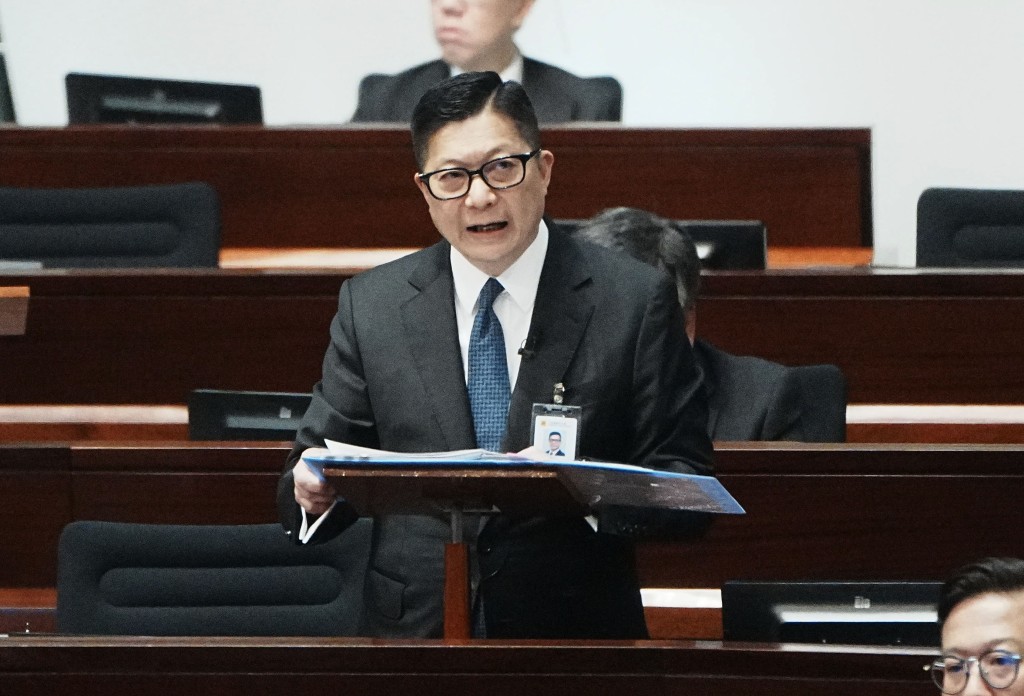
Hong Kong's top justice and security officials have defended amendments to the implementation rules of the National Security Law, clarifying new powers related to compelling device decryption and confiscating assets of those convicted of serious national security crimes.
Acting Secretary for Justice Horace Cheung Kwok-kwan and Secretary for Security Chris Tang Ping-keung attended a Legislative Council committee meeting to explain the new rules, which were formulated by the Chief Executive in consultation with the Committee for Safeguarding National Security (NSC).
Cheung stated that the NSC's work is not subject to interference from any Hong Kong institution and its decisions are not open to judicial review, a provision that extends to these amended rules.
He asserted that the amendments are designed to effectively prevent and punish acts endangering national security while complying with the human rights protections enshrined in the Basic Law and the National Security Law itself.
He added that the provisions were not unique to Hong Kong, having been modeled on existing local laws and legislation from other common law jurisdictions.
Secretary for Security Chris Tang Ping-keung addressed public concerns about a provision granting police the authority to require individuals to provide decryption methods, such as passwords, for electronic devices during an investigation.
He dismissed claims that this would allow police to demand phone passwords at will, stressing that such a power can only be exercised after officers obtain a court warrant for national security-related reasons.
Tang explained that refusing to provide a password after a warrant has been issued would be akin to physically barring police from entering a property during a warranted search, potentially constituting an act of obstructing an officer.
He reiterated that similar laws are common in jurisdictions like the United Kingdom, Australia, and New Zealand, and described the associated penalties as reasonable.
The officials also detailed new rules allowing for the confiscation of specified property from individuals convicted of serious national security offenses.
In response to lawmakers' questions about jointly owned assets, Tang clarified that the intent is to cut off funding for criminals, and only the convicted person's share of an asset would be subject to seizure.
For properties held under a joint tenancy (or "long-life deed"), the tenancy would be converted to a tenancy-in-common upon a confiscation order, allowing other owners to retain their respective shares.
Cheung added that there is a high threshold for asset confiscation, applying only to those sentenced to life imprisonment or more than 10 years in jail, or those suspected of financing national security crimes.
He also noted that a mechanism exists for individuals to apply to the court to have a confiscation order revoked or altered if they can prove it is disproportionate.
The amended rules also grant new authority to customs officers. Tang explained that previously, Customs could only inspect and check for items endangering national security but could not seize or confiscate them.
He cited past cases involving seditious publications where Customs had to detain the items and wait for the police to formally seize them.
The new rules streamline this process, allowing Customs officers to confiscate such materials directly.