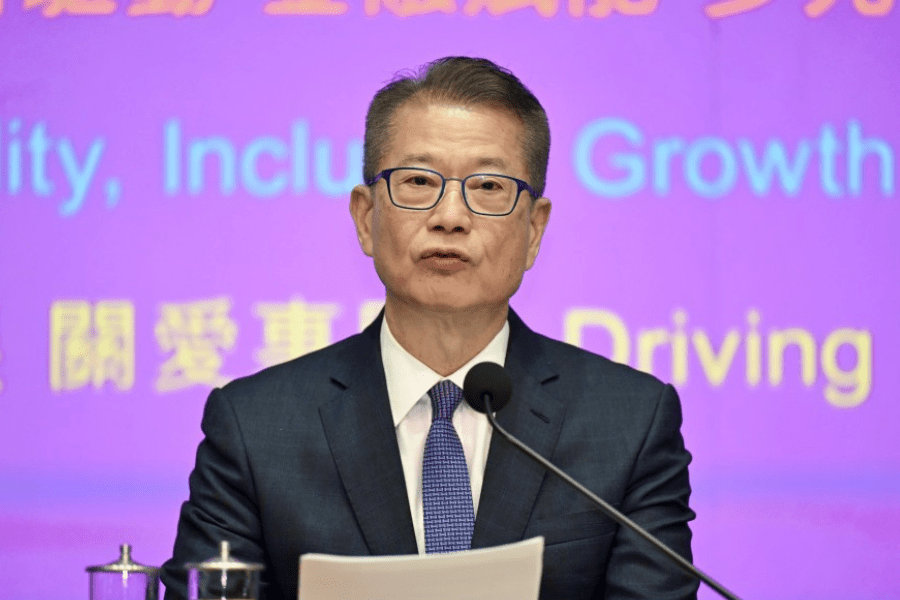
To proactively align with the national “dual carbon” targets and green and low- carbon development strategies, the government will promote the development of green industries and green transformation of enterprises, Financial Secretary Paul Chan Mo-po said.
As green industries and green transformation require the support of capital, technology and talents, it will create enormous business opportunities for Hong Kong, he said.
To reach the climate target of reducing the city’s carbon emissions by half from the 2005 levels before 2035 and achieving carbon neutrality before 2050, the government is actively implementing Hong Kong’s Climate Action Plan 2025, Chan reported.
Hydrogen Development
The government will formulate a hydrogen standard certification according to the Strategy of Hydrogen Development in Hong Kong. The authorities are consulting the trade on the framework, with a view to establishing a certification system that connects with both the Mainland and the world, building Hong Kong into a demonstration platform for the export of green and low‑carbon hydrogen technologies and products, Chan said.
The government will host the Hydrogen Week in May to foster international exchanges and organize visits to the Mainland on the development of hydrogen applications for overseas experts.
Green City
I·PARK1, Hong Kong's first waste‑to‑energy facility for treating municipal solid waste (MSW), has gradually commenced operation since the end of last year. Upon full operation, the facility can process 3000 tonnes of MSW per day and export over 400 million kilowatt‑hours of electricity to the power grid per year, which is sufficient to power 100,000 households, according to Chan.
With the development of the planned I·PARK2, Hong Kong is progressing steadily towards the target of zero landfill and carbon neutrality, Chan said.
For waste reduction and recycling, the government will reserve resources for launching a five-year plan to enhance and upgrade recycling infrastructure in three areas starting from the next financial year:
First, expanding the recycling network by gradually transforming GREEN@COMMUNITY into round‑the‑clock self‑service recycling facilities.
Second, extracting valuable materials from waste and turning them into raw materials for making green products through the use of technology.
Third, building a smart recycling network logistics system to enhance its cost‑effectiveness and efficiency.
Sustainable Development of Agriculture and Fisheries Industries
The government continue taking forward the Blueprint for the Sustainable Development of Agriculture and Fisheries, Chan said.
For the fisheries sector, the modernised marine fish culture farms at Wong Chuk Kok Hoi and Mirs Bay new fish culture zones have commenced operation. The Sustainable Fisheries Development Fund will continue to support research and development of fish fry and the development of processing facilities for local fisheries products.
For the agriculture sector, the government will select an operator in the first half of this year to construct and operate the first multi‑storey, environmentally‑friendly pig farm in Lo Wu.