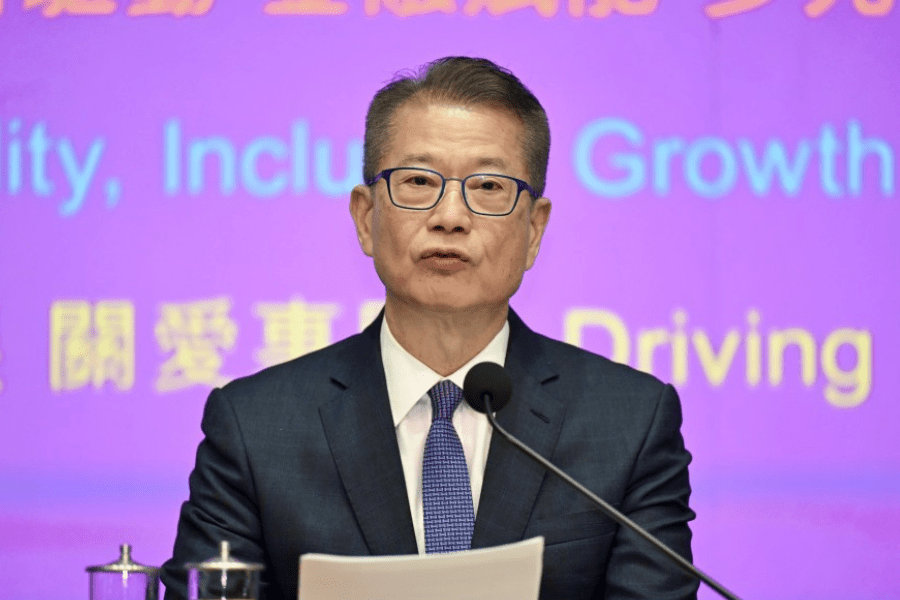
For decades, Hong Kong's annual Budget was anticipated largely for the "sweeteners" – electricity subsidies and tax waivers that offered short-term relief. Property and land policies typically took center stage, with welfare handouts acting as the annual pacifier. This year, Financial Secretary Paul Chan Mo-po has torn up that old playbook.
The 2026-27 Budget looks fundamentally different. It is leaner on immediate handouts but substantially heavier on forward-looking investment. This is a budget designed not just to manage Hong Kong's present, but to engineer its future.
The AI imperative
The most striking departure is the aggressive pivot toward artificial intelligence and technology. Unlike previous budgets where tech funding was siloed, this year's allocations are mass-oriented and systemic. Chan's announcement of the "AI+ and Industrial Development Strategy Committee" – which he will personally chair – signals this is a whole-of-government priority.
This draws a direct parallel to Singapore's 2026 Budget, which launched its own "Champions of AI" program. Both cities recognize AI as a horizontal enabler, not a vertical industry. The focus areas are ambitious: life and health sciences, robotics, drones, space technology, quantum computing, and new manufacturing. With computing power reaching 5,000 PFLOPS and the Sha Ling Data Park underway, Hong Kong is building the infrastructure, not just talking about it.
Northern Metropolis: the enabler
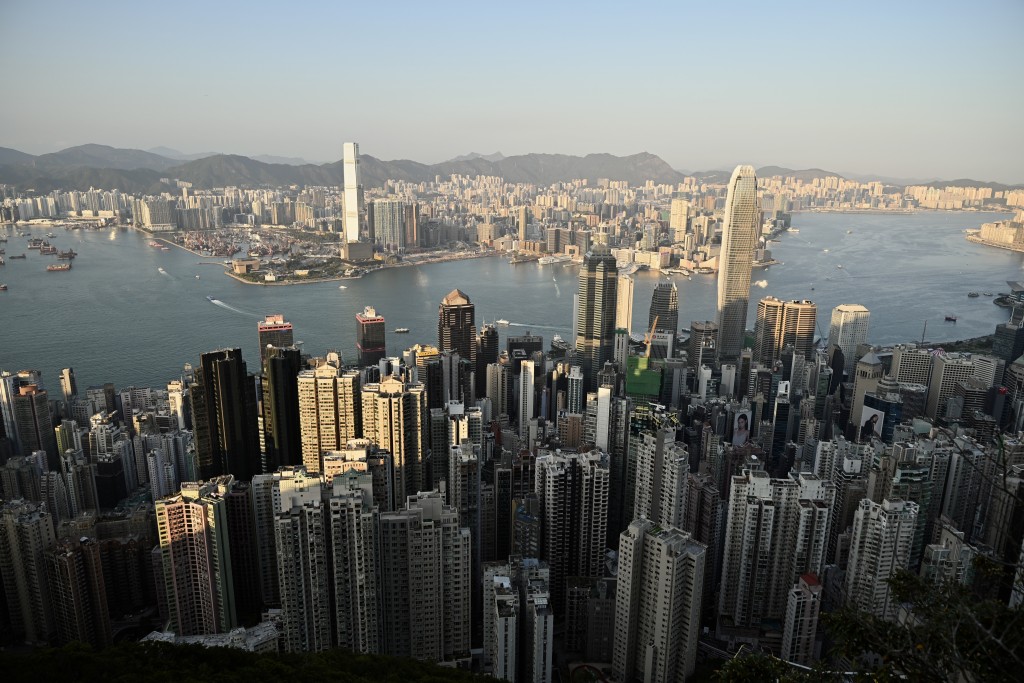
None of this would be possible without solving Hong Kong's perennial land shortage. Here, the Northern Metropolis emerges as the silent hero. An additional HK$20 billion has been earmarked for the San Tin Technopole, transforming the border area into a 30,000-hectare innovation engine.
This is where the ecosystem comes together. Hong Kong's five world-class universities provide the academic environment, while fiscal reserves and a bullish investment climate create the conditions for innovation that the city has long sought but rarely achieved.
A new social contract
Perhaps the most mature aspect is the handling of economic transition. As traditional shops close and low-skilled roles become obsolete, the government has resisted direct aid. Instead, the focus is on workforce transformation.
The government is to invest HK$2.5 billion to boost AI education and workforce skills. The Vocational Training Council has embedded AI as a compulsory component of higher diploma programs, ensuring baseline digital literacy across hospitality, design, and engineering. From AI-powered job matching to smart flood prediction, the government is leading by example. This supports workers while feeding talent back into the market – a circular model of labor sustainability.
The China factor
To a large extent, none of this is possible without the mainland connection. The Budget's emphasis on the Greater Bay Area and alignment with the country's 15th Five-Year Plan underscores that Hong Kong's tech ambitions are inextricably linked with national strategies. Finance and property – once the city's undisputed kings – are now repositioned into supporting roles. They remain crucial, but they are no longer the entire show.
A gleam of hope
For a city navigating economic uncertainty, Chan's Budget offers something invaluable: a gleam of hope. By betting big on AI and tech, backing the Northern Metropolis, and retooling the workforce for the digital age, Hong Kong is finally building a bridge to its own future. The question now is not whether the money has been allocated, but whether the city can execute at the speed that technology demands.