Less than a month into the new Legislative Council term, a wrong-way driving incident involving New People’s Party lawmaker Judy Chan Kapui is set to become the first test of the revised Code for Members of the Legislative Council.
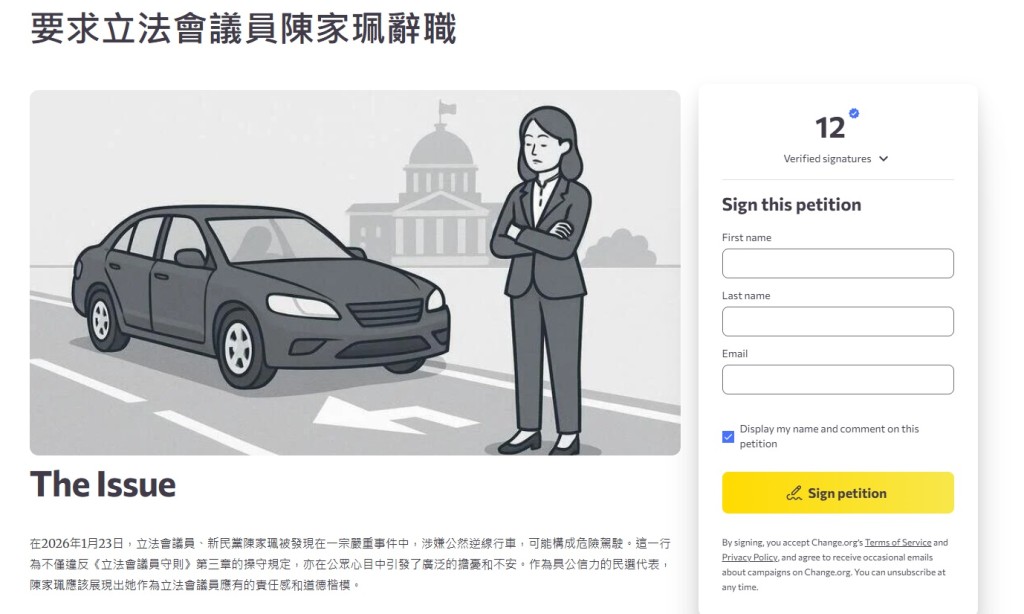
The controversy arose after footage circulated online last Friday, January 23, showing Chan driving against traffic on Jaffe Road in Wan Chai.
Chan initially said she had been rushing to a meeting and had ensured it was safe before proceeding to a car park.
Following strong public criticism over her explanation, Chan later issued a formal apology on social media and during a radio program, and voluntarily reported the incident to police the next day.
In comments to Sing Tao Daily, the sister publication of The Standard, several veteran lawmakers stressed the importance of hiring drivers to reduce the risk of such incidents, noting that doing so also allows members to make better use of travel time for work.
Some former legislators said they had stopped driving themselves after experiencing fatigue following long meetings.
Explanation that adds fuel to the fire?
The New People’s Party later said Chan did not have a driver due to budget constraints, but the explanation drew further criticism, with some lawmakers describing it as “adding fuel to the fire.”
They said financial considerations could not justify illegal behavior, particularly by public officials. Some also suggested the party’s remarks could be seen as indirectly criticizing colleagues who choose to hire drivers and devote more resources to constituency or public service work.
While the Legislative Council does not provide lawmakers with dedicated drivers, members are allowed to hire assistants who can drive for them, and work-related travel expenses are eligible for reimbursement, according to legislators familiar with the arrangement.
Under the Code for Members of the Legislative Council, the Legislative Council Supervisory Committee will only handle a complaint after any police investigation or legal proceedings have concluded.
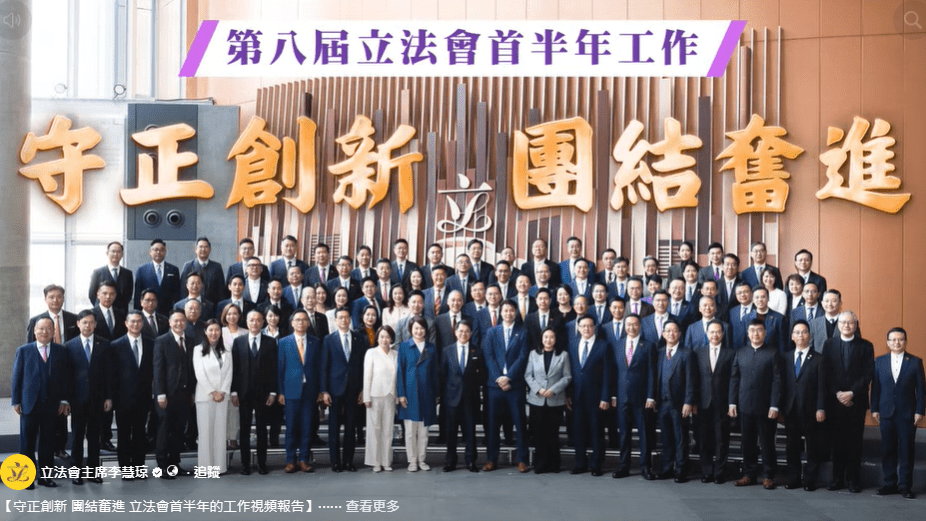
Although committee chairperson Starry Lee Wai-king has declined to comment on whether Chan’s case will be taken up, some legislators said an inquiry would be difficult to avoid if the credibility of the new system is to be maintained.
The revised code introduces a five-tier sanction system for breaches, ranging from written warnings to possible suspension of duties and deductions from remuneration and allowances.
Some lawmakers, however, expressed concern that if an offense such as careless driving — a broad category that can include conduct like tailgating — were enough to trigger committee action, it could open the door to complaints over relatively minor violations and subject members to heavier scrutiny.
Chan, who is serving her second term and is regarded as a potential future leader within her party, has come under criticism in political circles. While many agree her conduct and initial response were inappropriate, there is also a general view that the incident does not warrant her resignation.