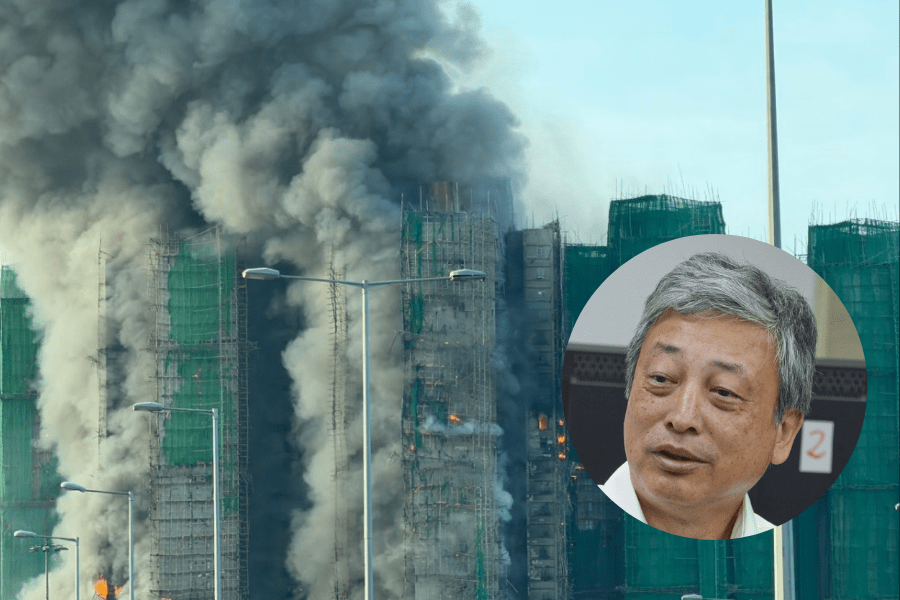
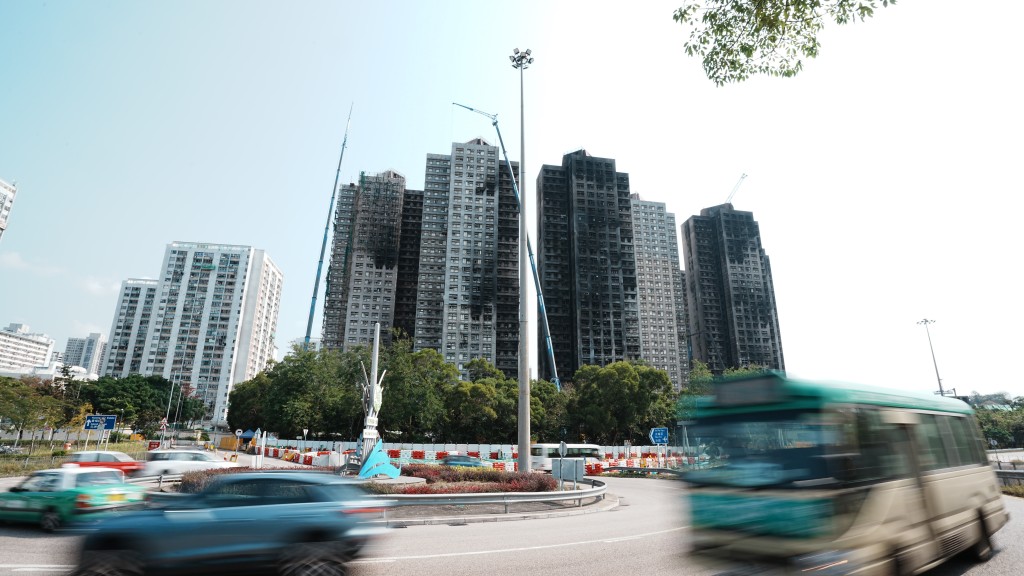
While flames and suspected flammable cladding turned Wang Fuk Court into a deadly inferno, a registered structural engineer has offered cautious reassurance that the building’s core concrete-and-steel frame is unlikely to have suffered damage severe enough to require complete demolition and rebuilding. However, a wait of at least six months will be necessary for comprehensive assessments.
In an interview with Sing Tao Daily, the sister publication of The Standard, registered structural engineer Ngai Hok-yan explained that the impact of fire on a building's structure primarily depends on temperature and duration.
He noted that the reinforcing bars in residential towers are typically protected by concrete layers ranging from 15 to 25 millimeters thick, offering at least one hour of fire resistance.
If the building’s temperature does not exceed 800 degrees Celsius, even prolonged exposure to fire would only have a minor effect on concrete and steel structures.
Conversely, extremely high temperatures can cause significant damage in a short period.
Based on an analysis of online videos, Ngai stated that the fire's containment to individual units and scaffolding suggests the building structure may not be fully compromised, likely eliminating the need for complete demolition.
Once the fire is fully extinguished, Ngai indicated that a detailed inspection will be conducted by the Independent Checking Unit (ICU) under the Housing Department or hired registered structural engineers.
The inspection may require breaking into some concrete components to evaluate the condition of the protective layers and the underlying steel rebars.
"If the concrete protective layer has spalled and cracked and the rebars inside are damaged, a repair plan will be needed," Ngai explained.
Long repair road ahead
Ngai projected a lengthy repair process, noting that scaffolding will be required to facilitate the inspection, and the submission and approval process for the proposed repair plan could take over six months.
With numerous buildings and floors affected, Ngai said estimating total repair time and costs is challenging, depending heavily on damage to public facilities, including gas lines, communication systems, electricity, and elevators.
He emphasized that the fire's destruction extends beyond construction costs, as the psychological impact on residents and the potential decrease in property values could be significant.
If purely estimating from a repair standpoint, partial repairs on the buildings should be less expensive than a full rebuild.