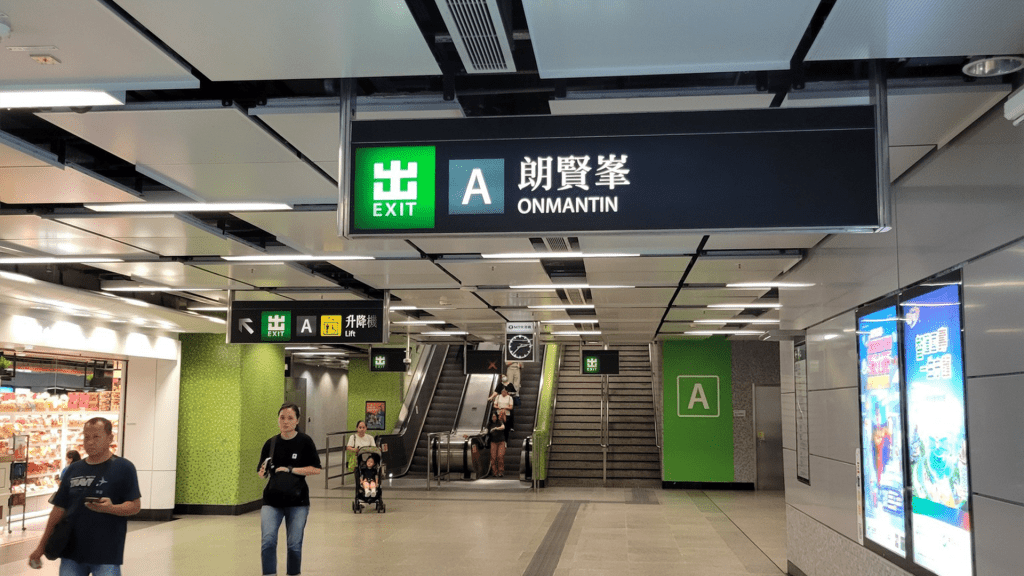
MTR Corporation has drawn criticism after changing the Exit A signage at Ho Man Tin Station, replacing the long-standing references to public housing estates “Oi Man Estate/Ho Man Tin Estate” with the newly completed luxury development “ONMANTIN.”
Residents of Oi Man Estate shared a nearly 1,000-word complaint on Facebook, accusing MTR of prioritizing commercial interests over public convenience. They warned that the prominent display of ONMANTIN could confuse visitors, especially elderly residents unfamiliar with the area or mobile apps, while diminishing recognition of the half-century-old public estate.
Photos posted online show the main sign highlighting ONMANTIN, with Oi Man Estate and Ho Man Tin Estate relegated to smaller wall-mounted signs. Residents argue that nearly all Hong Kong citizens recognize Oi Man Estate, but far fewer know the new development, making the change controversial.
The complaint raised several concerns: that replacing long-standing estates undermines familiar public landmarks, that highlighting a private development may mislead passengers, and that such changes risk turning neutral transport signage into a commercial tool.
MTR responded that Exit A signage highlights major nearby buildings to guide passengers and that station concourses and mobile apps provide detailed maps of all surrounding landmarks. The company said it has forwarded residents’ feedback and will continue to review signage as local developments and passenger needs evolve.
The debate online has divided opinions. Supporters of the resident say signage should prioritize public convenience, while others argue that highlighting ONMANTIN, located directly above Exit A, is reasonable.
Information shows that ONMANTIN is a residential project built above Ho Man Tin Station, jointly developed with MTR. The two-phase project offers 990 units and includes a dedicated lift connecting directly to the station.