Read More



HK movie producer Raymond Wong Pak-ming convicted of insider dealing
22-05-2026 17:10 HKT
Swire Properties wins compulsory auction for $2.02b Quarry Bay property
22-05-2026 20:36 HKT
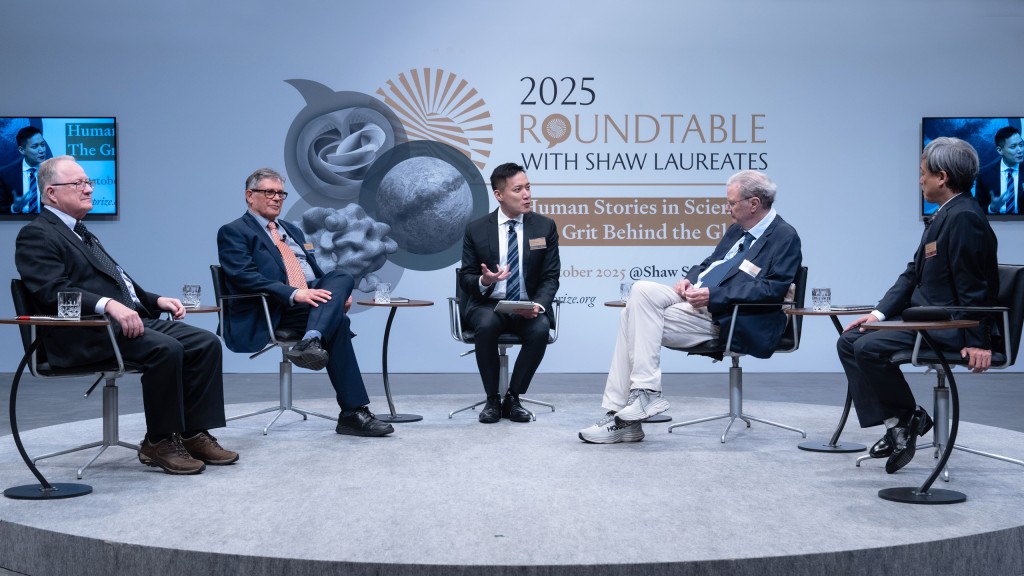
At the“2025 Roundtable with Shaw Laureates” held on October 23 at Shaw Studios in Hong Kong, four of the world’s most celebrated scientists stepped away from their fields of research and discovery to discuss the doubts, detours and resilience that define real scientific life.
In a discussion that was equal parts confessional and inspirational, the 2025 Shaw Laureates shared what drives them to persist when ideas fail, funding falters and recognition seems remote.
Astronomers John Richard Bond and George Efstathiou, biophysicist Wolfgang Baumeister and mathematician Kenji Fukaya appeared alongside moderator Samuel Wong Yeung-shan under the theme “Human Stories in Science: The Grit Behind the Glory.”
The talk began with an invocation from Shaw and Nobel laureate Professor Reinhard Genzel, who urged the audience to remember that “there are days when nothing works, and the next day, suddenly it does.” That rhythm of frustration and breakthrough, he suggested, is the heartbeat of all discovery.
For Bond, the seed of his fascination with the universe was sown in childhood through George Gamow’s One, Two, Three… Infinity.
“It told the cosmic story from what they thought was the beginning to the formation of life,” he said. “The title alone was outrageous and evocative; it showed that mathematics is the language of the cosmos.”
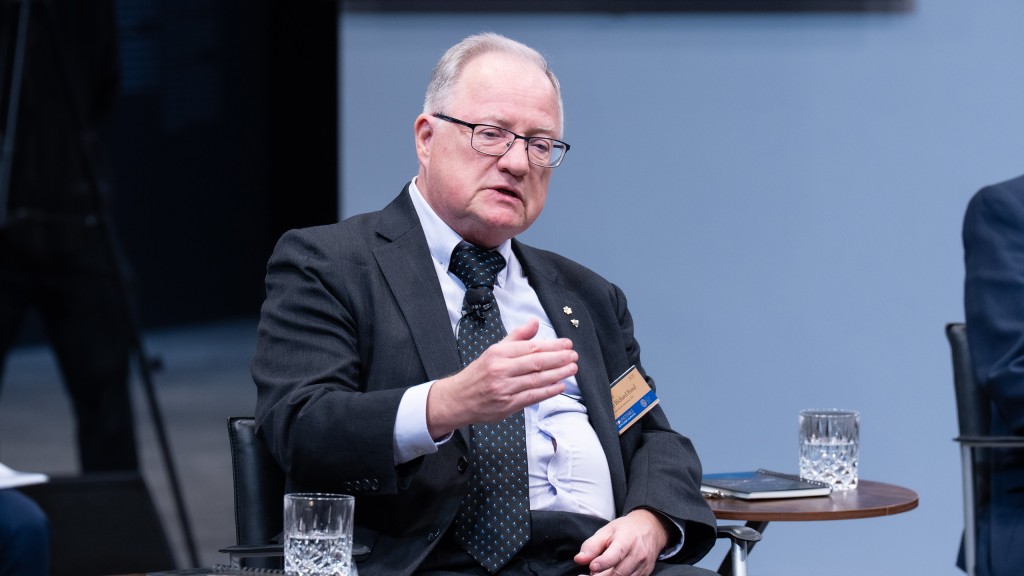
Only later did Bond realise that Gamow had predicted the cosmic microwave background, the very phenomenon for which he and Efstathiou were honoured.
But the Canadian theorist’s remarks soon turned from nostalgia to admonition. “Combining visuals with words is fantastic,” he said, “but the biggest issue of our time is going deep.
Surfing is fun, but it won’t create great things.” His warning against superficial engagement struck a chord with the students in the audience.
Efstathiou’s own fascination began even earlier. “When you’re three or four years old, you wake up and think, what am I, what is this?” he said.
With few books at home, a children’s encyclopaedia and a photograph of the Hale Telescope became his portal to the cosmos.
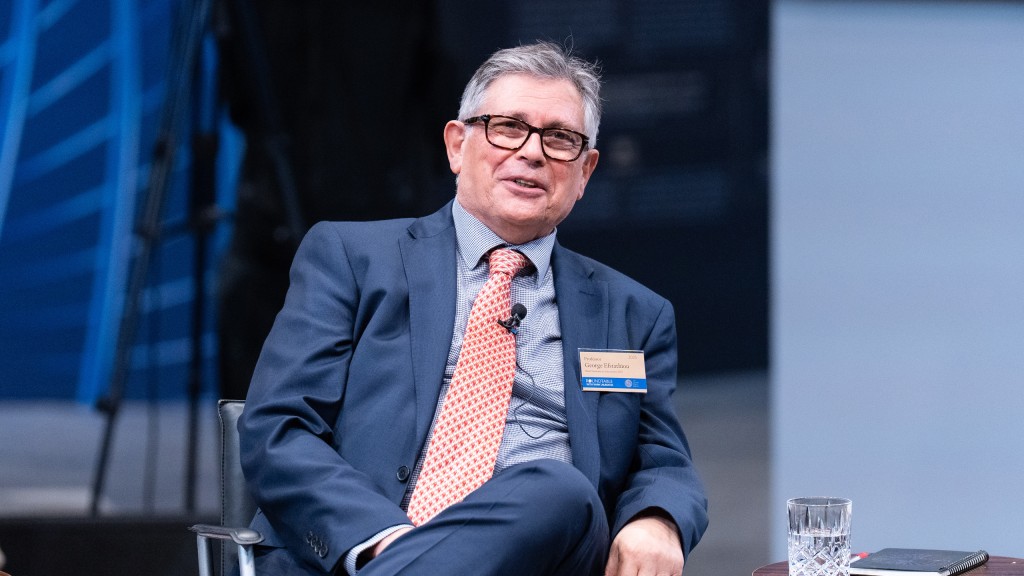
“People were building this amazing machine to discover things about the universe,” he recalled. “Even now I have pictures of that telescope in my office. It reminds me why I do cosmology.”
He spoke, too, of integrity under pressure. When his galaxy survey results in the 1990s contradicted prevailing models, he and his team spent a year checking the data.
The mismatch persisted. “So we published it,” he said. “Suppressing results because they don’t fit the theory is dangerous.”
The paper, which hinted at what is now known as dark energy, later helped reshape modern cosmology.
“The universe tells us what it’s like,” Efstathiou said quietly. “We don’t tell the universe what it’s like.”
For Baumeister, the journey began in a German high school laboratory and almost ended in frustration.
“University biology in the late 1960s was completely non-molecular,” he said. “We spent our days dissecting plants and drawing pictures.”
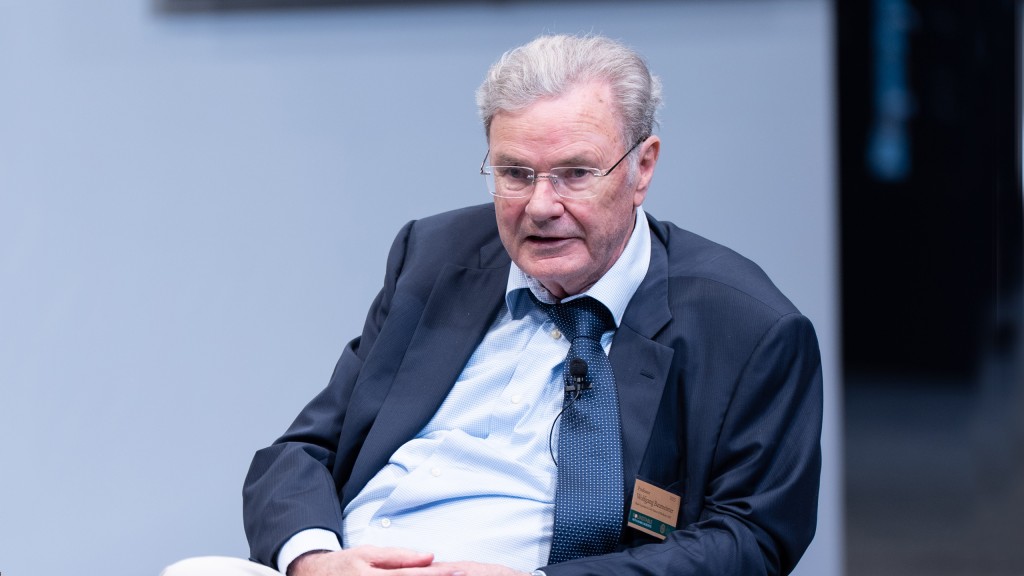
Everything changed when he discovered an abandoned electron microscope and taught himself to use it. His first paper was published in Nature but largely ignored.
“It was a dead end,” he admitted. “The hardest thing is to stop and say, this path doesn’t make sense. But you must be courageous enough to change direction.”
His persistence paid off decades later when he pioneered cryo-electron tomography, a breakthrough imaging method that now allows scientists to visualise cells in three dimensions within their natural cellular environment.
“There was no single eureka moment, only milestones. Each small success told us we were still moving forward,” he reflected.
Mathematician Kenji Fukaya described his discipline as “the art of dreaming, but testing the dream.” For him, imagination and rigour are inseparable.
“If you just follow what others have done, you can get results,” he said, “but the best thing is to imagine something new.”
His early work on Kuranishi structures was met not with critique but silence.
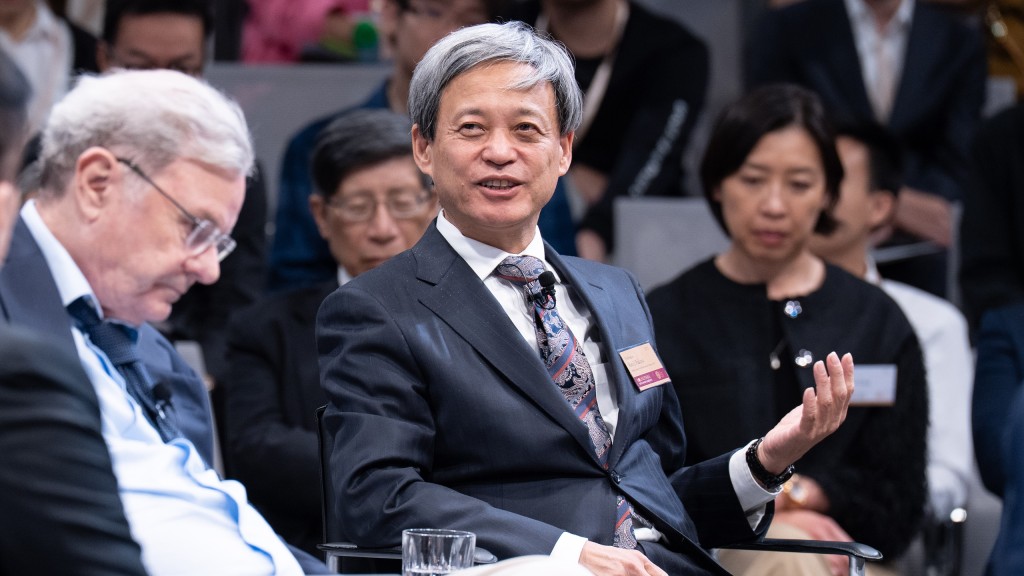
He said: “For ten years people ignored it. Scepticism is better than ignorance. At least it means somebody cares.”
Undeterred, he produced an 800-page proof that eventually established his theory.
“You have to be serious and honest with yourself,” he advised. “But if you still believe in your idea, then you must insist on going your own way.”
Bond and Efstathiou’s partnership, spanning more than four decades, became a thread of warmth running through the session.
“We were night workers,” Efstathiou laughed. “We’d go to parties and then to the lab.” Bond described their collaboration as a “movable feast of ideas”, a nod to Hemingway’s itinerant artists in Europe.
“Science shouldn’t be hierarchical,” he added. “Professors, postdocs and students should all be friends. That’s the essence of the cosmic journey.”
Baumeister and Fukaya echoed that sentiment in different ways. Both insisted that freedom and trust are essential to mentoring.
“Let ideas rise from the bottom up,” said Baumeister. “Don’t discourage the unconventional.” And Fukaya echoed: “Don’t trust us too much. Your insight may be better than ours.”
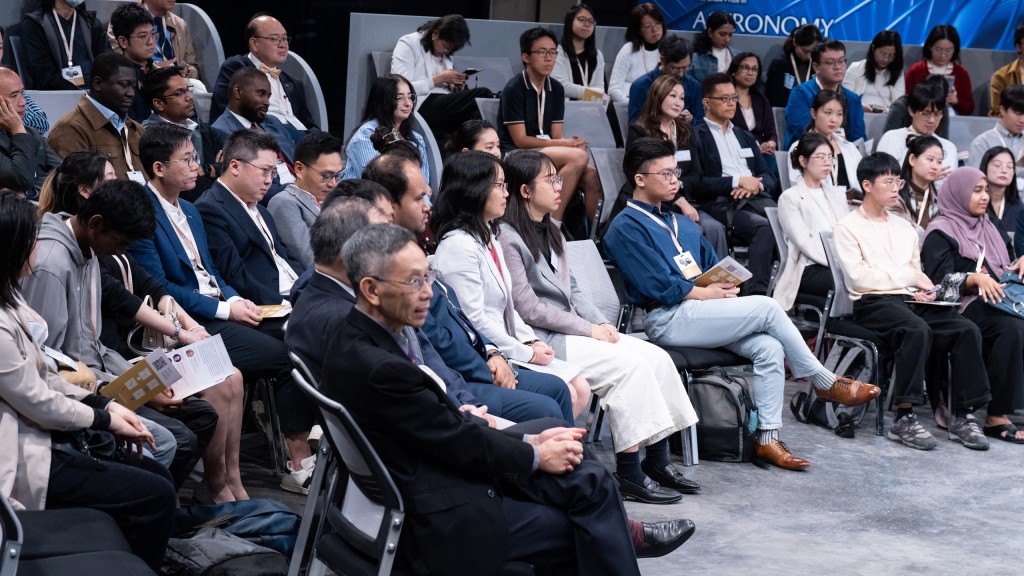
The conversation deepened when Professor Genzel, himself a Shaw Laureate, asked the question scientists are often forced to confront: why does pure research matter when the world faces so many urgent problems?
Bond’s answer came without hesitation. “They call what we do blue-sky research,” he said, “but if you don’t have that at the heart of civilisation, you lose passion. Passion is what fuels young people to know and to create. Without it, there is no progress.”
He reminded the audience that even the World Wide Web began as a tool for physicists to share data – a by-product of curiosity before utility.
Efstathiou added: “You’d think governments would focus on trains and hospitals, but they’re endlessly fascinated by dark energy.”
Baumeister noted that while structural biology supports drug discovery, his own motivation was simply “to understand how a cell operates, not what we can get out of it.”
For Fukaya, mathematics remains the longest game of all: “Its importance may only be evident hundreds of years later, but it always arrives.”
As the session drew to a close, Wong invited each laureate to share a final thought. Their answers formed a quiet manifesto.
Bond urged confidence, saying that belief in one’s ability matters most, even in moments of doubt.
Efstathiou followed, noting that nothing in science should ever be dismissed: what seems trivial may hold the seed of discovery.
Baumeister reminded the audience that only genuine curiosity can sustain a researcher through years of uncertainty.
And Fukaya, smiling, told the students never to accept anything on authority – not even from the laureates themselves – but to trust their own insight.
The Shaw Prize roundtable revealed that behind every breakthrough lies a human story of doubt, friendship and the quiet faith that tomorrow, perhaps, the experiment will work.