Read More
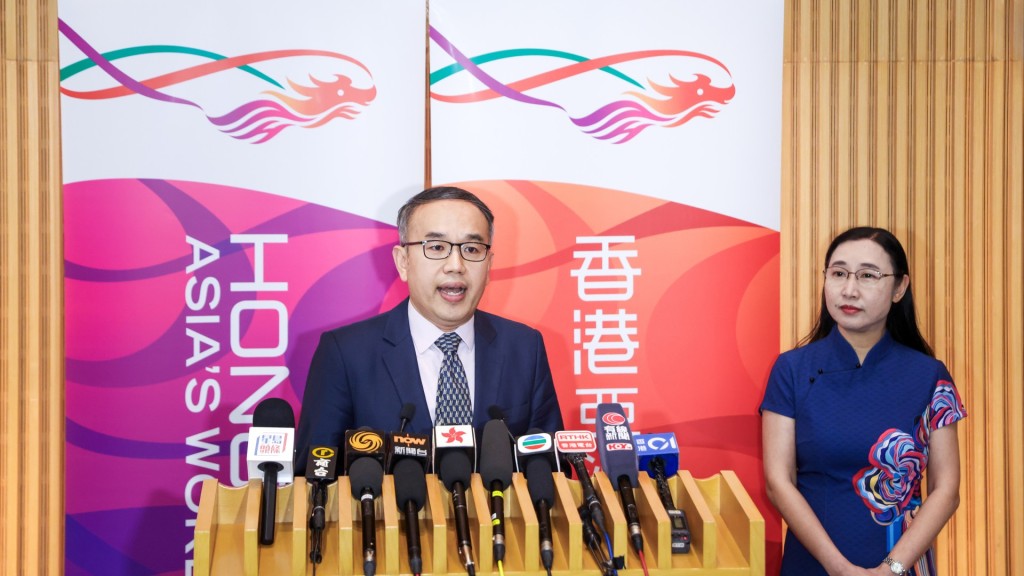
The Financial Services and the Treasury Bureau (FSTB) has rolled out six new measures to overhaul government procurement, aiming to close loopholes through institutional change, enhancement of cross-departmental information exchanges, and reshaping of work culture, as announced by Secretary Christopher Hui Ching-yu on Monday.
ADVERTISEMENT
SCROLL TO CONTINUE WITH CONTENT
Hui said today that these initiatives, stemming from recommendations by the Task Force on Review of Government Procurement Regime, focus on systemic improvements, better interdepartmental information sharing, and fostering a culture of accountability to address vulnerabilities in government procurement and prevent fraudulent practices.
The measures include issuing detailed internal guidelines that outline specific due diligence requirements at every stage of the procurement process, from drafting tender documents to evaluating bids and managing contracts.
These guidelines aim to equip procurement staff with clear instructions to identify and mitigate potential fraud risks effectively.
Additionally, a new Procurement and Stores Management Audit Section has been established to conduct risk-based spot checks across departments, acting as an independent oversight unit that reports findings to senior officials for prompt action.
The Government Logistics Department has also revised its Standard Terms and Conditions of Tenders and Contracts (STC) to strengthen vetting and contract management.
These updates allow the government to verify information submitted by bidders and contractors directly with third parties. Contracts can now be terminated immediately if false or inaccurate information is detected, ensuring greater accountability.
To enhance transparency, a digital database will be created to centralize information on contractors’ bidding histories and performance, enabling procurement officers to quickly identify high-risk bidders through the government-wide procurement information portal.
To bolster fraud prevention, the department is organizing training programs to familiarize staff with the new guidelines and heighten their awareness of deceptive practices.
Furthermore, efforts are underway to cultivate a culture of ownership among employees through onboarding sessions and staff engagement events, encouraging them to approach procurement tasks with the same diligence as personal responsibilities.
Hui stated that the recent bottled drinking water procurement incident not only involves suspected fraudulent behavior by an individual company but also highlights deficiencies in the due diligence and fraud detection capabilities of relevant personnel, which fall short of expectations in today’s commercial environment.
He and the task force believe that to ensure government staff can perform procurement tasks more effectively in the future, a fundamental reshaping of work culture is essential, alongside enhancing staff’s due diligence skills and empowering them with sufficient authority.
This would position them not only as facilitators of fair competition but also as vigilant gatekeepers of government procurement integrity.