Publicity and education are more effective than waste-charging in encouraging residents to participate in waste reduction and recycling, a cleaning company said, citing worries that a relaunch of the municipal waste-charging scheme will greatly increase frontline workload.
Last year, the government intended to implement waste-charging. At that time, the cleaning industry and frontline staff felt perplexed.
Ying, a cleaner, said that when the government planned to implement waste-charging last year, she felt it made the process of waste collection more complicated, because it was necessary to separate rubbish not packaged in designated bags – in effect, immensely burdening the frontline cleaners.
Another cleaner, Yu, was confused by the original waste-charging scheme. She said that in the face of rubbish unpackaged in designated bags, she would not know how to handle indeed, and would be afraid of having disputes with residents; if she overlooked it, she would also worry about unintentionally breaking the law.
Therefore, when the government postponed the scheme last year, she really breathed a sigh of relief.
Chan Sik-lung, General Manager of cleaning company Swan Hygiene Services Limited, said that under the current economic environment, the government should not relaunch waste-charging, and believes that through education, residents will understand more about waste reduction and recycling in the long run.
Chan also observed that in recent years, after the government strengthened recycling facilities, residents’ habits in handling waste have clearly changed.
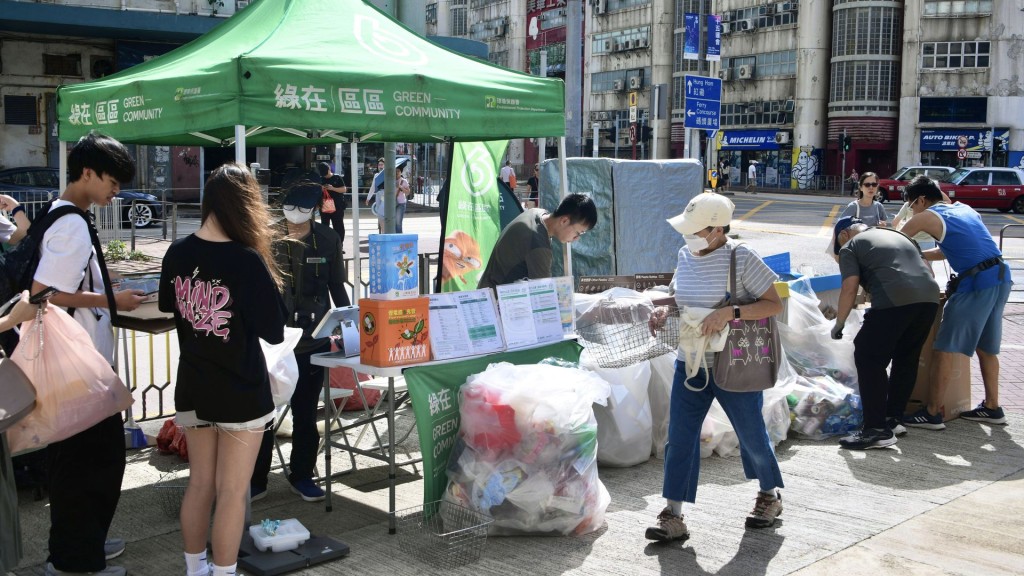
For example, many residents will store plastic bottles, aluminium cans, and cardboard and put them into the recycling bins in their housing estates, or take them to “Green@Community” recycling points.
It can be seen that residents’ participation in waste reduction and recycling has significantly increased, and he believes this is more effective than compulsory charging.
He added that, with the popularisation of food waste smart recycling bins in residential areas, members of the public have begun to sort household food waste themselves, putting food waste into the smart bins every day, making the housing estate environment more hygienic and reducing the breeding of pests such as cockroaches and rats.