Read More
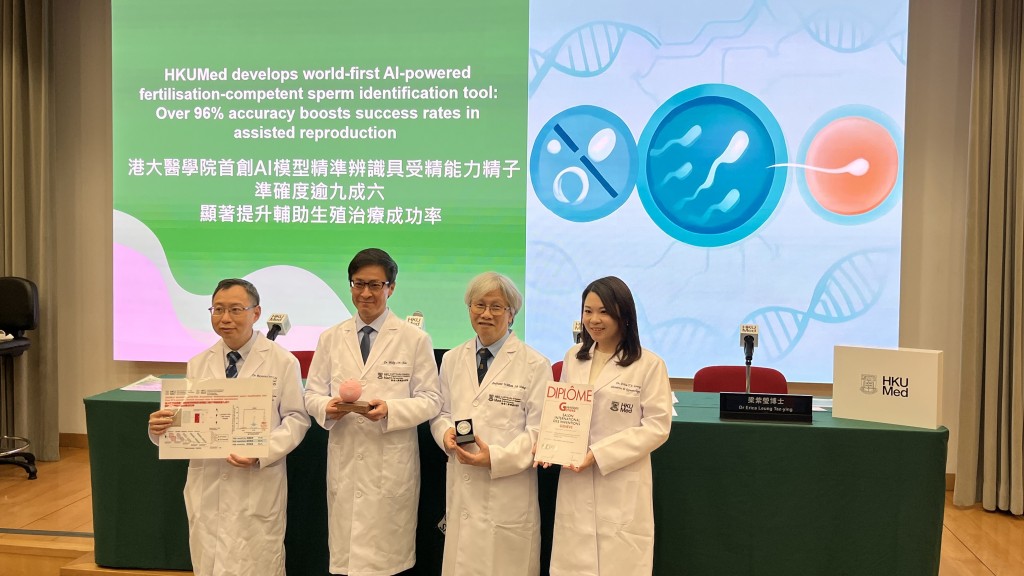
In a breakthrough for reproductive health, researchers at the University of Hong Kong’s Li Ka Shing Faculty of Medicine (HKUMed) have unveiled the world’s first artificial intelligence model designed to identify human sperm with fertilization potential, achieving an accuracy rate of over 96 percent.
ADVERTISEMENT
SCROLL TO CONTINUE WITH CONTENT
According to the research team, the new technology promises faster and more reliable analysis, significantly reducing human error and improving the accuracy of male fertility assessments.
The team’s findings have been published in the international journal Human Reproduction Open and won the Silver Award at the 50th Geneva International Invention Fair in 2025.
The study analyzed over 40,000 sperm images from 117 men diagnosed with infertility between 2022 and 2024. It revealed a strong correlation between the proportion of sperm capable of binding to the zona pellucida (ZP) and the success rates of assisted reproduction treatments (ARTs).
While a typical ejaculate contains 100 to 200 million motile sperm per milliliter, the team pointed out that only about 7 percent of these sperm demonstrate fertilization potential.
Due to variations in conventional semen analysis, which mainly relies on visual interpretation, the accuracy of male fertility evaluations and the effectiveness of ARTs has historically been limited.
Shortening time to pregnancy
As the binding of sperm to the ZP is a crucial step in fertilization, researcher Erica Leung Tsz-ying explained that the automated AI model analyzes morphological features to accurately determine the percentage of human sperm capable of binding to the ZP. This provides a highly reliable assessment of male fertility.
The researchers believe this model will enhance clinical decision-making and enable personalized treatment plans for couples, ultimately improving infertility management, reducing fertilization failure rates, and shortening the time to pregnancy.
They aim to integrate this technology into ARTs at Queen Mary Hospital, Kwong Wah Hospital, and HKU Shenzhen Hospital within one to two years, while keeping testing costs affordable.
The team also committed to ensuring the AI testing remains accessible to the public.
Additionally, the team plans to extend the AI model’s application to Intracytoplasmic Sperm Injection (ICSI) treatments in collaboration with HKU’s engineering department, offering new hope for couples facing infertility challenges.