Read More

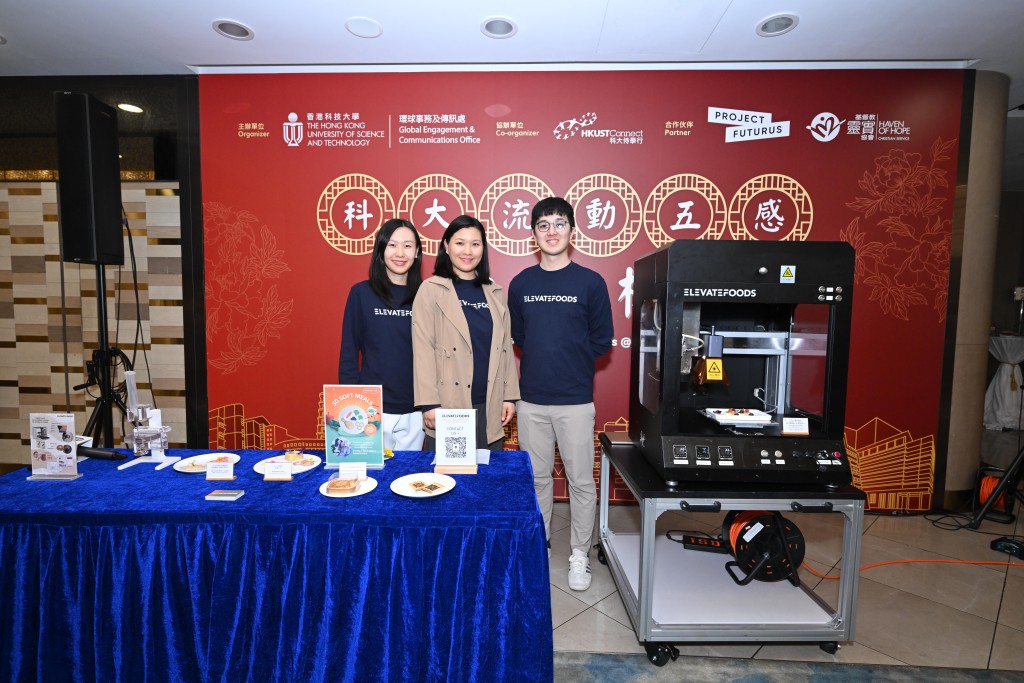
HKUST startup team develops AI-assisted 3D food printer
06-05-2025 16:29 HKT


Night Recap - September 20, 2026
4 hours ago




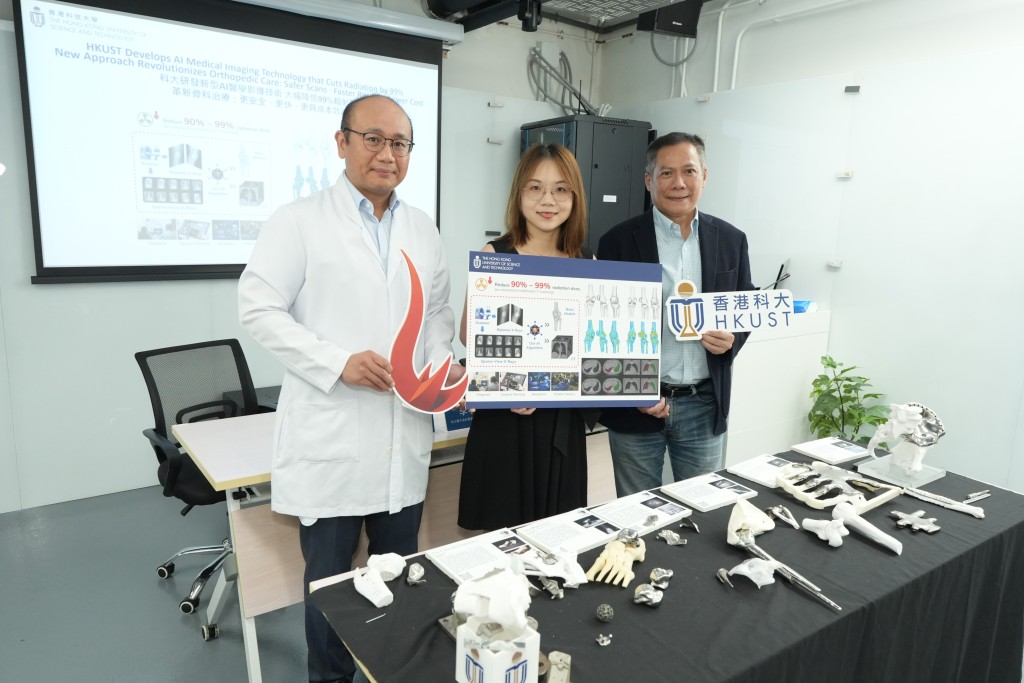
Hong Kong University of Science and Technology (HKUST) researchers have developed an AI technology that creates 3D visuals of bones and organs from minimal X-rays, reducing patient radiation exposure by up to 99 percent compared to CT scans.
CT scans use X-rays to create detailed cross-sectional images for diagnosis and treatment planning, but require around 400 to 500 exposures, posing high radiation risks to vulnerable groups like children, pregnant women, and the elderly.
Spent two to three years in development, the AI-powered algorithm can generate 3D bone and anatomy similar to a CT scan, just using as few as two to four X-ray snapshots and in under a minute. Researchers said its accuracy is the highest among similar ones.
The team said the technology allows for lower costs, as radiographs only cost around hundreds of dollars, compared to thousands for CT scans. Waiting time may be reduced, as X-rays take only hours, while prioritized CT patients usually wait three weeks.
The research team is partnering with Koln 3D, a local orthopedic and metal component printing company, to apply the AI tech to pre-surgical planning, personalized implants and real-time surgical navigation.
Lead researcher Li Xiaomeng, assistant professor from the Department of Electronic and Computer Engineering and associate director of Centre for Medical Imaging & Analysis at HKUST, envisioned more applications beyond 3D bone printing.
“We aim to expand into creating implantable bone structures while advancing imaging precision of 3D anatomical structures beyond our current 97 percent accuracy benchmark compared to conventional CT scans,” she said.
A public hospital plans to test the technology soon, and if it works well, it could be used in the public healthcare system as early as next year, the researchers revealed.
They also hope to team up with other hospitals to apply it in heart and lung imaging, aiming to make diagnoses quicker and safer, and improve surgery planning and performance.
(Katrina Tong)