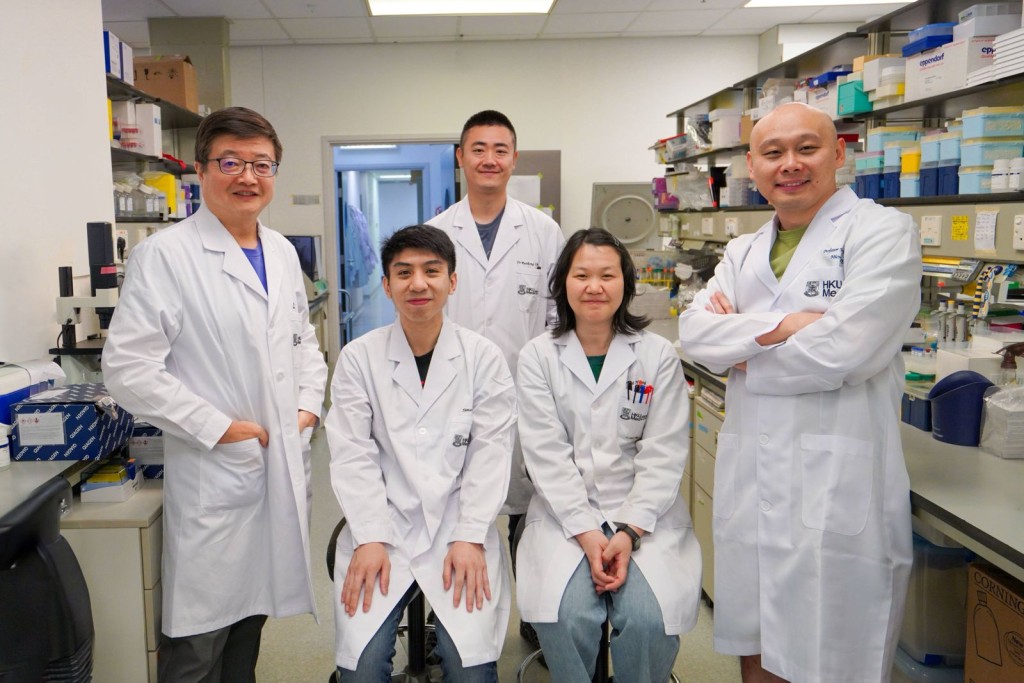
Researchers at the University of Hong Kong have discovered a crucial protein that could help eliminate hidden HIV-1 – the most common type of HIV – in the body, potentially making AIDS a curable disease in the future.
More than 40 million people worldwide live with HIV-1, which remains a major health threat because the virus can hide silently in immune cells, avoiding complete removal even with treatment.
By screening 280 epigenetic compounds, scientists at HKU’s Li Ka Shing Faculty of Medicine have identified, for the first time, a specific gene transcription factor called BRD9 as a key player of latent HIV-1 reactivation.
“This discovery offers new hope for the ‘Shock & Kill’ strategy, aiming to activate hidden virus reservoirs and then eliminate them,” said Chen Zhiwei, Suen Chi-Sun Professor in Clinical Science and Director of the HKU AIDS Institute, who led the HKUMed research team.
The groundbreaking study also revealed that the BRD9 inhibitor can demonstrate a significant synergistic effect in reactivating the latent HIV-1 reservoir when combined with another HIV-1 latency reversal agent (LRA).
“These findings deepen scientific knowledge of HIV latency and lay a crucial foundation for novel curative and precise approaches, offering hope to the millions of people living with HIV worldwide,” added Chen.
(Cheng Wong)