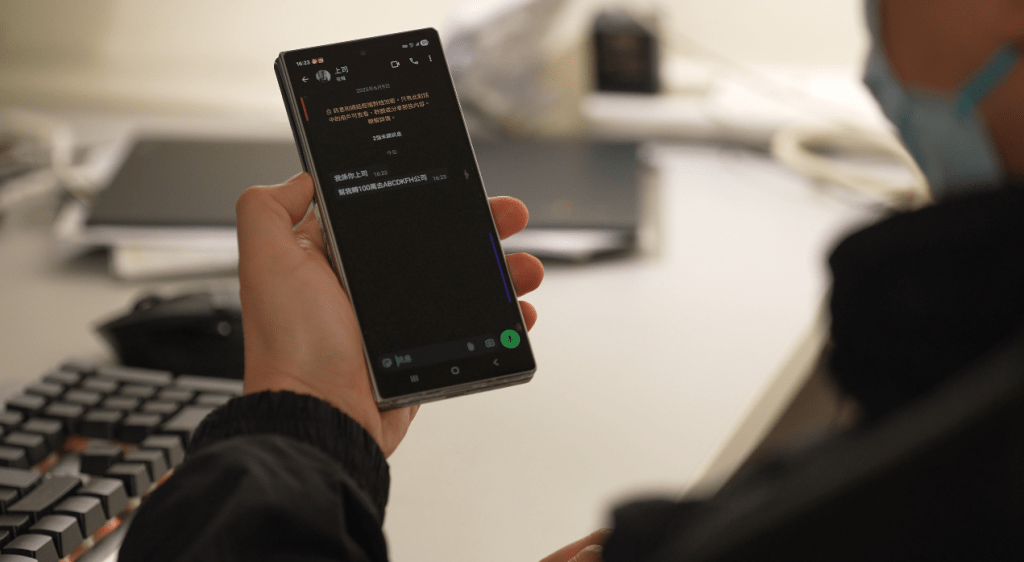
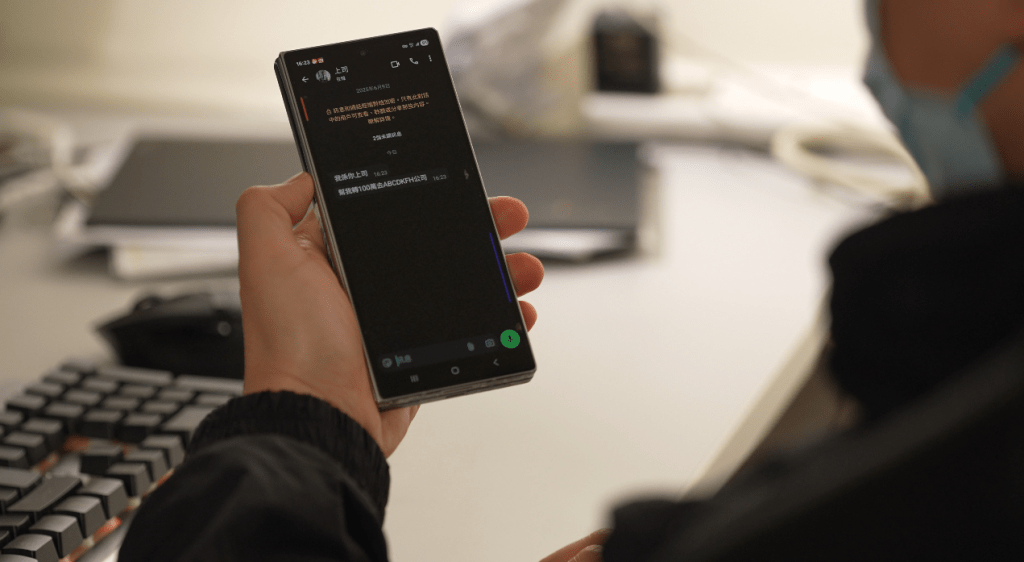
Amid the increasing prevalence of phone scams, an incident involving a scammer impersonating an official from mainland China has come to light as he happened to contact Sing Tao Daily, a sister publication of The Standard, with the intent to perpetrate a fraudulent scheme.
Calling with victim's personal information
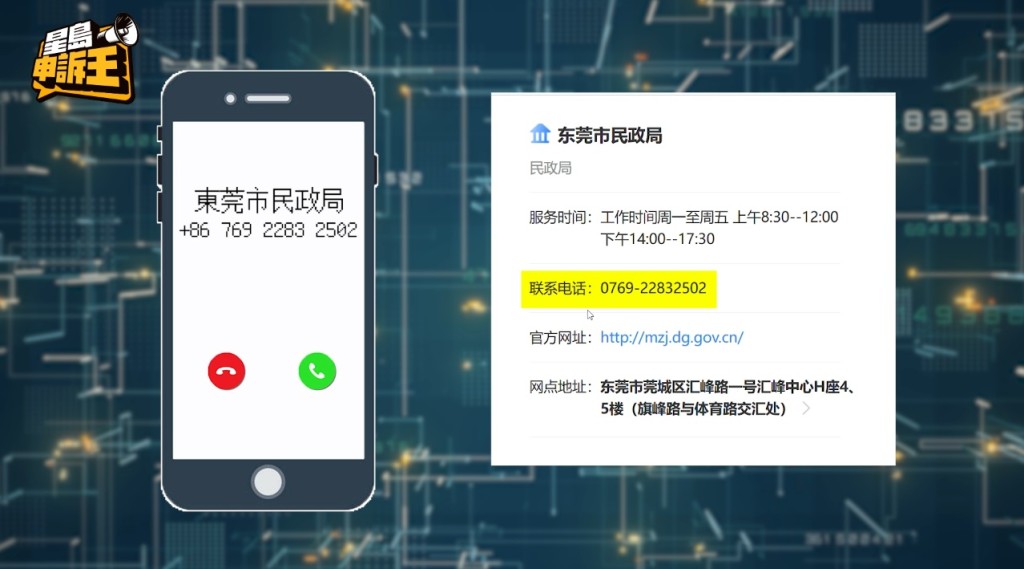
A man, Yeung, who identified himself as from the Dongguan Bureaus of Civil Affairs, called Sing Tao Probe's supervisor earlier and falsely claimed that she had registered for a mainland phone number at Guangzhou Baiyun International Airport on April 3 via her Home Return Permit.
Yeung precisely cited the supervisor's Hong Kong Identity Card number, accusing her of sending over 500 job recruiting messages and stealing personal information.
While many might have believed this was a legitimate call, the head of Sing Tao Probe quickly recognized the scam and transformed the encounter into an investigation.
A reporter posed as her husband to continue the conversation. Yeung acknowledged their concerns and encouraged the reporter to verify the phone number on the official website.
However, when the reporter continued to question his identity, the fraudster resorted to intimidation, claiming immediate action was required to avoid affecting the supervisor's ability to use her Home Return Permit.
As the reporter feigned fear and asked what actions were necessary, Yeung offered to assist in determining how the department would handle the case.
"Guarantee" with payments
Following another call from Yueng stating the case had been reported to the 110 police hotline for further action, the reporter received a call from a man introducing himself as Officer Liu from the Zhongshan Public Security Bureau, using a simulated 110 number.
Liu indicated the reporter's "wife" was now implicated in a criminal case involving stealing personal information, for which a "guarantee" was needed to prove her innocence.
When the reporter played along and inquired about the guarantee, Liu requested a substantial payment and bank details.
The reporter then ended the conversation and called the official hotline of the Dongguan Bureaus of Civil Affairs, where the staff clarified that there was no one surnamed Yeung called and confirmed it was a scam.
Scammers offering personal data may seem persuasive, but reports have revealed that certain personal information is sometimes sold on social media groups for as little as 10 HK cents.
Regarding the technology used by scammers to impersonate calls from government departments, Hong Kong Information Technology Federation honorary president Francis Fong Po Kiu revealed that the calling number display is an outdated technology with lax regulations, allowing scammers to change their caller ID to pretend to be any government authority.
In response to inquiries, the police reported receiving 1,166 cases of "Pretend Official" phone scams last year, with total losses amounting to HK$ 1.69 billion.
The police urged the public not to disclose personal information to strangers, even if the caller can provide personal details as fraudsters can obtain information through illegal means, advising citizens to call the Anti-Deception Coordination Center(ADCC) if they have any concerns.