





Read More


Night Recap - April 23, 2026
24 mins ago




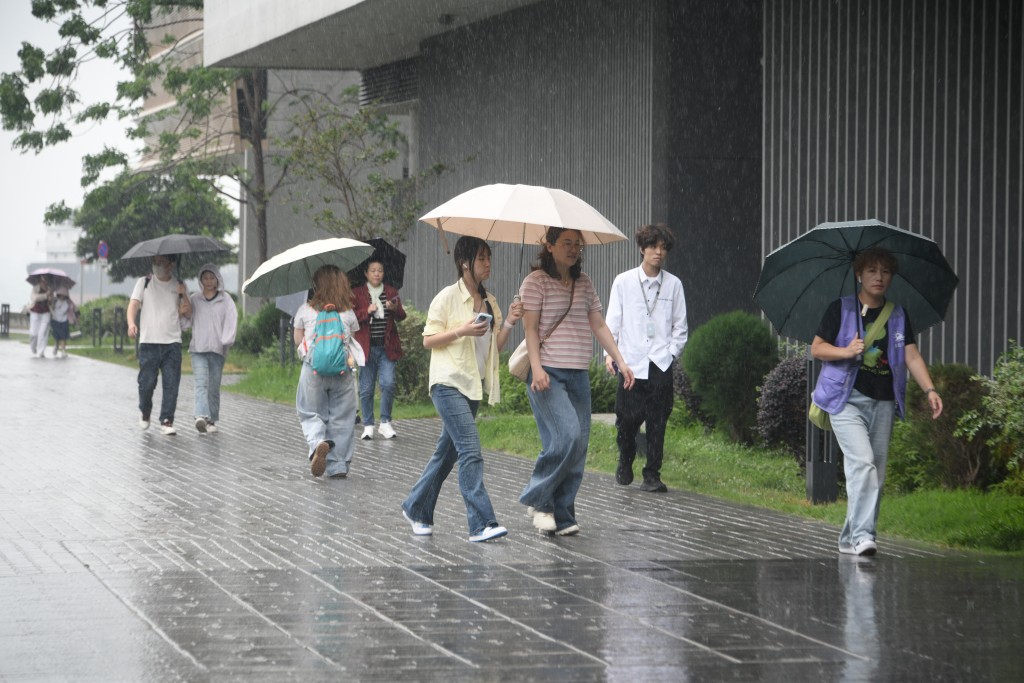

HK braces for 7-degree plunge and heavy rain on Fri as cold front arrives
22-04-2026 13:19 HKT
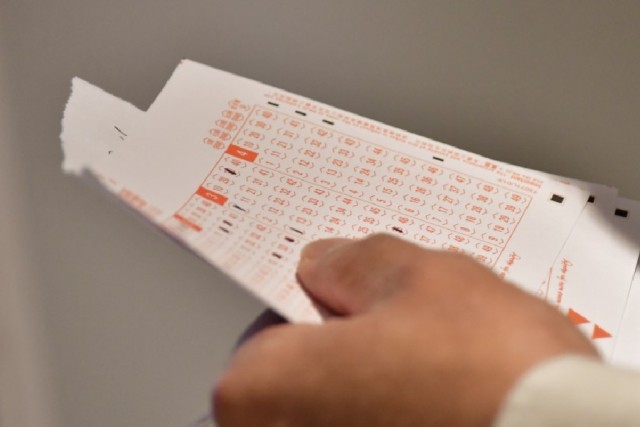
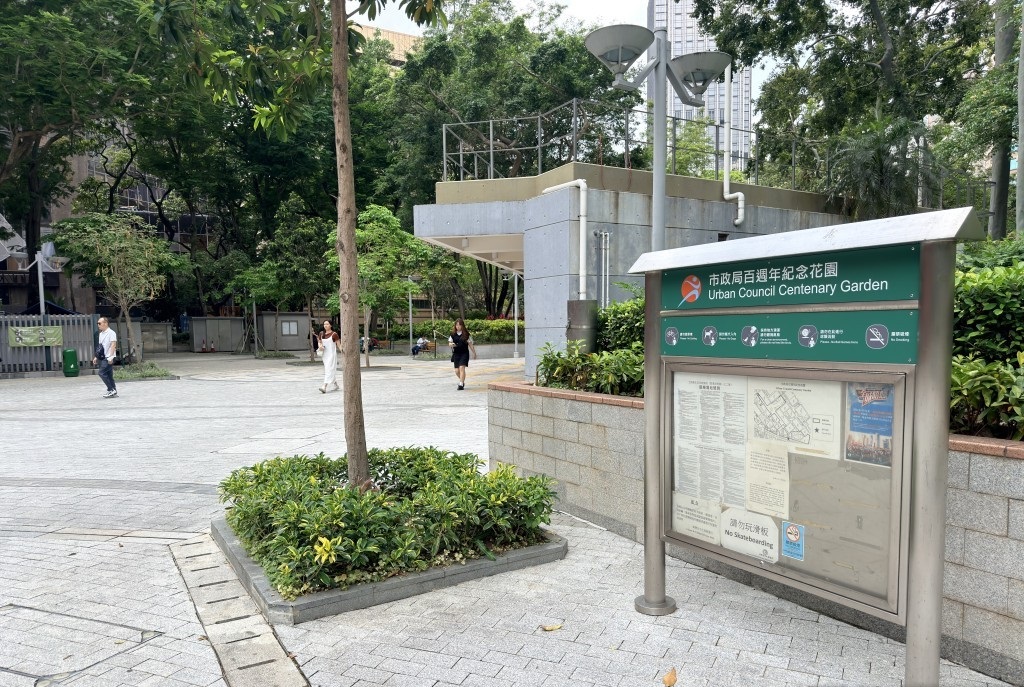
Rolex and diamond ring stolen from sleeping man in Tsim Sha Tsui park
22-04-2026 12:18 HKT
This time next year Hong Kong will once again be in the grips of election fever. By then Ms. Carrie Lam’s term of office would have only a few more months to run, and the process of selection for appointment of the next Chief Executive will be a topic of hot debate. And there may be attempts to derail the appointment by resort to court process, as happened in 2012.
What the advent of Covid-19 has taught the world is this: Prompt executive action is vital. Even a day’s delay could be catastrophic. Hence, any vacancy in the office of Chief Executive would become a matter of great concern. The corollary is that the process leading up to the appointment (or re-appointment) of the Chief Executive must be seamless, untroubled by vexatious proceedings in the courts. In this regard, the litigation generated as a result of Mr. C.Y. Leung’s appointment back in 2012 provides a dire warning.
Special Litigation
A legal challenge in the course of an election for Chief Executive is, for obvious reasons, special litigation, conducted under a regime created for that purpose under the Chief Executive Elections Ordinance, Cap. 569.
Section 32 specifies that an election may only be questioned by lodging an election petition made on specific grounds.
Section 33 limits the class of persons qualified to lodge a petition: in effect, candidates and those who had attempted to become candidates.
If there are real grounds for challenge because of misconduct in the course of an election, the facts would be well known to the persons taking part in the election. Hence, the time limit for lodging the petition is 7 working days from the day the Returning Officer declared the winner: s. 34( 1 ).
The underlying objective of the Ordinance is that the proceedings must be clear-cut, expeditious and final.
The 2012 Litigation: Mr C Y Leung’s Election
And yet, Mr. C Y Leung’s election in 2012 gave rise to three High Court actions -HCAL 83/2012, HCAL 84/2012 and HCAL 85/2012 and an appeal to the Court of Final Appeal ( CFA ) – FACV 24,25/2012. This process began in July 2012 and ended with the CFA’s judgment a year later, after Mr. Leung had been in office for over a year. The judgments total well over 200 pages, crammed-full of citation of overseas cases, incomprehensible to the ordinary person.
The proceedings were brought by Albert Ho Chun Yan, an unsuccessful candidate, and Leung Kwok Hung who had taken no part in the election process and had no standing whatever to bring proceedings under the Chief Executive Elections Ordinance, Cap. 569.
What gave rise to these court actions ? The facts are obscure. The courts seemed singularly uninterested in the facts.
The Facts
What is known is this: The election for Chief Executive was due to take place on 25 March 2012. Mr Henry Tang had declared his candidacy on 26 November the previous year and Mr C Y Leung did so a day later. Both men then came under the regime set out in the Chief Executive Election Ordinance. They were the leading candidates.
On 13 February 2012 Ming Pao revealed that there were extensive unauthorised building works (UBWs ) at Mr Tang’s home: allegedly, a basement had been created without the approval of the Building Authority. In the following days the media pressed Mr Tang for his explanation. His replies were equivocal. This caused a media frenzy. The judge referred to this as “the UBWs scandal”.
But how did this involve Mr Leung? The answer is this: On 16 March 2012 – just over a week before the election – there was a televised debate between Mr Tang and Mr Leung. In the course of that debate there were, as the judge puts it, “questions asked [by Mr Leung] about Mr Tang’s handling of the UBWs at his house”.
This, according to the election petition subsequently lodged by Ho Chun Yan, was a “central issue”, underpinning the allegations made against Mr Leung of (1) false or misleading statements in the course of the election and (2) conduct amounting to his not being “a person of integrity, dedicated to his duties” as required by Article 47(1) of the Basic Law.
What statements were made by Mr Leung in the course of that debate, amounting to such serious accusations as to disqualify him from being Hong Kong’s Chief Executive? The answer is: None at all.
The “Innuendo Challenge”
Ho Chun Yan, in his election petition, did not say that Mr Leung had made any statements as such in the course of that debate. His allegation, as described by the judge, was an “innuendo challenge”. This was an odd label, borrowed from the law concerning libels. What the allegation amounted to was this: By putting questions to Mr Tang about his UBWs during the debate, Mr Leung was by implication representing that there were none at his own home.
Most people would have dismissed this as utter nonsense. And that, at the end of the day, was also the conclusion reached by the Court of Final Appeal: though not expressed in such emphatic terms.
The Forensic Web
There being no facts underpinning the allegations made against Mr Leung, how could the event have generated so much litigation, so many pages of fine print? So much “law” being discussed? The short answer is: the courts became entangled in the web of arguments spun by counsel; the proceedings went into hyperspace, inhabited by lawyers and no-one else, wholly detached from reality on the ground.
What happened was this. On 25 March 2012 the Returning Officer for the election declared Mr Leung the winner. The instrument of appointment was executed by the Premier in Beijing on 28 March and formally delivered to Mr Leung on 10 April, making him as from that date the Chief Executive-designate for a five-year term, commencing on 1 July 2012.
On 21 June – nine days before Mr Leung assumed office – Ming Pao published an article alleging that, at Mr Leung’s home, there were also UBWs: a balcony had allegedly been enclosed. The judge made no finding as to whether this allegation was true or false and, if true, whether Mr Leung was in any way personally responsible.
The Launch of Proceedings
But this nevertheless motivated Ho Chun Yan and Leung Kwok Hung to take proceedings. This they did on 4 July, long after the election process had completed its course and a few days after Mr. Leung had assumed office.
Ho Chun Yan’s petition was followed the next day by a notice of application for leave to apply for judicial review in Form 86 on the same grounds as the petition. Leung Kwok Hung lodged an application in Form 86 on identical grounds, seeking leave to start judicial review proceedings.
One of the grounds for allowing a petition to be lodged under the Ordinance is that the person was not duly elected because he was engaged in corrupt or illegal conduct at the election: Section 32(1)(iv). And, as mentioned earlier, the petition must be lodged within 7 working days after the day on which the result was declared. In the context of this case it meant 7 working days after 25 March, which brought the time limit to early April. Ho Chun Yan’s petition lodged on 4 July was way out of time.
Section 37 of the Ordinance governs the court’s conduct in determining an election petition. The court is required, after trial, to rule on the matter “by means of a written judgment”: s.37(2). The Ordinance is silent as to the consequence of such a ruling. For obvious reasons.
The Futility of the Proceedings
The power of appointment of the Chief Executive lies in Beijing. If the court’s ruling came before the formal appointment was made, and it disclosed serious misconduct on the part of the candidate during the election, the Central Government could withhold the appointment. But, after the appointment, the purpose of the Ordinance is spent, and the scene shifts away from election and appointment to removal of the Chief Executive. Hence, the time limit for challenging the election by petition – seven working days – is critical.
This is a matter of pure common sense.
In effect, Ho Chun Yan had no shadow of a case for two overwhelming reasons:
( 1 ) His “innuendo challenge” was a nonsense on the facts.
( 2 ) His petition was time-barred under s.34(1) of the Ordinance.
This, effectively, should have been the end of the case.
The Web Tightens
But this did not deter the judge from entertaining elaborate arguments from counsel. These are not easy to follow. There appears to be two strands to the arguments:
( i ) s.34(1) conflicted with Article 35(1) of the Basic Law and was therefore unconstitutional;
( ii ) apart from s.32 (limiting election challenges to petitions), s.39 envisages the possibility of judicial review proceedings being brought within 30 days to challenge an election: this, it was argued, gave the court scope to enlarge the s.34(1) time limit.
After scores of pages of argument derived from overseas cases, these two strands merge into one astonishing conclusion: that s.34(1) was unconstitutional.
Infringement of Basic Law
As regards (i) - the alleged conflict with the Basic Law - any ordinary person reading the Basic Law would look at this proposition with amazement. Article 35(1) of the Basic Law simply says in general terms that Hong Kong residents shall have access to the courts. Full stop. It does not regulate how such right might be exercised.
Ho Chun Yan had access to the courts, under the regime set out in the Ordinance. The problem with his case was not access. It was quite simply that the proceedings themselves were futile, having been initiated long after Mr Leung had assumed office as Chief Executive, and in any case had no factual substance. And it breached the 7-day time limit.
Unrealistic Approach
What the judge said about the futility of the proceedings gives a glimpse of his approach to the case:
“……the decision of the Central Peoples’ Government (CPG ) in relation to the removal of a Chief Executive does not simply depend on the legal analysis on whether he is duly elected. Once he has assumed office ……the CPG would have to assess the overall situation and the potential impact on Hong Kong before such an important decision can be made ……No doubt the CPG would have regard to the determination of the court and the reasons given by the court for the determination. But the CPG can legitimately take account of other matters which have taken place since the election …..”( para. 21 in the judgment dated 12/9/2012 ).
How realistic is that? Assume that the CPG had to make a decision on the determinations made by the judge in this case: 4 of them, the last dated 5 October 2012. Each tens of pages long. They required translation into Chinese. How many days would that have taken?
“The CPG would have regard to the reasons given by the court for the determinations”, says the judge.
Really? Taking the present case as an example, the reasons would be unfathomable. For instance, British history set out in paras. 34-51 in the judgment of 12/9/2012, which the judge himself said was a “digression” ( para. 52 ). Reasons? Far more likely, the CPG would have regarded the court’s determinations as pure mumbo-jumbo.
In the forensic web spun by counsel, the judge had lost all sense of reality.
The Challenge by Judicial Review
As regards (ii) above – challenge by judicial review as set out in s.39 of the Ordinance – the time limit is 30 days, with a possibility of enlargement for good reasons.
This opened the way for counsel to argue that the 7- day limit in s.34(1) was oppressive by comparison, and unconstitutional.
Such comparison is fundamentally flawed. Judicial Review and election petitions are two very different processes.
A petition focuses on the misconduct of candidates. Judicial Review, on the other hand, is aimed at acts and decisions of public authorities, affecting the interests of individuals. In this case, the authority was the Returning Officer Mr Justice Jeremy Poon, who was named as 2nd Respondent in the proceedings.
On the facts of this case, what possible public law wrong could Mr Justice Poon have committed against Ho Chun Yan and Leung Kwok Hung ? None whatsoever.
It was piling nonsense on nonsense.
It is not surprising that, by this stage, the web of arguments spun by counsel was so thick that day-light could no longer penetrate. The judge, in the course of argument, asked the Secretary for Justice to produce a comparative table regarding elections for heads of state in various countries. Dutifully, the material was produced, showing time limits for Poland, Ireland, France, India etc. These were all unitary states, none operating under a system like One Country Two Systems.
The Outcome
What was the outcome of all this? The judge concluded that the 7-day time limit conflicted with Article 35(1) of the Basic Law and was therefore unconstitutional.
“Reading Down”
But, following the “technique” articulated by Sir Anthony Mason NPJ in HKSAR v Lam Kwong Wai,” the court”, said the judge, had “implied power “ to “read down” the severity of the 7-day time limit. The court would not strike down s.34(1) as being totally incompatible with the Basic Law. It could read into s.34(1) a discretion to extend time for the lodging of Ho Chun Yan’s petition. Which is what the judge did, thus keeping alive the petition.
Subsequently, in a judgment of 5 October 2012 ( 23 pages ) the judge, for lack of merit on the facts of the case, declined to exercise discretion in Ho Chun Yan’s favour to extend time and dismissed his petition.
Such fancy footwork would have left the ordinary person totally mystified as regards the rule of law in Hong Kong. It looks more like a piece of theatre than effective administration of justice.
The reality is that Article 35(1) of the Basic Law was never engaged. And that should have been the end of the story.
Deeper Consequences
There are deeper consequences to the way the judge dealt with the constitutional challenge to s.34(1) of the Ordinance.
Article 35(1) is simply one of the many personal rights and freedoms guaranteed in the Basic Law. These rights and freedoms are not absolute. They are all governed by rules and regulations. The way in which the enjoyment of such personal rights and freedoms should be regulated – so that societal rights might be protected – is a balancing exercise involving many factors. These are beyond the capacity of the courts to entertain. if it were otherwise, the judiciary would, in effect, be taking over legislative functions, which the courts are not allowed constitutionally to do.
It follows that when someone comes to court to challenge the rules and regulations by invoking some provision in the Basic Law, the bar is necessarily high. There must be something exceptional in the circumstances of the case before the court can conclude that the Basic Law is engaged.
There is this additional factor. The power of final interpretation of the Basic Law is vested in the Standing Committee of the National Peoples’ Congress. Every time a Hong Kong court purports to apply the Basic Law it potentially makes a dent in Hong Kong’s high degree of autonomy.
It necessarily follows as a matter of policy that the courts should exercise strict judicial discipline to prevent lawyers making of the Basic Law a play thing.
The Appeals
Did the judge’s ruling bring an end to the proceedings? No at all. Arising out of all this, applications for leave to appeal to the Court of Final Appeal (CFA ) were made by all parties except Leung Kwok Hung: 8 in all.
These applications were dealt with by the Appeal Committee on 18 & 19 November 2012. The Committee concluded that the factual allegations made by Ho Chun Yan and Leung Kwok Hung were unarguable, thus rendering academic the other issues for which leave to appeal was sought.
Undeterred, the Committee gave leave to appeal on two issues:
( a ) Did the seven-day time limit laid down by the Ordinance s.34(1) involve any infringement of the right of access to a court guaranteed by Article 35(1) of the Basic Law and, if so, was such time limit unconstitutional?
( b ) Under the Ordinance, how do challenges to a Chief Executive election pursuant to the election petition procedure in s. 32 relate to challenges pursuant to the judicial review procedure in s. 39?
The CFA’s Judgment
The matter was determined by the CFA in its judgment of 11 July 2013: more than a year after Mr Leung had assumed office.
Article 35(1) of the Basic Law as applied to the scheme in the Ordinance
As regards ( a ) above, the starting point must surely be a plain reading of Article 35(1) of the Basic Law, as applied to the scheme in the Ordinance, to determine whether it is engaged. The answer would have been obvious.
But No. The CFA entered into a long dialogue with counsel, pondering the effect of a number of Australian cases, to reach the same conclusion as the judge: That Article 35(1) was engaged.
But, as to whether the 7-day time limit in s.34(1) of the Ordinance conflicted with Article 35(1) of the Basic Law, after 5 further pages of discussion with counsel, the court concluded that the judge was wrong.
The Academic Exercise
As to ( b ) above, the exercise took up 12 ½ pages of fine print: an exercise which, as the court itself said, was purely academic. It decided nothing. No useful purpose is served by going through those lengthy pages of discussion with counsel.
Development of the Common Law
In this regard the CFA seems to have forgotten a cardinal point.
The law’s general principles guide its application, but not all the way. It only identifies the approximate boundaries of its reach. Turning principles into effective law depends on particular situations. Within the general principles are nuanced exceptions which judges will need to consider, and it is pointless to speculate what they might be in advance.
The law is stitched together, through specific instances, in an ever-changing tapestry. That is how the common law evolves: not by discussion of principles unattached to hard facts.
Lack of Leadership
The CFA has a leadership role to play.
Here it concluded that Leung Kwok Hung’s application for leave to start proceedings for judicial review must be summarily rejected for total lack of underlying merit: Leung relied on the same facts as those put forward by Ho Chun Yan.
Had the underlying facts been the starting point of the entire exercise, all proceedings would have been dismissed within days of being launched. The law would then have shown a hard edge, following a disciplined process. The purpose of the Ordinance – the speedy and effective disposal of election petitions – would have been served. And the High Court judgment would have been no more than a couple of pages, which everyone would have understood.
As things were, not only did the CFA fail to play a leadership role, it indulged in a fruitless exercise, turning the courtroom into a lecture room, and delivered a 42-page judgment which no-one could have understood.
The appointment of the Chief Executive is uniquely a matter touching upon the relationship of the two governments: The CPG and the Regional government. It is at the heart of the workings of the One Country Two Systems principle. And yet, there is not a glimpse of such understanding in the CFA’s judgment.
Unless judges radically change their mindset and focus on effective remedies rather than vague principles, they are not equipped to deal with existential situations which must necessarily arise from time to time: As is illustrated by Mr C Y Leung’s case.
The process for appointment of the next Chief Executive will begin in about a year’s time. Should a challenge happen as in 2012, are the courts likely to act differently?