Nivedita Bhattacharjee
The rapid increase in satellites and space junk will make low Earth orbit unusable unless companies and countries cooperate and share the data needed to manage that most accessible region of space, experts and industry insiders said.
A United Nations panel on space traffic coordination in late October determined that urgent action was necessary and called for a comprehensive shared database of orbital objects as well as an international framework to track and manage them.
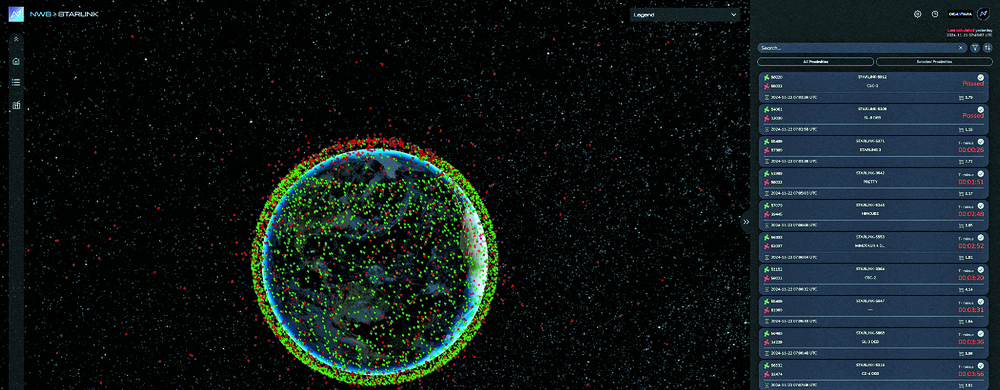
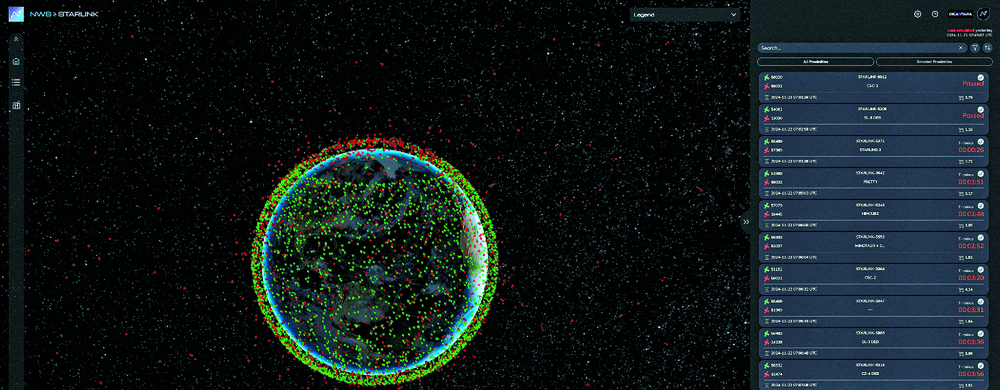
More than 14,000 satellites, including some 3,500 inactive, are in low Earth orbit, data from US-based Slingshot Aerospace shows. Alongside those are 120 million pieces of debris from launches, collisions and wear and tear, of which only a few thousand are large enough to track.
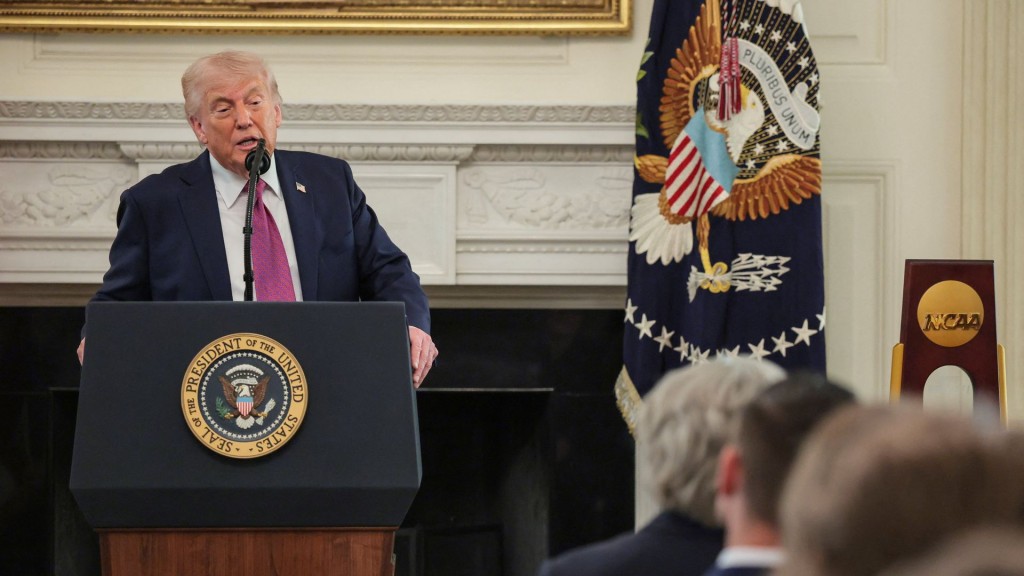
"There's no time to lose on traffic coordination. With so many objects being launched, we have to do everything to ensure safety and that means facilitating the sharing of information between operators," said panel co-chair Aarti Holla-Maini, head of the UN Office for Outer Space Affairs.
Low earth orbit must remain safe to prevent costly disruptions to the technology behind global communication, navigation and scientific exploration, she said.
Yet there is no centralized system that all space-faring nations can leverage and even persuading them to use such a system has many obstacles. Whereas some are willing to share data, others fear compromising security, particularly as satellites are often dual-use and include defense purposes.
Moreover, enterprises are keen to guard commercial secrets.
In the meantime, the mess multiplies. A Chinese rocket stage exploded in August, adding thousands of debris. In June, a defunct Russian satellite exploded, scattering thousands of shards that forced astronauts on the International Space Station to take shelter for an hour.
The orbit is the region most congested with human-made objects as it offers a balance between cost and proximity, making it a prime target for the rapidly growing commercial space sector. It has seen a 17 percent rise in close approaches per satellite over the past year, Slingshot data showed.
Projections point to tens of thousands more satellites entering orbit. The potential financial risk of collisions is likely to be US$556 million (HK$4.33 billion) over five years, based on a scenario with a 3.13 percent annual collision probability and US$111 million in yearly damages, said Montreal-based NorthStar Earth & Space.
"We are at a critical point with respect to putting regulations and structure in place to monitor and manage the congestion. With Starlink launching thousands of satellites a year, China and others preparing to follow, we will soon push the bearing capacity," said its chief executive Stewart Bain.
Low Earth orbit is densely packed, with bands such as the one for satellite internet service Starlink from SpaceX - at an altitude of 540 to 570 kilometers. As of November 27, Starlink had 6,764 satellites in orbit, Jonathan's Space Report showed.
SpaceX data showed Starlink satellites performed nearly 50,000 collision-avoidance maneuvers in the first half, about double the previous six months.
The European Space Agency said in 2021 its maneuvers have increased to three or four times per craft versus a historical average of one.
The 800-900 km band contains fewer satellites but has 3,114 objects - including operational and non-operational payloads, rocket bodies and fragments - which make up 20 percent of the total mass of objects in low Earth orbit, posing significant collision risk, LeoLabs data showed.
Expired satellites add to the clutter as they stay in orbit until they fall into - and burn up in - Earth's atmosphere years later or are flown to a "graveyard orbit" some 36,000 km away.
Russia drew global criticism in November 2021 when it test fired a missile at a defunct satellite in orbit, creating thousands of fragments of debris. Russia invaded Ukraine three months after the test.
"The potential for conflicts between states has been on a steep rise in the recent past. If these extend to space it could complicate the outer space environment. We urgently need common global rules for coordination," said Anirudh Sharma, CEO of Bengaluru-based Digantara, which specializes in space situational awareness.
The UN's Holla-Maini, whose office serves as secretariat for the Committee on the Peaceful Uses of Outer Space, said the October panel aimed to bring together public- and private-sector experts to outline steps needed to start work on coordination. It will present its findings at a committee meeting next year.
Global cooperation is essential to develop enforceable rules akin to those used by the International Civil Aviation Organization, industry experts said.
Such efforts would involve the use of tools such as databases, telescopes, radars and other sensors to track objects while improving coverage, early detection and data precision.
Yet geopolitical tensions and reluctance to share data with nations deemed unfriendly as well as commercial concerns over protecting proprietary information and competitive advantages remain significant barriers.
That leaves operators of orbital equipment relying on informal or semi-formal methods of avoiding collisions, such as drawing on data from US Space Force or the Space Data Association. However, this can involve issues such as accountability and inconsistent data standards.
"The top challenges are speed - as consensus-building takes time - and trust," Holla-Maini said.
"Some countries simply can't communicate with others, but the UN can facilitate this process.
"Speed is our biggest enemy, but there's no alternative. It must be done."
REUTERS
Adding to the constellation of satellites and 120 million pieces of debris are, from far left, the breakup of the upper stage of the Long March rocket launched from Taiyuan, Shanxi, on August 6 and the breakup of a Russian satellite in June. xinhua,