Read More
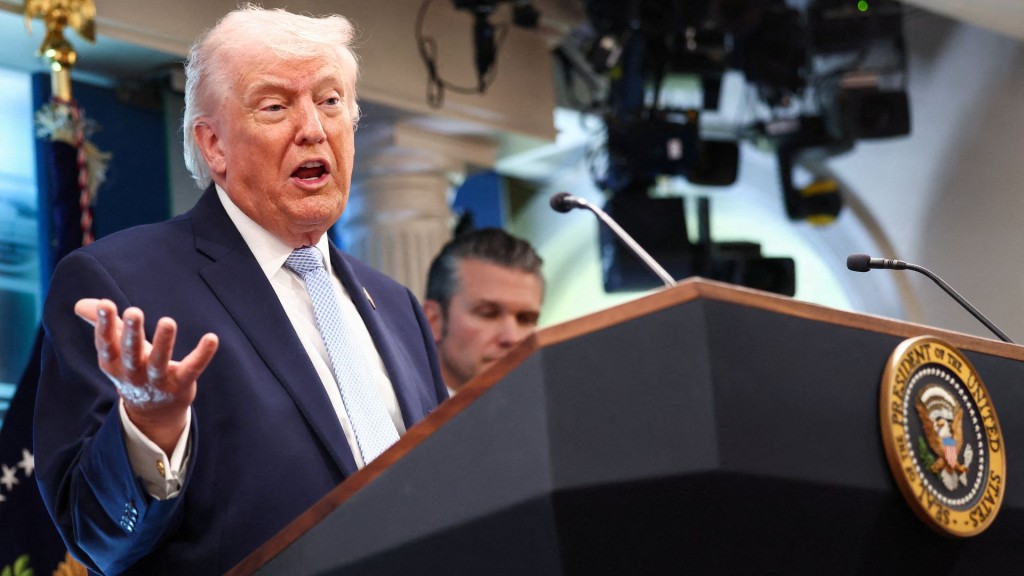
President Donald Trump has repeatedly emphasized that the United States aims to reach a ceasefire agreement with Iran in the near term. However, developments surrounding the Strait of Hormuz alone illustrate the significant challenges involved. Within less than 24 hours of Trump announcing that Iran would unconditionally reopen the Strait, Tehran reversed course, accusing Washington of breaching prior commitments and declaring the waterway closed once again. There were even reports of two commercial vessels being attacked by Iran while attempting to transit the Strait. These underscore the inherent difficulty of securing a durable ceasefire between the two sides.
ADVERTISEMENT
SCROLL TO CONTINUE WITH CONTENT
Even if a ceasefire were ultimately achieved, the Trump administration would still face a range of complex aftermath issues. Notably, since the outbreak of the Iran conflict, Trump has repeatedly criticized NATO member states as weak, signaling that the US may leverage threats of withdrawal from NATO to pressure allies into increasing defense spending. Should the US actually exit the alliance, the already fragile situation surrounding the Russia–Ukraine war would become even more difficult to manage. Consequently, repairing and stabilizing US–NATO relations is likely to emerge as a major global challenge.
At the same time, the administration has begun targeting China, accusing it of indirectly supporting Iran – particularly through the purchase of Iranian oil – which, in Washington’s view, enables Tehran to further develop weapons of mass destruction, including nuclear capabilities. While Beijing has firmly rejected these claims, one of the key obstacles to reopening the Strait of Hormuz lies in the continued US blockade of Iranian ports, which has severely constrained Iran’s ability to export crude oil. This, in turn, poses a significant risk to China’s energy supply. It also suggests that, ahead of Trump’s anticipated visit to China, Washington is once again adopting a more confrontational stance, casting a shadow over the planned mid-May meeting between the two leaders.
Therefore, even as the S&P 500 reaches new record highs, it does not necessarily signal a meaningful easing of global geopolitical risks. Only a limited number of markets, such as Japan’s Nikkei 225 and Taiwan’s Weighted Index, have managed to follow the S&P 500 to new highs. Beyond the heavier economic toll that elevated oil prices impose on many regions compared to the US, a more fundamental issue is that investors remain unconvinced that global conditions will stabilize in the near term. This is especially true given Trump’s stated determination to deliver on his “Make America Great Again” agenda during his tenure, implying that an assertive and potentially aggressive foreign policy stance is likely to persist.
Andrew Wong is a veteran independent commentator