Her uniform impeccable, 22-year-old Hazuki Okuno boards a bullet train replica to rehearse the strict protocols behind the smooth operation of a Japanese institution that turned 60 on Tuesday.
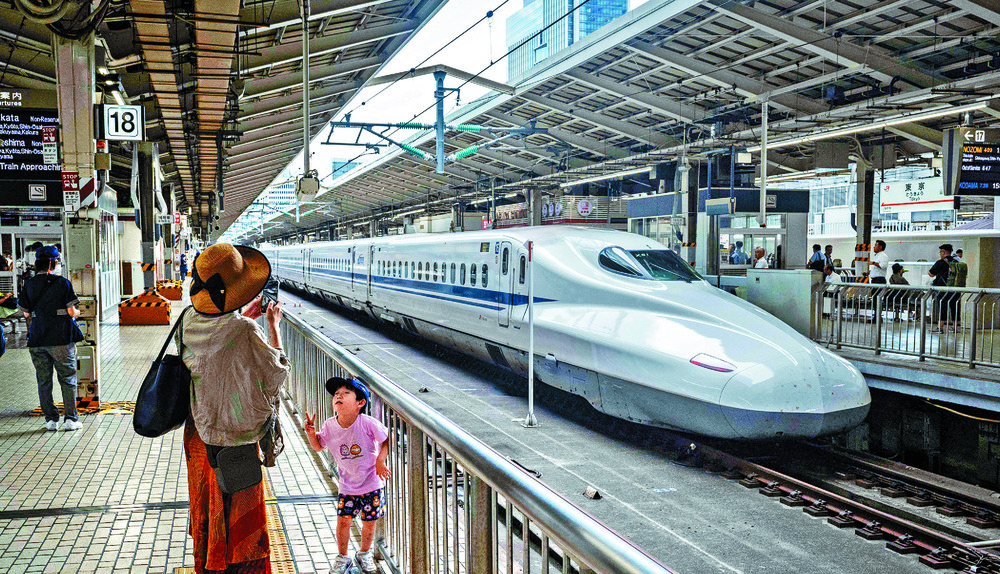
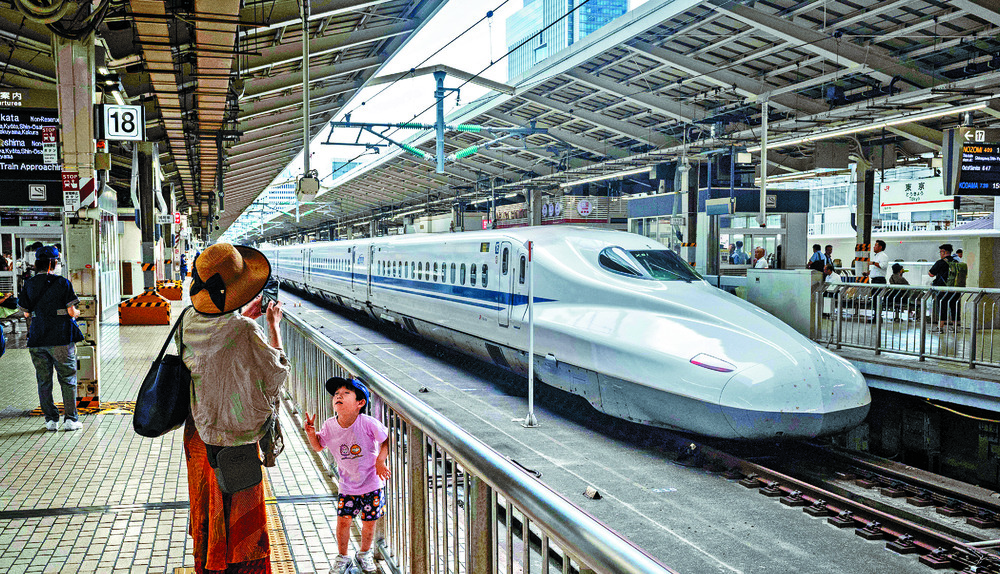
Shinkansen trains began running between Tokyo and Osaka on October 1, 1964, heralding a new era for rail travel as Japan grew into an economic superpower after its World War II defeat.
The service remains integral to the nation's economy and way of life - so keeping it dazzlingly clean, punctual and accident-free is a serious job.
At a 10-story, state-of-the-art staff training center, Okuno was put through her paces when a video screen shows a flailing passenger stuck in a door.
The live-in facility southwest of Tokyo offers what rail giant JR Central describes as an "intense education" for future conductors, drivers and other team members.
Each day nearly a quarter of a million people ride the Tokaido Shinkansen line, which stretches from Tokyo past Mount Fuji to Hakata around five hours away.
One top-speed Nozomi train arrives up to every five minutes.
JR Central says it has never had an accident resulting in death or injury on the bullet train, even in a country where earthquakes, typhoons and heavy snow are common.
Last month, two linked bullet trains, in a first, uncoupled on a JR East line, causing an emergency stop but no injuries.
The Shinkansen's top speed of 320 kilometers per hour is no longer the world's fastest, having been outpaced by China.
But the original high-speed locomotive's streamlined nose and spacious interiors remain a symbol of Japanese engineering prowess and attention to detail.
It's also a tourist must-do and pop culture mainstay - such as in Brad Pitt's 2022 blockbuster Bullet Train.
A meticulous maintenance schedule means the trains gleam outside and in.
In some countries, delays result in little time for such primping, said Christopher Hood, author of Shinkansen: From Bullet Train to Symbol of Modern Japan.
On the bullet train network, however, the average delay is less than a minute.
The growth of cities along Shinkansen routes over the decades shows its impact on the economy in Japan, where "face-to-face business is very, very important," said Hood, a Cardiff University researcher.
The train has played a role in speeding up depopulation in rural Japan, leaving many elderly isolated, he said, adding "people would rather live in the big cities and then use the Shinkansen to go and visit relatives out in smaller cities."
With aging Japan increasingly facing labor shortages, JR Central is also researching a new digital inspection system that can analyse images of a train to spot dangers.
It has said driverless bullet trains could be introduced from the mid-2030s.
There is also a huge project to build a magnetic levitation train line in Japan, long delayed due to environmental opposition.
Maglev trains, which can run at 500 kilometres per hour, were meant to begin service between Tokyo and Nagoya in central Japan in 2027, but JR Central has pushed this back to 2034 or later.
The aim is to create a "dual system" with the Shinkansen, said JR Central PR officere Daisuke Kumajima, to respond to demand and keep operations stable in the case of maintenance work or a big quake.
It's easy to take the Shinkansen for granted, but when Japanese travel overseas, in Europe or the United States, "they soon appreciate that 'yeah, the Shinkansen is a little bit special'" Hood said.
AGENCE FRANCE-PRESSE
Japan's fastidiousness about hygiene and aesthetics extends to the level of the minutiae with, from far left, a loupe and virgin white antimacassars marshalled to give its army of sarariman, or salarymen, and the hordes of tourists, the reassurance t