Read More




The illusion of integration | Boarding Pass | Aidan Leung
30-04-2026 00:57 HKT
Energy security through diversity | Nuts and Bolts | Edmund Leung
29-04-2026 00:30 HKT

Ah…you have a bursary? | Boarding Pass | Aidan Leung
29-04-2026 00:03 HKT
Selling jackets with built-in fans, neck coolers and T-shirts that feel cold, Japanese firms are tapping into a growing market for products to help people handle the summer heat.
Japan - like elsewhere - is seeing ever-hotter summers. Last month was the warmest in 100 years, with at least 53 people dying of heatstroke and almost 50,000 needing emergency attention.
Workman, which makes clothes for construction workers, launched a version of their fan-fitted jackets adapted for the high street in 2020 as demand grew.
The mechanism is simple - two electric, palm-sized fans powered by a rechargeable battery are fitted into the back of the jacket.
Drawing in air to deliver a breeze - at variable speeds - onto the body, they retail for 12,000 to 24,000 yen (HK$560 to HK$1,280).
"As it gets hotter, people who have never worn fan-equipped clothing before want to find ways to cool down so more people are interested in buying it," Workman spokesman Yuya Suzuki said.
Japanese summers are hot and humid, but Tokyo really sweated last month as the average temperature hit 28.7 degrees Celsius, the highest on record since 1875.
Heatstroke is particularly deadly in Japan, which has the second-oldest population in the world after Monaco.
More than 80 percent of heat-related deaths in the past five years have been among senior citizens.
"Individuals as well as companies are putting more and more effort into measures against heatstroke every year," said Nozomi Takai of MI Creations, a company selling neck-cooling tubes mainly to factory and warehouse workers.
The gel inside his firm's brightly colored tubes - priced at 2,500 yen - is cool enough to use after 20 minutes in the fridge.
Wearing it on the neck will "considerably cool the whole body" for about an hour, she said.
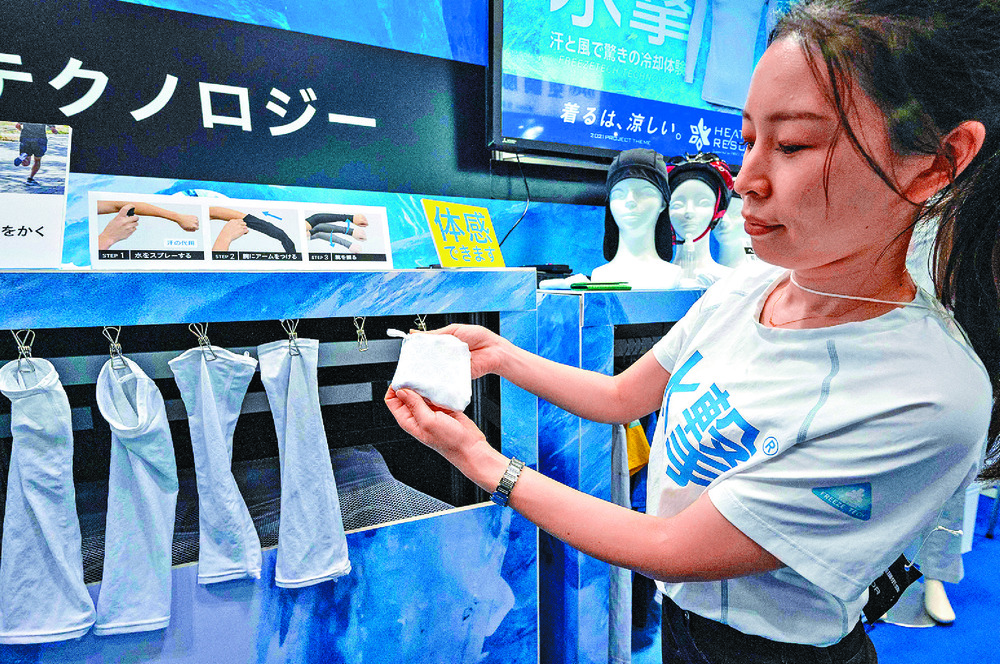
Her firm joined an expo this year on "measures against extreme heat" in Tokyo to showcase new products.
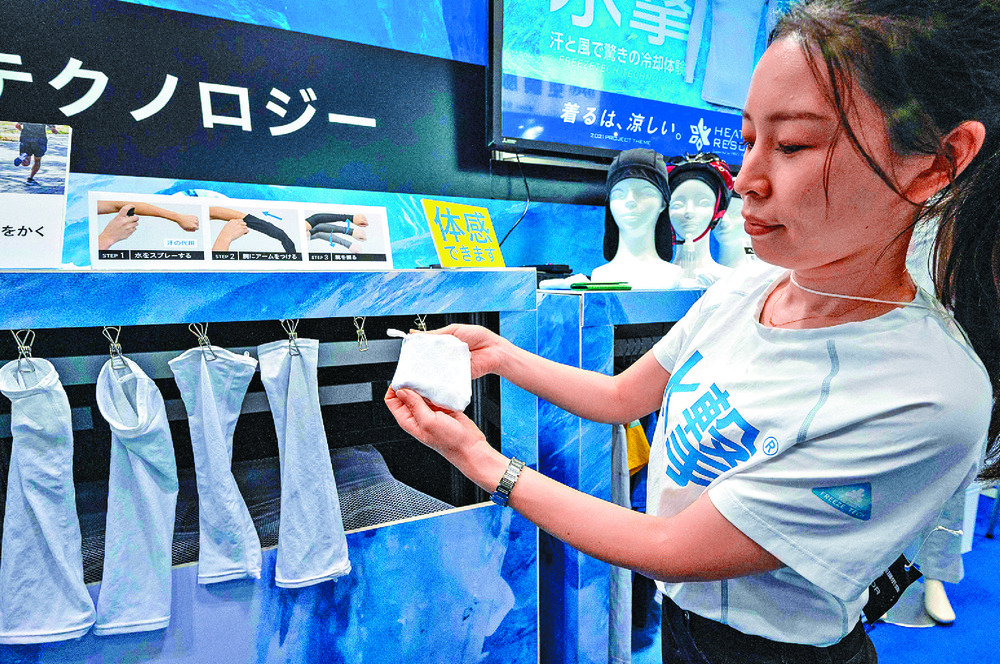
At another booth, Tokyo-based firm Liberta had clothing including T-shirts and arm sleeves using prints that make users feel cool - especially when they sweat.
The prints use materials such as xylitol that feel cool when reacting with water and sweat, they said.
Chikuma, an Osaka-based company, has even created office jackets and dresses equipped with electric fans.
"We developed them for places where casual wear is not allowed," Yosuke Yamanaka of Chikuma said.
Regular fan-fitted clothes can make the wearer look puffy, as they need to be zipped up, and cuffs are tight.
But jackets developed jointly by Chikuma, power tool maker Makita and textile giant Teijin do not need to be buttoned up, thanks to a special structure that sandwiches the fans in two layers and keeps the cool air in, Yamanaka said.
Parasols are now proving more popular with men too.
Komiyama Shoten, a small, luxury umbrella maker, began making parasols for men around 2019 after the environment ministry encouraged people to use them.
Before, many men thought parasols "were for women and they were embarrassed," the owner, Hiroyuki Komiya, said.
On the streets of popular tourist destination Asakusa, Kiyoshi Miya, 42, said he decided to "use his umbrella as a parasol. It's like I'm always in the shade and the wind feels cool."
Another visitor, Shoma Kawashima, wore a wearable fan around his neck.
"It's so hot I want to be naked," the 21-year-old said.
Gadgets are helpful, but "not a solution" to rising temperatures, he added.