It would not do musical instruments justice without mentioning wind instruments.
Wind instruments make music through vibrations of the air in a resonator.
The resonator is usually in the form of a tube, made of brass or wood or their derivatives. Air is blown into the tube, initiating vibrations and amplifying them.
There are essentially two types of wind instruments.
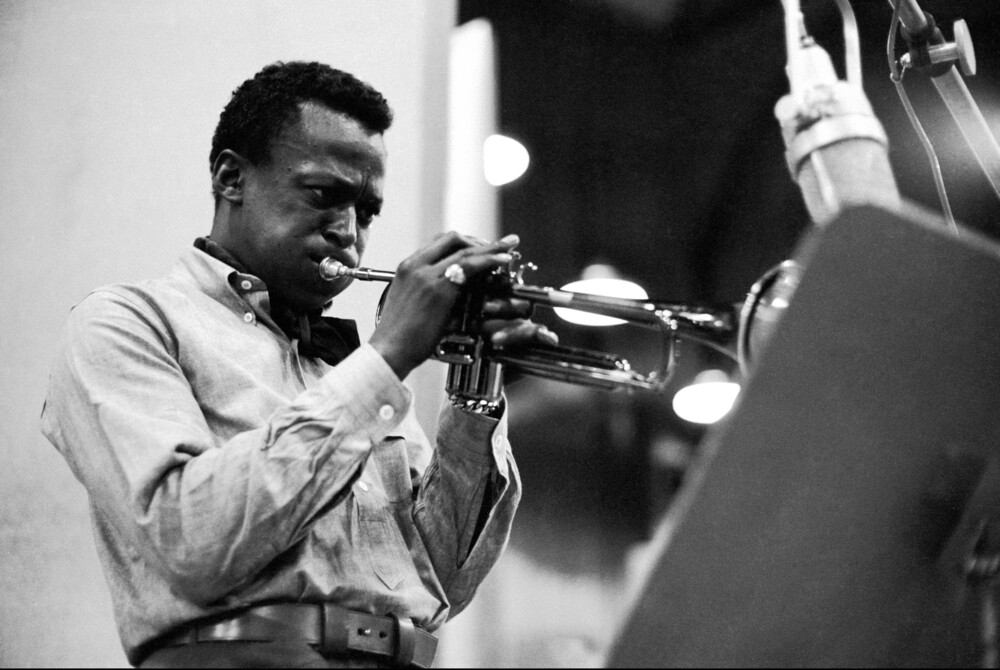
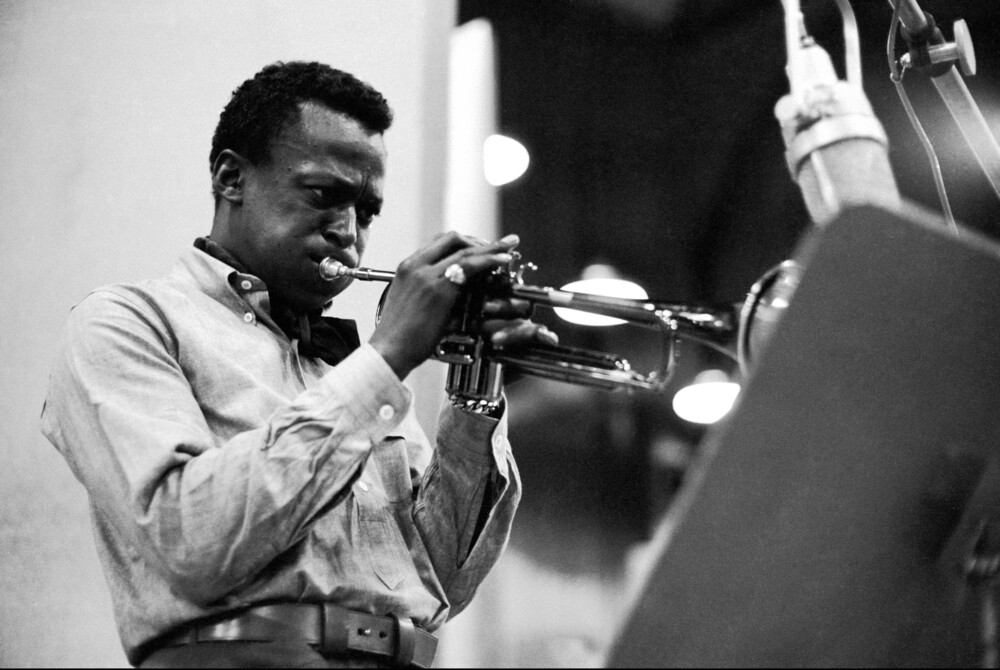
The brass kind, such as horns, trumpets and trombones, makes sound through vibrations initiated by the player's lips.
Wood instruments, such as oboes and clarinets, produce musical notes by vibrations of a reed or reeds.
It is interesting that the saxophone, made of brass, is classified as a wood instrument because it produces sounds with a vibrating reed, but the bamboo Australian didgeridoo is classified as a brass instrument because it makes sound through vibrations of the lips instead.
It is even more interesting that the brass-made flute, which has no reed, is also classified as a wood instrument. Sound is produced by the fluttering of air blown into its hole at one end.
Brass wind instruments are more versatile as they utilize the skill of the lips to start the vibration of the air column.
For the same reason, it is also easier to distinguish an expert from a novice.
The production of musical notes from wind instruments is a complex technical phenomenon, but the basic principles depend on vibrating air columns.
A high-pressure pulse travels down the tube at the speed of sound, and reflects back to form a standing wave to produce a musical note.
Musical notes, mainly due to different frequencies, are formed by varying the length of the tube through which the sound wave travels.
This can be done in various forms.
The most common is by closing off air escape holes drilled along the tube.
Another form, as used in trombones, is by sliding the tube. A more sophisticated method would be to use valves to route the air pulse through different lengths of the instrument.
Wind instruments have the advantage of the powerful delivery of notes, which can be heard much clearer than those produced by string instruments.
They are therefore commonly used in marches and open-air events.
In an orchestra, there are a lot more string instruments than wind instruments to achieve the right volume balance.
Some wind instruments, such as flutes and harmonicas, are simple to carry and relatively inexpensive.
Hence, they are popular with young music students, but the limitation is that the music quality produced is less fine than that from string instruments.
It is ironic that, at the opposite end of the scale, the saxophone can produce mellow notes, despite it being a wind instrument.
It is probably because its shape, with a U-shaped bell tube, resembles the human voice chamber in the throat and is reckoned to be closest to a human voice.
I wonder how our ancestors invented wind instruments without much technical knowledge but were still able to develop them into various forms over thousands of years.
The modern instruments are mass produced with quality and precision and are equipped with sophisticated mechanisms to control the vibrating air column, thanks to technological developments and industrialization of the past few centuries, using metal to fabricate complex and accurate shapes and forms.
Veteran engineer Edmund Leung Kwong-ho casts an expert eye and ear over features and forces in modern life