Read More

From Hong Kong to the world: Robocore's next move | Market Pulse | HKTDC
28-09-2026 05:00 HKT

The magic of Yann Arthus-Bertrand | La Vie en Rose | Joanne Chan
24-09-2026 05:20 HKT


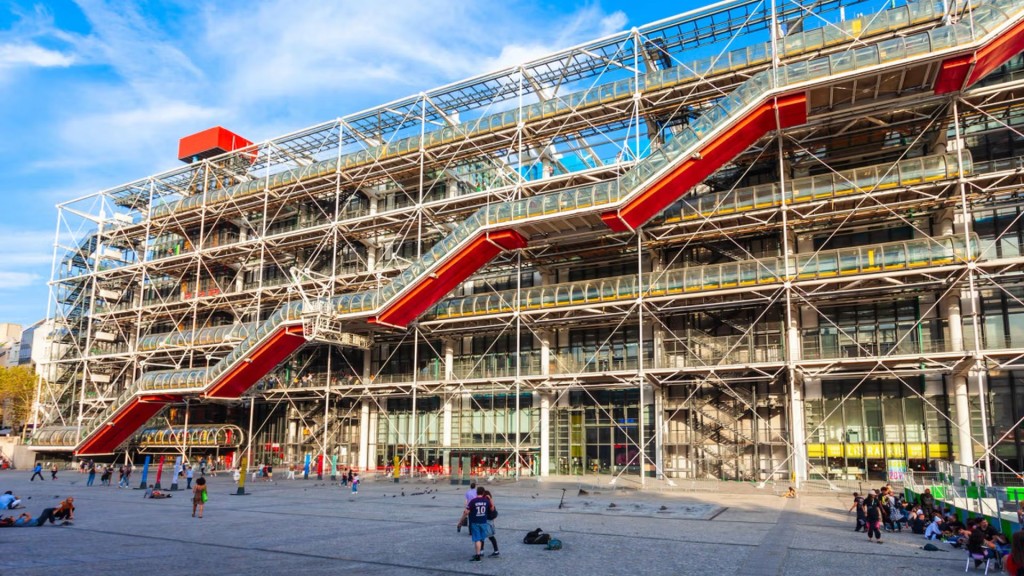
I have long loved museums, not just for the artworks they hold, but for how they rewrite the story of art. Following the Centre Pompidou for years, I watched it become an international currency of taste and ambition, a global network former French President Georges Pompidou likely never expected.
At the helm of this metamorphosis is its current museum president Laurent Le Bon. He is a curatorial wizard known for non-conventional exhibitions, such as placing Jeff Koons in the Versailles Palace. Under his guidance, the institution masterfully shifted from local decentralization to global expansion. Management rebranded the network into the “Centre Pompidou Constellation,” with Le Bon affectionately calling his international partners “stars.”
This expansion leverages the “Bilbao Effect,” anchoring each star with iconic architecture. First came Metz in 2010, designed by Shigeru Ban, to democratize art for French provinces. Then came Malaga, Spain, in 2015, featuring Daniel Buren’s striking glass cube. By 2019, the constellation reached Asia via the Shanghai West Bund Museum Project, housed in Sir David Chipperfield’s iridescent structure. These latter two locations operate as high-profile, state-funded projects.
However, its newest iterations represent a radical operational pivot. A partnership with Hong Kong’s M+ museum moves away from brand exporting toward dialogue between two collecting institutions. M+ museum director Suhanya Raffel described her institution as a young upstart compared to the 49-year-old Pompidou heritage site. This win-win partnership marks a vital step for an art world where Asian modern movements have too long been sidelined. By leveraging Le Bon’s talent for mixing heritage with contemporary spectacle, the collaboration elevates global dialogue while rejuvenating the aging French icon.
If Hong Kong represents a cultural dialogue, Seoul introduces a completely different commercial framework. Launched on June 4, 2026, the Centre Pompidou Hanwha trades the traditional museum sanctuary for a corporate partnership. The venture is backed by a US$21 million (HK$163.8 million) licensing agreement with the Centre Pompidou spanning four years. Designed by Jean-Michel Wilmotte as a translucent “box of light,” the museum occupies an annex of the iconic 63 Building. The entrance journey is unexpected. I was routed through Hanwha’s art-filled corporate headquarters, passing high-end retail and cafes before the path opens into the Centre Pompidou Hanwha. I felt business, retail, and leisure folding into culture.
Decades ago, President Pompidou remarked, “The museum is no longer a sanctuary, but a factory.” Walking through Seoul’s corporate-infused ecosystem, his words feel strikingly current. The museum is a living, global network processing the culture of today.
Joanne Chan, Art Historian, Chevalier de l’Ordre des Arts et des Lettres. A kaleidoscope of musings and flâneries through France