Last March, as Covid-19 locked down the world, what may have been the first autonomous drone attacks in history took place on a largely unwatched battlefield in Libya.
According to a UN report this March, Libyan forces loyal to the Government of National Accord used Turkish-made Kargu-2 drones to hunt down units loyal to former Libyan "Field Marshal" Khalifa Haftar.
The report by independent experts for a UN panel on Libya arms sanctions breaches stated that four-rotor drones were programmed in autonomous mode to attack fleeing logistics convoys and other vehicles without further human intervention.
If true, that would represent the first such incident on a battlefield - a development that has long been predicted and feared by military and human rights experts alike.
While drones have been a feature of the battlefield for years - from strikes by large US unmanned aerial vehicles to much smaller devices operated by militant groups like Islamic State - they have still required a human being to operate the "kill switch."
But that such a step may have taken place unheralded and largely unnoticed should not be a surprise. The past two decades have seen a mass proliferation, downsizing and democratization of technology once the preserve of the most powerful states. Innovation is now much cheaper, and those willing to bend rules can find advantage.
No country has exploited this dynamic more than Turkey, its cheap and effective "loitering" kamikaze drones a perfect fit for President Tayyip Erdogan's foreign policy.
As Western interest in the Middle East falters, Turkish involvement is rising in conflicts in Libya, Syria, Afghanistan and west Africa. That is often simultaneously diplomatic, commercial and military - with shipments of Turkish weapons and technology often a key part of a deal.
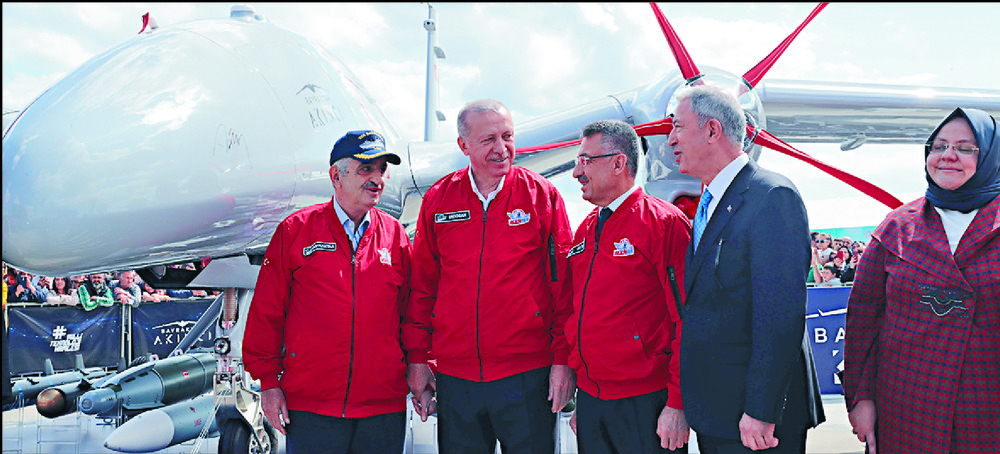
Turkey has also become a prime mover in the larger unmanned aerial vehicle market, selling its Bayraktar drones in countries like Qatar, Tunisia and Ukraine, each deal also furthering its geopolitical connections and interests. This drone was also used by Turkish-backed forces in Libya, one of several weapons systems apparently shipped in contravention of a UN arms embargo.
In the Nagorno-Karabakh conflict between Armenia and Azerbaijan last year, Turkish support was central to Azerbaijan's battlefield success, with Turkish drones loitering over battlefields to target Armenian tanks with brutal effect.
Not everyone is glad to see Turkey's UAV export success. In April, Canada blocked the export of drone components to Turkey at the same time as other Western sanctions following Ankara's purchase of Russian air defense missiles.
Ottawa said the ban was in part due to evidence that Canadian drone parts were used in the Nagorno-Karabakh conflict.
STM, the Turkish firm that makes the drones, says Kargu drones can select targets autonomously in a "fire and forget" mode, implying it can be launched to loiter looking for a target and then engage automatically.
Similar drones - although not necessarily autonomous - are also made by Israel and played a significant role in the most recent attacks on Gaza as well as being exported to Azerbaijan and used in Nagorno-Karabakh.
Tracking such developments is difficult in the Covid era when international media and observers are less likely to be present.
Small drones are increasingly a feature of war in the Middle East, used by Houthi rebels in Yemen, Iran-backed militias in Iraq and all sides in Syria.
The use of "fire and forget" weapons is not new: 77 years ago German V1 and V2 rockets hit England, sent at populated areas by rudimentary guidance systems.
Anti-personnel and anti-vehicle landmines have been around much longer, lying in wait for unsuspecting victims - sometimes decades later.
Anti-personnel landmines were banned by the 1997 Ottawa Treaty, and some campaigners have long called for a similar prohibition on autonomous killer drones.
They have argued this should be done before such technology became a reality, but it may already be too late. Whether or not the Libya strike last March was the first autonomous drone attack hardly matters, and there may well have been more since.
REUTERS
Tayyip Erdogan, second left, has been riding high at home and abroad partly on the back of sales of the Bayraktar UAV.