In December last year, I drew our readers' attention to the need of incorporating resilience in transport infrastructure.
The incident in Heathrow Airport last month illustrates this vividly.
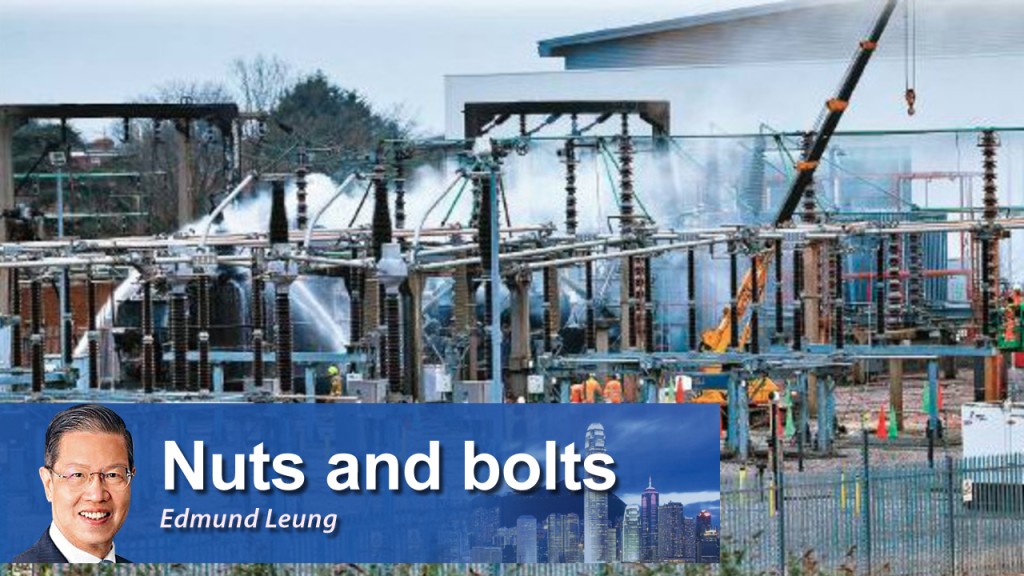
A fire in a high-voltage transmission substation in North Hyde caused total power loss to the Heathrow Airport and its surrounding areas, paralyzing it for more than a day. Fortunately, it happened at night when traffic was relatively light and the interruption to air traffic - although most inconvenient for those arriving and departing passengers - did not cause too much of a disaster.
But it begs the question as to how a strategically important transport infrastructure can be affected by a single power substation fault.
Most facilities in modern cities are fed by more than one source of power supply, commonly called a ring circuit, to allow for sufficient redundancy. This is to ensure that, in the event of an interruption to one circuit, the other circuit can continue to provide adequate electrical power without interruption.
The fact that power supply was resumed within 18 hours pointed out that some form of alternative power supply could be made available, though this cannot be regarded as satisfactory.
All major facilities are equipped with emergency power supplies, but normally they can only feed emergency lighting for passenger evacuation, and for control systems such as air traffic control and other essential systems to ensure safety under emergency conditions.
To equip these facilities with a full back-up emergency power source would not only be expensive in terms of equipment costs, but also not deemed necessary as alternative power supplies should be the more reliable option.
News reports said the substation was for converting high-voltage power at 275kV to 11kV for supply to the airport facilities. One can assume that there was no alternative 275kV high-voltage transmission supply to augment it, but somehow, they may have other power supply sources at the lower voltage network at 11kV level that can be redeployed in this instance.
Why was this not inherently a standard provision for resilience is puzzling.
Investigations will reveal why the substation transformer could catch fire so easily. It appears that the insulating oil in the transformer was ignited to cause the huge fire.
Photos showed a transformer destroyed by fire, but the adjacent transformers seemed to be damaged, apparently because lack of segregation walls which should have been incorporated in the original design as a standard feature.
The fire could have started with overheating of the insulating oil, probably due to an equipment fault, resulting in a short circuit. But in such a case, the transformer should have been protected by a relay operating at excessive oil pressure when the transformer overheated, with power turned off to minimize damage. They should also be equipped with a fire-fighting system that could automatically douse the fire.
Also, the fact that reconnection of power can only be achieved many hours after the fire was put out, points out to an ineffective design of alternative supplies.
For a strategic airport like Heathrow - which has probably the second busiest passenger traffic in the world - to halt operations for the best part of two days, affecting tens of thousands of passengers, not only brings red faces to the airport authority and the city government, but smacks of lack of attention in the original design, in the operation and maintenance procedures or other weaknesses. None of these should be allowed to happen.
Hopefully, this incident will serve as a wake-up call to their authorities to conduct a thorough check and redesign to ensure such incidents cannot happen again.
It will be good if the power system for critical facilities can be equipped to automatically switch over to alternative power source when catastrophic power loss occurs, minimizing the need for manual rebooting.
Imagine such major incidents happening in Hong Kong or other major cities in the world - some heads will roll.
Fortunately, in Hong Kong, resilience in the transport infrastructure is inherent in our design and operation, and we can enjoy the highest level of reliability in our airport, in our railways and other transport facilities.
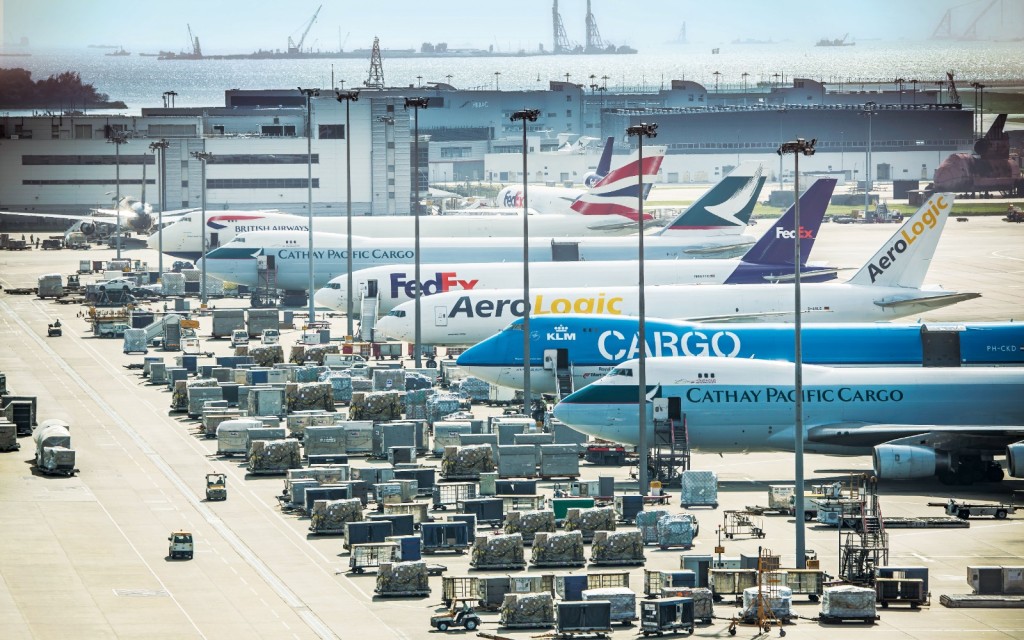
I understand the Hong Kong International Airport has full (100 percent) alternative power feed at the distribution voltage system of 11kV to ensure no interruption in power to critical facilities should one circuit fails. High-voltage transformers are also segregated in separate compartments such that, should a fire occur in one, it should not affect others.
Resilience in transport infrastructure must be inherent in the design of the system and stringently maintained to ensure safe and reliable operation. It requires good planning and thorough and continuous checks by expert engineers to ensure the design intent can be executed in actual operation.
Citizens can take for granted that such provisions are always in place and, touch wood, we will never need to tolerate such incidents.
Veteran engineer Edmund Leung Kwong-ho casts an expert eye over features of modern life