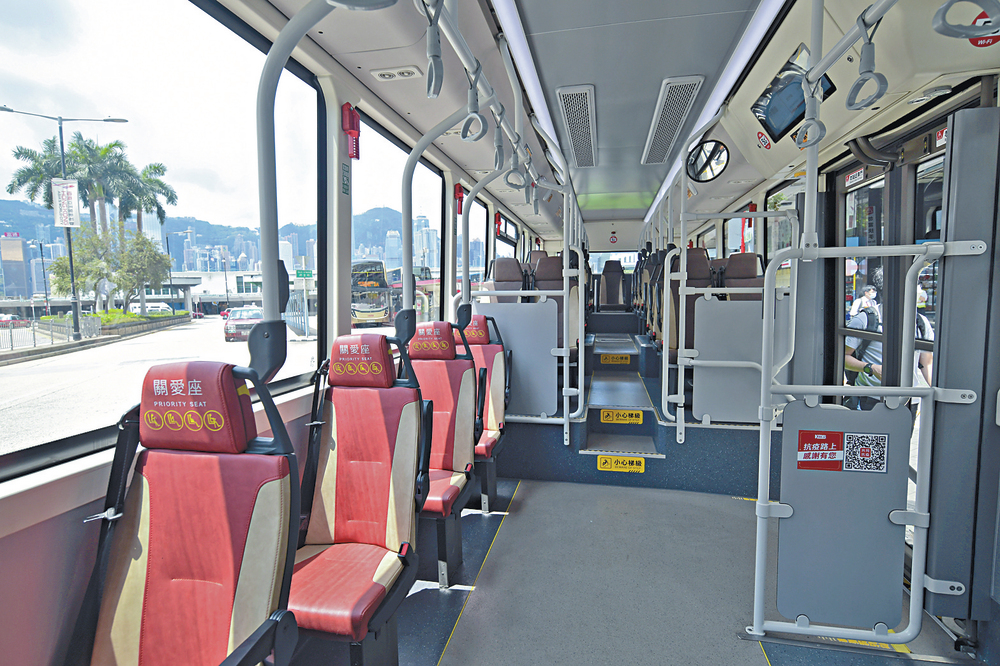
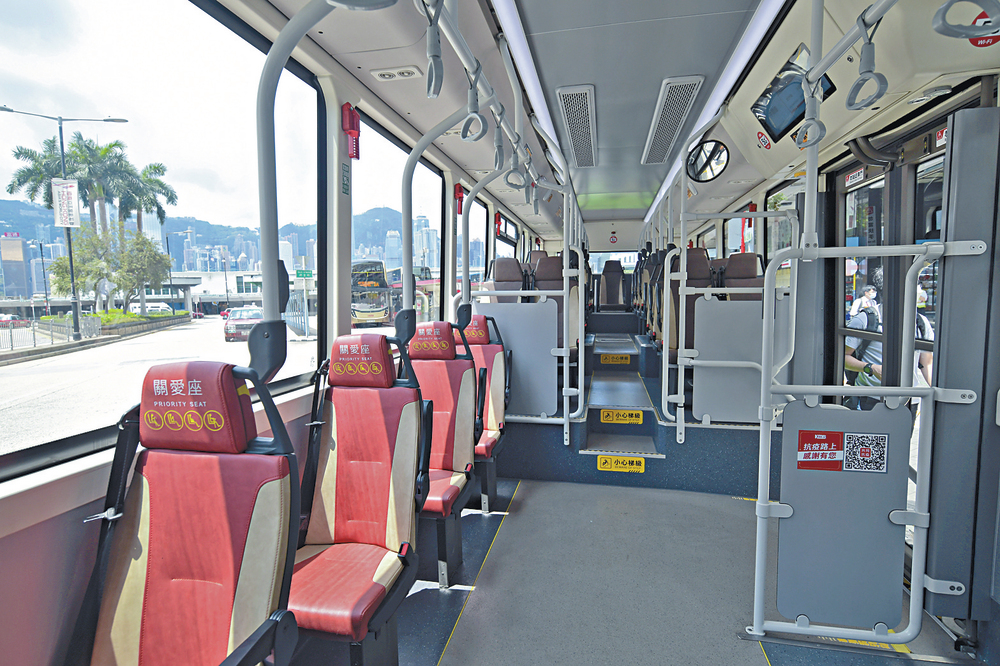
The striking appearance of a range of single-decker green buses on Nathan Road has caught the eyes of many. These are electric-powered vehicles, and Kowloon Motor Bus has launched 16 of them in an effort to reduce carbon emissions.
Electric buses have been used widely in Shenzhen among many other cities, but for Hong Kong they are a novel idea under experiment.
While in other cities bus depots are located outside of city centers where there is plenty of space to park the vehicles while they are not in service, we do not have that luxury in Hong Kong as space is at a premium, and there are many competing uses for land easily accessible by road.
You have only to see the rows of buses parked on roads in the early hours in Lai Chi Kok and other places to be reminded of the shortage of space for bus parking when they are not in service.
With diesel engines, refueling can be done in minutes and then the buses can be driven away to be parked. But not so with electric. The charging process takes hours, and while that's under way buses cannot be moved to other locations. This will pose a serious challenge to bus companies running a large fleet with a limited number of depots.
This new series of buses, manufactured by BYD in Shenzhen, may have the most modern technology in batteries and in charging methods but according to KMB they still require about 1 hours to recharge.
They use a water-cooled system to keep the battery temperature under control because fast charging with an large electric current generates a lot of heat that needs to be dissipated.
With a range of about 200 kilometers the buses can run for only a few hours and then must return to depots for recharging.
They are best deployed for services with short peak periods, allowing them to be taken out of service in the daily routine and put back in service for midday and evening peaks.
Additionally, battery powered buses are a lot heavier than diesel-powered models and are best used on level roads.
These 16 buses represent less than 0.5 percent of the KMB fleet, and even with 52 double-decker electric buses going into service next year as the next stage of this green initiative it will take a long time to replace the whole diesel-engined fleet, which has served reliably and efficiently since the 20th century.
My view is that in the coming 10 years the hydrogen-powered fuel cell may at least become an equally viable option and a necessary supplement if not a total replacement of electric-powered buses for our congested streets.
Refueling with hydrogen will be a similarly simple process to diesel-engined vehicles as fuel cell technology is coming to maturity.
Hydrogen tanks will also be a lot lighter than batteries.
Wide application of solar and wind-power generation will enable mass production of hydrogen at off-peak times, providing an abundant supply of hydrogen fuel for road vehicles.
We aim to achieve carbon neutrality in line with the 2050 Vision, and I'm glad to see the bus company joining this initiative.
But technological development advances with time, so we need to apply the latest but proven technology to our everyday operation for best efficiency, reliability and sustainability goals.
Veteran engineer Edmund Leung Kwong-ho casts an expert eye over the future of public transport